
Best Organic Dog Treats of 2026: Evidence-Based Guide for Dog Parents Who Prioritize Clean Nutrition

Summary
Organic dog treats are worth the investment for dog parents seeking clean, minimally processed ingredients and reduced exposure to synthetic additives. USDA organic turkey and chicken treats offer higher digestibility and lower risk of contaminants than conventional options, while natural plant-based treats provide strong alternatives for dogs with protein sensitivities.
By Superfood Science Writing Team | Reviewed by Dr. Kelly Hood, DVM | Last Updated: 1/28/2026 Superfood Science has produced organic and natural functional foods for humans and pets for over 20 years, specializing in clean-label formulations and evidence-based nutrition.
Key Takeaways
- USDA organic treats avoid synthetic pesticides, artificial preservatives, antibiotics, and growth stimulants, reducing chemical exposure for dogs.[1]
- Organic turkey and chicken provide high-quality proteins with better digestibility and lower allergenic potential for many dogs.[2]
- Natural, non-organic treats can still be beneficial when made from limited, whole-food ingredients.
- Choosing organic treats is most valuable for dogs with sensitivities or dogs that receive frequent training rewards.
What Makes a Dog Treat Organic?
The term organic refers to strict USDA-regulated standards that control how ingredients are grown, processed, and handled. These regulations aim to minimize chemical contamination and promote sustainable agriculture.
USDA Organic Requirements Include:
- No synthetic pesticides or fertilizers
- No antibiotics or growth hormones in animal products
- No artificial colors, preservatives, or flavor enhancers
- Ingredient traceability and certified production systems
These standards help reduce chemical residues that may accumulate in conventional ingredients and contribute to adverse reactions in sensitive dogs.[1]
Ingredient Quality Comparison
| Treat Type | Ingredient Quality | Best For |
| USDA Organic Turkey Treats | Lean, highly digestible protein; minimal processing | Sensitive stomachs; training rewards |
| USDA Organic Chicken Treats | Palatable, complete amino acid profile; clean sourcing | Picky eaters; daily rewards |
| Natural Plant-Based Treats | Whole-food ingredients; no artificial additives | Chicken/turkey allergies; low-fat needs |
Step-by-Step: How to Choose the Best Organic Dog Treat
Step 1: Assess Your Dog’s Sensitivities
Chicken is a common canine dietary allergen; dogs with sensitivities may benefit from organic turkey or plant-based treats.[3]
Step 2: Match the Treat to the Purpose
- Training: Select small, soft organic turkey or chicken treats.
- Daily rewards: Choose crunchy or jerky-style organic options.
- Sensitive digestion: Use single-ingredient organic turkey or natural plant-based treats.
Step 3: Review Ingredient Transparency
Look for:
- Organic protein listed first
- Limited-ingredient formulas
- No artificial preservatives or unspecified by-products
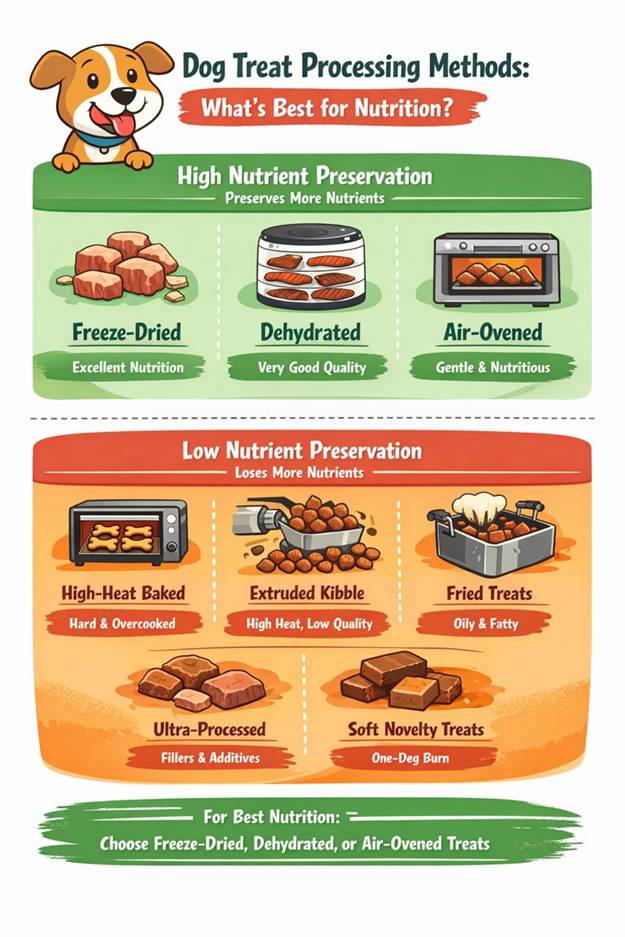
- Processing methods such as freeze-drying, air-oven (low-temperature air-baking), or dehydration, which preserve nutrients[4]
Organic Turkey vs Organic Chicken Treats
Many dog parents ask which protein offers the best health benefits.
Why Organic Turkey May Be the Better Fit
- Leaner protein that is easier to digest[2]
- Often tolerated better by dogs with mild sensitivities
- Mild flavor suitable for repetitive training rewards
Why Organic Chicken Remains a Top Choice
- Highly palatable for most dogs
- Rich amino acid profile supporting muscle maintenance
- Works well for jerky-style or crunchy treats
Bottom line: Turkey is often preferred for sensitivity; chicken remains the most palatable and versatile.
Frequently Asked Questions (FAQ)
Q: Are organic dog treats safer for dogs with allergies?
A: Yes. Organic dog treats are often a better starting point for dogs with sensitivities. They are made without synthetic pesticides, artificial colors, or chemical preservatives that can contribute to digestive upset or skin irritation in sensitive dogs. While some dogs may still react to specific proteins regardless of farming method, organic treats offer cleaner ingredient profiles and fewer unnecessary additives, making it easier for pet parents to identify and manage true protein sensitivities.[1]
Q: Do puppies benefit from organic treats?
A: Puppies receiving frequent training rewards may benefit from reduced additive exposure and cleaner proteins.
Q: Are natural plant-based treats nutritionally adequate?
A: They can be, especially for dogs with poultry sensitivities, provided they use whole-food ingredients without fillers.[5]
Conclusion
Organic dog treats offer meaningful benefits for health-conscious dog parents who value ingredient purity, safety, and digestibility. Organic turkey and chicken provide clean protein options, while natural plant-based treats remain excellent alternatives for allergen-sensitive pets.
Explore more clean-label treat guides:
References
- Benbrook CM. “Organic agriculture and reducing exposure to pesticides.” Environmental Health Perspectives. 2012.
- Case LP et al. Canine and Feline Nutrition. 3rd ed. 2011.
- Olivry T. “Evidence of food allergy in dogs.” Veterinary Dermatology. 2017.
- Heinze CR. “Processing effects on nutrient availability in pet foods.” Journal of Animal Science. 2015.
- Knight A. “Plant-based diets for dogs: nutritional considerations.” Animal Welfare. 2021.
