
Healthy Dog Treats for Allergies in 2026: Organic & Limited-Ingredient Options That Work
Quick Answer
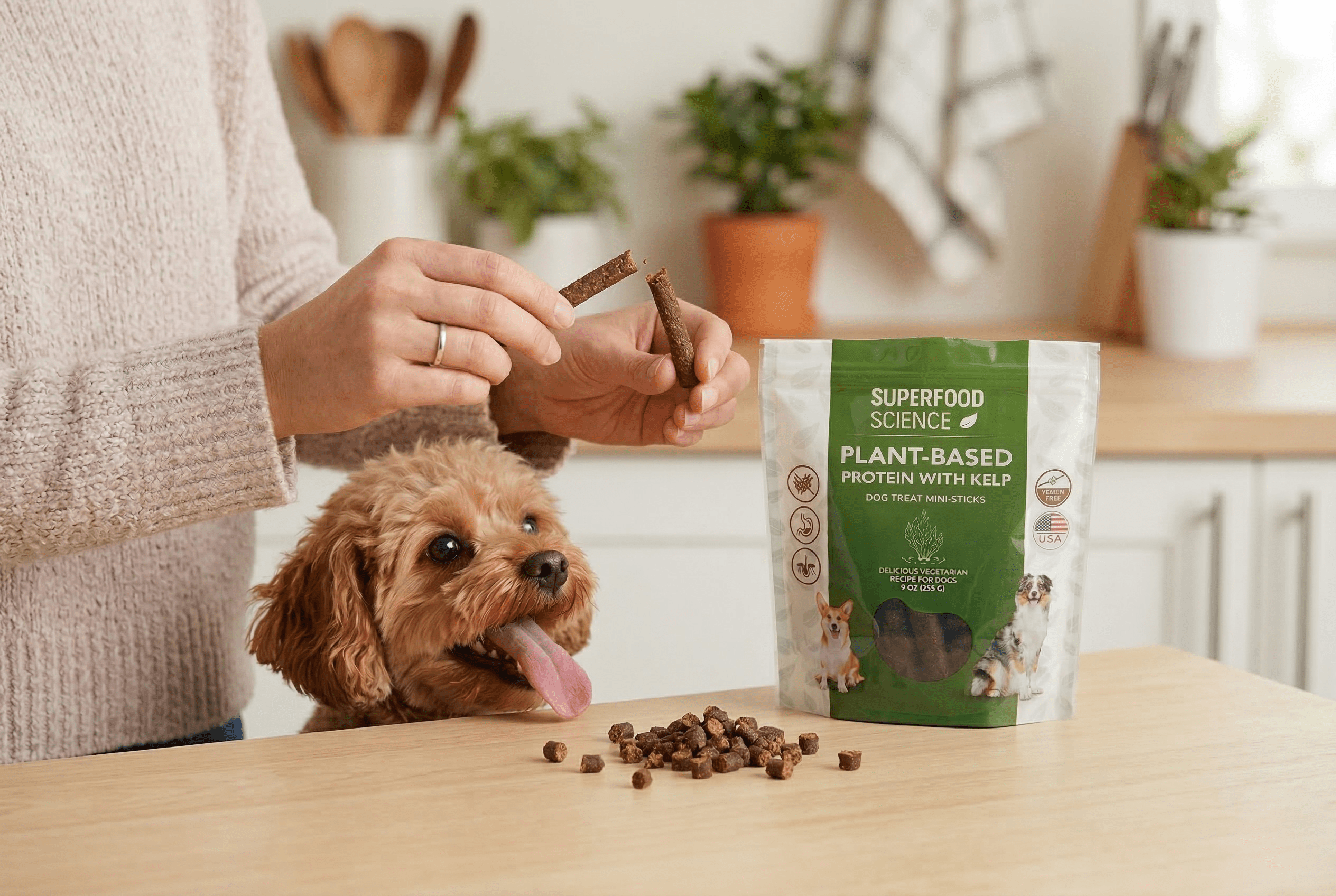
The best treats for allergic dogs in 2026 are organic or limited-ingredient mini-stick treats made from single, clean proteins such as organic turkey or organic chicken, or natural plant-based formulas for dogs with poultry sensitivities. If you’re searching for the best healthy dog treats for allergies in 2026, it’s important to focus on limited-ingredient, allergy-friendly options. Semi-soft, breakable mini sticks reduce digestive stress, limit allergen exposure, and allow precise portion control during elimination trials.
Trust Signal
By Superfood Science Writing Team | Reviewed by Dr. Kelly Hood, DVM | Last Updated: 3/13/2026 Superfood Science has produced organic and natural functional foods for humans and pets for over 20 years, specializing in clean-label formulations and evidence-based nutrition.
Key Takeaways
- Food allergies in dogs commonly involve chicken, beef, dairy, and wheat, making limited-ingredient and alternative proteins essential for symptom management.[1]
- Organic turkey and chicken treats avoid synthetic pesticides and artificial preservatives that may aggravate skin or digestive symptoms.[2]
- Natural plant-based treats are excellent for dogs with poultry sensitivities or multi-protein allergies.[3]
- Breakable semi-soft mini-sticks help pet parents control treat size during allergy monitoring.
- Identifying a dog’s specific allergens is critical and usually starts with a simplified, clean treat formula.

Introduction
Allergies and food sensitivities are among the most common reasons pet parents seek cleaner, simpler treat options. Dogs experiencing itching, digestive upset, or recurrent ear issues often show improvement when switched to organic or limited-ingredient treats that eliminate common triggers. Treats play a larger role in allergy flare-ups than many owners realize, as they often contain hidden proteins, fillers, or artificial preservatives.
In 2026, pet parents increasingly choose USDA Organic or plant-based options because they reduce chemical exposure and simplify allergen identification. Semi-soft mini sticks are especially helpful because they break cleanly, enabling precise portioning during elimination diets.
Understanding Dog Allergies: What the Research Shows
Food allergies occur when a dog’s immune system overreacts to dietary protein. According to large-scale reviews, the most common allergens include chicken, beef, dairy, and wheat.[1]
Common symptoms include:
- itching or paw licking
- recurrent ear infections
- soft stool or diarrhea
- chronic skin irritation or hotspots
- poor coat quality
Many of these symptoms overlap with those of environmental allergies, but adjusting the ingredients in dog treats is often the simplest diagnostic step.[4]
Why Organic & Limited-Ingredient Treats Help Allergic Dogs
Research shows that exposure to certain preservatives, contaminants, and low-quality proteins may worsen inflammatory responses in sensitive dogs.[2]
Organic turkey and chicken treats:
- avoid synthetic pesticides and fertilizers
- exclude artificial preservatives like BHA/BHT
- eliminate artificial colors and flavors
- provide gentle, highly digestible protein[5]
Limited-ingredient formulas:
- reduce the number of potential triggers
- support elimination of diet protocols
- allow owners to identify allergens more easily
These options significantly lower the likelihood of flare-ups in sensitive dogs.
When Natural Plant-Based Treats Are the Best Choice
Some dogs react to multiple animal proteins, including chicken and turkey. Research demonstrates that well-formulated plant-based diets can support healthy skin and digestion while avoiding major allergens.[3][6]
Plant-based treats are ideal when dogs show:
- itching after poultry consumption
- chronic GI upset following animal proteins
- multi-protein sensitivities
- improved symptoms on plant-forward diets
High-quality, natural, plant-based mini-sticks deliver training value and flavor without triggering poultry-related reactions.
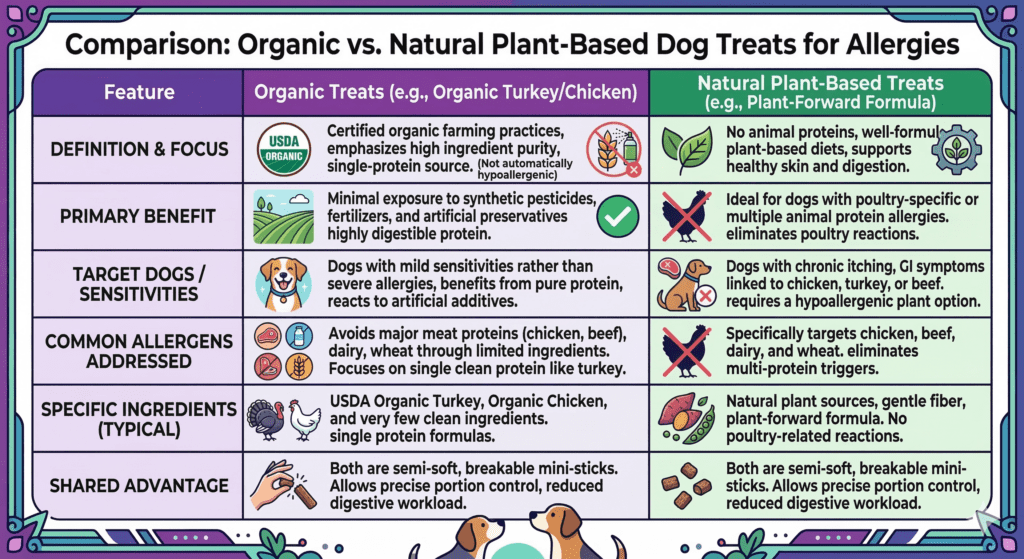
Organic vs Natural Allergy-Friendly Treats: Comparison
| Feature | Organic Turkey/Chicken Treats | Natural Plant-Based Treats |
| Allergen Load | Low (single-protein formulas) | Very low (no animal proteins) |
| Digestive Support | Excellent; highly digestible proteins[5] | Ideal for poultry-sensitive dogs; gentle fiber sources |
| Ingredient Purity | USDA-certified; no pesticides[2] | Clean ingredient lists; no artificial additives |
| Texture | Semi-soft, breakable mini-sticks | Semi-soft, breakable mini-sticks |
| Best For | Mild sensitivities, skin/GI issues | Poultry allergies, multi-protein sensitivities |
Step-by-Step: How to Choose Allergy-Friendly Treats
Selecting the right dog treat helps minimize reactions and supports diagnostic clarity.
Step 1: Identify Suspected Allergens
Research shows the most frequent dietary canine allergens include: – chicken – beef – dairy – wheat[1]
Start with a limited ingredient treat featuring only one protein.
Step 2: Choose Organic for Sensitive Digestion
Organic treats help dogs with:
- chronic soft stool
- recurring skin inflammation
- sensitivity to artificial preservatives
- pesticide-related GI irritation[2]
Step 3: Use Plant-Based Treats for Poultry Allergies
Choose plant-based mini-sticks if your dog:
- reacts to chicken or turkey
- shows itching after animal proteins
- improves on plant-based formulas[3]
Step 4: Introduce Slowly and Monitor
Break mini-sticks into small trial pieces.
- Monitor for digestive or skin changes for 4 – 6 weeks.
- Add only one new treat at a time.
The Mini-Stick Advantage for Allergic Dogs
Semi-soft mini-sticks are uniquely helpful for allergy management.
- break cleanly for controlled portioning
- reduce digestive workload
- support sensitive puppies and seniors
- maintain motivation during training without excess calories
Because allergic dogs often require careful monitoring, mini-sticks enable safe, gradual testing.
When to Use Organic vs Natural Allergy Treats
There is no one-size-fits-all answer—each dog’s sensitivity and individual allergen profile are different.
Use Organic Turkey or Chicken Treats if your dog:
- has mild sensitivities rather than severe allergies
- benefits from organic protein purity
- reacts poorly to artificial preservatives
- has loose or change stool consistency or mild GI upset
Use Natural Plant-Based Treats if your dog:
- reacts to chicken or turkey proteins
- has chronic itching or GI symptoms linked to animal proteins
- requires a hypoallergenic option
- thrives on plant-based diets per veterinary guidance
Frequently Asked Questions (FAQ)
Q: What are the most common allergens in dog treats?
A: Chicken is the most common, followed by beef, dairy, and wheat.[1]
Q: How can I tell if a treat is triggering an allergy?
A: Watch for itching, soft stool, or ear issues within 24–72 hours or even one week after introducing a new treat.
Q: Are plant-based treats good for allergy-prone dogs?
A: Yes. Research supports plant-based options as effective for reducing skin and GI symptoms in protein-sensitive dogs.[3][6]
Q: Are organic treats automatically hypoallergenic?
A: No. Organic describes farming practices, not allergen status. Dogs allergic to poultry still require plant-based alternatives.
Conclusion
Allergic dogs benefit from clean ingredient profiles, predictable formulas, and low-allergen protein sources. Organic turkey and chicken treats reduce chemical exposure and aid digestion, while natural, plant-based mini-sticks support dogs with moderate-to-severe poultry sensitivities. With careful selection and monitoring, pet parents can significantly improve comfort and reduce flare-ups.
Explore related articles:
– Best Training Treats for 2026
– Best Organic Dog Treats of 2026
– Organic Puppy Treats Guide 2026
References
- Mueller, R. S., Olivry, T., & Prélaud, P. (2016). Common food allergens in dogs and cats. BMC Veterinary Research, 12, 9.
- Benbrook, C. M. (2012). Organic agriculture and reducing exposure to pesticides. Environmental Health Perspectives, 120(5), a182–a183.
- Knight, A., Leitsberger, M., & Light, N. (2021). Vegan versus meat-based dog food: Guardian-reported health outcomes. Animal Welfare, 30(3), 285–300.
- Bizikova, P., Pucheu-Haston, C. M., Eisenschenk, M. N. C., Marsella, R., Nuttall, T., & Santoro, D. (2015). Food allergy testing in dogs: Limitations and recommendations. Veterinary Dermatology, 26(5), 431–e101.
- Case, L. P., Daristotle, L., Hayek, M. G., & Raasch, M. F. (2011). Canine and Feline Nutrition (3rd ed.). Mosby.
- Roberts, J., et al. (2022). Nutritional adequacy of plant-based formulations for dogs. Veterinary Sciences, 9(7), 338.
- de-Oliveira, L. D., et al. (2008). Effects of dietary protein sources on stool quality and digestibility in dogs. Journal of Nutrition, 138(2), 274–275.
- Macías-Montes, A., et al. (2025). Pesticide residues in commercial dry pet food. Environmental Pollution, 336, 122–145.
- Wise, C. F., et al. (2021). Comparative assessment of pesticide exposures in domestic dogs and their owners. Environmental Science & Technology, 55(4), 2619–2630.
