
Turkey vs. Chicken: Which Protein Is Better for Your Dog’s Treats?

Quick Answer
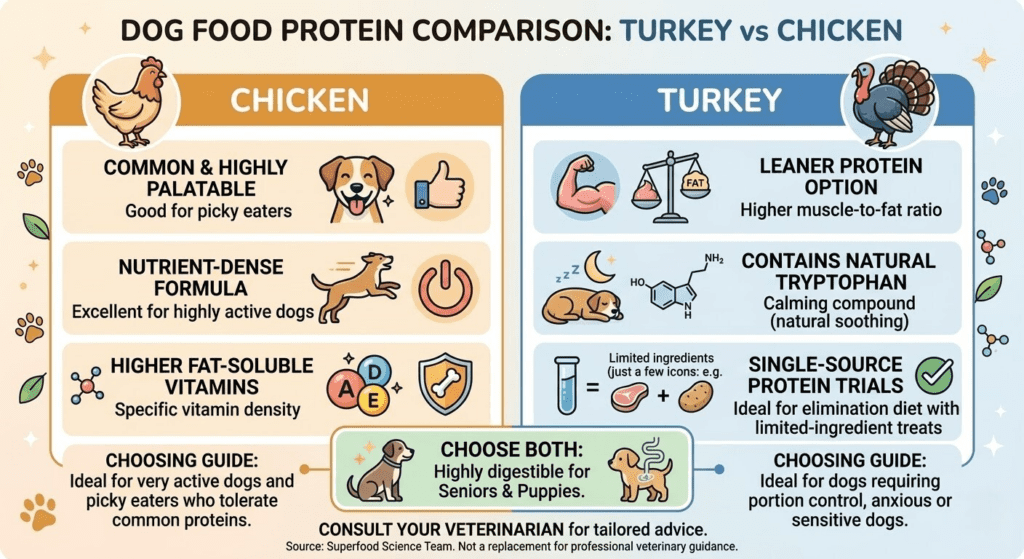
Turkey is often the better choice for dogs that need gentler digestion, lower-fat treats, or simpler daily rewards, while chicken is often the better choice for picky eaters and training situations where a stronger aroma and higher palatability matter. Both are high-quality proteins for many dogs. However, chicken is also one of the more commonly reported food allergens in dogs, so dogs with suspected poultry sensitivity may need a different option altogether.
By Superfood Science Writing Team | Reviewed by Dr. Kelly Hood, DVM | Last Updated: 3/23/2026 Superfood Science has produced organic and natural functional foods for humans and pets for over 20 years, specializing in clean-label formulations and evidence-based nutrition.
Key Takeaways
- Turkey and chicken are both highly digestible proteins for many dogs, but turkey is often preferred when gentler digestion or lower fat is the goal.
- Chicken is often more aromatic and rewarding, which can make it useful for training and picky eaters.
- Chicken is also a more commonly reported food allergen than turkey, so protein history matters when choosing treats.
- Dogs with suspected poultry sensitivity may do better with a poultry-free plant-based treat instead.
Why Compare Turkey and Chicken for Dog Treats?
Turkey and chicken are two of the most common proteins used in dog treats because both provide a complete amino acid profile, good digestibility, and strong everyday usability. Even so, small differences in fat content, palatability, and allergy risk can make one protein a better fit than the other, depending on the dog.
For pet parents choosing treats for seniors, puppies, sensitive dogs, or dogs in training, those differences matter.
Turkey vs. Chicken at a Glance
| Feature | Turkey | Chicken |
| Digestibility | Highly digestible and often chosen for gentler digestion | Highly digestible for many dogs |
| Fat profile | Typically, leaner | Often slightly higher in fat |
| Palatability | Mild flavor | Often more aromatic and rewarding |
| Allergy considerations | Less commonly discussed as a trigger than chicken | One of the more commonly reported food allergens in dogs[1] |
| Often best for | Sensitive digestion, seniors, weight-conscious treat routines | Training, picky eaters, higher-value rewards |
When Turkey May Be the Better Choice
Gentle Digestion Support
Turkey is often a strong choice for dogs that need a simpler, gentler treat protein. That may include seniors, puppies, dogs transitioning to foods, or dogs that tend to have softer stool.
Canine nutrition research suggests that protein sources can influence stool quality and digestibility, which helps explain why some dogs appear to do better on leaner, simpler proteins.[5]
Lower-Fat Treating
Turkey is often chosen by pet parents seeking a lower-fat reward option. That can be useful for dogs with slower metabolisms, dogs on weight-management plans, and older dogs that need lighter daily snacks.
Soft or Semi-Soft Texture Compatibility
Turkey mini-sticks are especially useful when texture matters as much as protein. Soft or semi-soft treats may be easier for dogs with dental discomfort, missing teeth, or smaller mouths.
When Chicken May Be the Better Choice
Better for Training and Picky Eaters
Chicken is commonly used when palatability matters most. Many dogs respond strongly to its aroma and taste, which can make it especially useful for training, behavior shaping, and as a high-value reward.
Strong Protein Quality for Active Dogs
Chicken also provides complete protein and may be a practical option for active dogs that tolerate it well and benefit from a more rewarding treat experience.
Clean Organic Chicken May Reduce Unnecessary Irritants
When chicken is used in an organic or clean-label formula, it may help reduce exposure to synthetic additives, artificial preservatives, and certain pesticide-related concerns compared with lower-quality conventional options.[2]
When to Avoid Both Turkey and Chicken
Turkey and chicken are not the right fit for every dog. A poultry-free option may be better when a dog has a confirmed poultry allergy, chronic itching linked to poultry exposure or repeat digestive flare-ups after eating chicken or turkey.
Food-allergy literature suggests that animal proteins are among the most common triggers in canine food reactions, and chicken appears often in those reports.[1][4]
How to Choose the Best Protein for Your Dog
Step 1: Look at Digestive Tolerance
If your dog tends to have soft stool, digestive sensitivity, or does better with simpler foods, turkey may be the safer starting point.
Step 2: Consider the Job of the Treat
If the treat is mainly for training, chicken may work better because many dogs find it more rewarding. If the treat is mainly for gentle daily use, turkey may be a better fit.
Step 3: Review Allergy History
If your dog has reacted poorly to poultry before, it is usually smarter to avoid both and move to a poultry-free option.
Step 4: Match Texture to Life Stage
Puppies, seniors, and dogs with dental discomfort often do best with soft or semi-soft treats that break easily into smaller pieces.
The Mini-Stick Advantage
Mini-stick treats offer practical benefits beyond protein choice alone. They are easier to portion, easier to use during training, and often easier for sensitive dogs to chew. When paired with a simple ingredient list and soft texture, mini sticks can make daily treat routines more predictable and easier to manage.
Best Protein Options
Organic Turkey Mini-Sticks
Best suited for gentle digestion, soft-texture preferences, and lower-fat treatment routines.
Organic Chicken Mini-Sticks
Best suited for picky eaters, reward-based training, and dogs that tolerate chicken well.
Natural Plant-Based Mini-Sticks
Best suited for dogs that need a poultry-free option.
☑Explore Turkey, Chicken, and Poultry-Free Clean Treats (Insert Amazon Attribution Link)
Conclusion
Turkey and chicken can both be excellent treat proteins, but the best choice depends on what your dog needs most. Turkey often makes more sense when digestion, lower fat content, and gentler daily feeding are the priorities. Chicken often makes more sense when reward value, aroma, and motivation matter most. If poultry sensitivity is part of the picture, a poultry-free alternative is usually the smarter path.
More on other related topics
Below are links to additional info. Click the link and learn more.
- organic turkey dog treats
- organic chicken dog treats
- plant-based dog treats
- dog treats for sensitive stomachs
- dog treats for picky eaters
- soft dog treats for seniors
- puppy training treats
- limited-ingredient dog treats
- poultry-free dog treats
- clean-label dog treats
Frequently Asked Questions
Which protein is more digestible for dogs?
Both turkey and chicken are highly digestible for many dogs, but some sensitive dogs appear to tolerate turkey slightly better.[5]
Which protein is better for training treats?
Chicken is often the stronger training choice because many dogs find it more aromatic and rewarding.
Which protein is better for senior dogs?
Turkey is often a good fit for seniors because it is commonly chosen for gentler digestion and lower-fat options.
What if my dog reacts to both turkey and chicken?
A poultry-free plant-based option may be the better choice when both poultry proteins appear to trigger itching or digestive upset.[3]
References
- Mueller, R. S., Olivry, T., & Prélaud, P. (2016). Common food allergens in dogs and cats. BMC Veterinary Research, 12, 9.
- Benbrook, C. M. (2012). Organic agriculture and reducing exposure to pesticides. Environmental Health Perspectives, 120(5), a182–a183.
- Knight, A., Leitsberger, M., & Light, N. (2021). Vegan versus meat-based dog food: Guardian-reported health outcomes. Animal Welfare, 30(3), 285–300.
- Bizikova, P., et al. (2015). Food allergy testing in dogs: Limitations and recommendations. Veterinary Dermatology, 26(5), 431–e101.
- de-Oliveira, L. D., et al. (2008). Effects of dietary protein sources on stool quality and digestibility in dogs. Journal of Nutrition, 138(2), 274–275.
- Fukuzawa, M., & Hayashi, N. (2013). Comparison of three different reinforcements on learning in dogs. Journal of Veterinary Behavior, 8(1), 1–6.
