
Are Plant-Based Dog Treats Healthy? Science, Ingredients, and What to Look For in 2026

Quick Answer
Plant-based dog treats can be healthy and practical for many dogs, especially those with poultry allergies, multi-protein sensitivities, or a need for lower-fat snack options, when they are nutritionally thoughtful, limited-ingredient, and used as treats rather than complete diets. In 2026, the best plant-based dog treats emphasize digestibility, ingredient transparency, and clean sourcing, making them a useful option for sensitive dogs and allergy-prone households.
By Superfood Science Writing Team | Reviewed by Dr. Kelly Hood, DVM | Last Updated: 3/26/2026 Superfood Science has produced organic and natural functional foods for humans and pets for over 20 years, specializing in clean-label formulations and evidence-based nutrition.
Key Takeaways
- Plant-based dog treats can be a smart option for dogs with poultry allergies, multi-protein sensitivities, or lower-fat treat needs.
- The best plant-based treats use digestible ingredients, limited formulas, and clean-label sourcing rather than relying on heavy fillers or vague claims.
- Treats do not need to be nutritionally complete like a full diet, but they should still be made with balanced, digestible ingredients.
- Soft or semi-soft plant-based mini-sticks can work especially well for training, portion control, puppies, seniors, and allergy-prone dogs.
Why Pet Parents Are Considering Plant-Based Dog Treats
Interest in plant-based dog treats has grown as more pet parents try to manage chicken or turkey allergies, multi-protein sensitivities, chronic itching, recurrent ear irritation, and digestive instability. Unlike plant-based complete diets, plant-based treats are supplemental. That makes them easier to formulate safely because they do not need to meet every full-diet nutritional requirement on their own.
Are Plant-Based Dog Treats Safe?
Yes, when they are formulated correctly.
Veterinary nutrition references support that dogs are omnivorous and capable of digesting a wide range of plant ingredients [4]. In practice, safety depends on ingredient quality, digestibility, amino acid balance, and the absence of unnecessary artificial additives. Poorly formulated plant-based treats may be overly processed or low in key amino acids, which is why ingredient transparency matters.
When Plant-Based Treats May Be the Best Choice
Plant-based dog treats may be especially useful when dogs:
- have confirmed poultry allergies [1]
- react to multiple animal proteins
- experience GI flare-ups with meat-based treats
- need lower-fat snack options
- benefit from protein rotation or elimination-style feeding strategies
These treats can also be useful during elimination-style approaches or when pet parents want to reduce exposure to common animal-protein triggers.
Key Ingredients in High-Quality Plant-Based Dog Treats
Digestible Plant Proteins
Common plant-based protein sources include:
- pea protein
- lentils
- chickpeas
When processed and blended correctly, these ingredients contribute more than just protein. They can also help support digestibility, satiety, and ingredient diversity in treats.
Additional Nutrients Provided by Plant Ingredients
High-quality plant ingredients may also contribute supportive nutrients documented in canine nutrition and pet food research [6][7][8].
- Dietary fiber: Soluble and insoluble fibers can support stool quality, gut motility, and beneficial gut bacteria [6][9].
- Complex carbohydrates: These can provide steadier energy compared with highly refined starch-heavy treats [7].
- Minerals: Ingredients such as legumes may contribute magnesium and potassium, which support normal muscle and nerve function [8].
- Phytonutrients and polyphenols: Naturally occurring plant compounds may support cellular protection and metabolic balance [10].
- Lower fat content: Many plant-based treats are easier to fit into lower-fat or weight-conscious treat routines.
When blended correctly, plant ingredients can also provide a complementary amino acid profile suitable for treats, even though they are not meant to replace complete dietary proteins [6].
Functional Plant Ingredients
Additional supportive ingredients may include:
- pumpkin or sweet potato for fiber
- flaxseed and chia seeds for beneficial omega-3 fatty acids and other antioxidant compounds
- kelp, traditionally used to support digestive, oral, skin, and coat health
What to Avoid
Watch for formulas built around:
- artificial flavors or colors
- excessive starch fillers
- sugar or sweeteners
- vague ingredient labels
Plant-Based vs. Animal-Based Treats: A Practical Comparison
| Feature | Plant-Based Treats | Turkey / Chicken Treats |
| Allergy risk | Very low for poultry-allergic dogs | Higher for poultry-allergic dogs [1] |
| Digestibility | Often excellent for sensitive dogs when formulated well | Excellent for many dogs |
| Protein completeness | Requires careful formulation | Naturally complete |
| Best fit | Allergies, protein rotation, lower-fat needs | Training, highly active dogs, stronger reward value |
What the Science Says
Digestibility and Health Outcomes
A large guardian-reported study found that many dogs maintained good health on plant-based diets when those diets were nutritionally adequate [2]. While treats are not the same as full diets, this supports the idea that well-formulated plant ingredients can be appropriate for many dogs.
Nutritional Adequacy
Research suggests plant-based formulations can meet canine nutrient requirements when they are properly designed [5]. For treats, this reinforces the importance of formulation quality rather than assuming plant-based automatically means inferior.
Allergy Management
Poultry and beef remain among the most commonly reported food allergens in dogs, which helps explain why plant-based treats can be useful alternatives for some allergy-prone dogs [1].

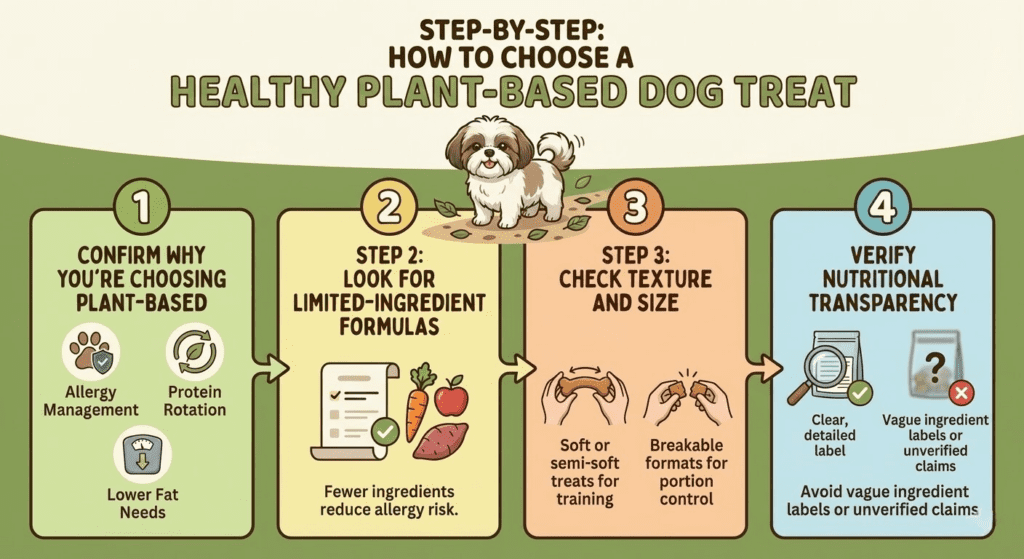
How to Choose a Healthy Plant-Based Dog Treat
Step 1: Confirm Why You Are Choosing Plant-Based
The goal may be allergy management, protein rotation, or lower-fat treat use. Clarifying the goal helps you choose more effectively.
Step 2: Look for Limited-Ingredient Formulas
Fewer ingredients can make treats easier to evaluate and may reduce the chance of unnecessary triggers.
Step 3: Check Texture and Size
Soft or semi-soft treats are often better for training, while breakable formats help with portion control. They can also be easier for puppies, seniors, and dogs with dental sensitivity.
Step 4: Verify Nutritional Transparency
Avoid vague labels or unverified claims. Look for brands that clearly disclose their ingredient list and overall treat purpose.
The Mini-Stick Advantage for Plant-Based Treats
Plant-based mini-sticks that break cleanly can offer practical advantages for everyday use. They support precise portion control, faster reinforcement during training, reduced calorie load per reward, and easier chewing for puppies and seniors. Soft textures may also be especially helpful for dogs with dental sensitivity.
Best Plant-Based Options
Natural Poultry-Free Plant-Based Mini-Sticks
These are especially useful when you want:
- limited ingredients
- a soft or semi-soft texture
- a poultry-free option for allergy-prone dogs
➡️ Explore Plant-Based Dog Treat Options
Conclusion
Plant-based dog treats can be a healthy option when they are thoughtfully formulated, easy to digest, and matched to the dog’s needs. They are often most useful for dogs with poultry sensitivities, multi-protein issues, or lower-fat treat goals. The best choice is not simply whether a treat is plant-based or meat-based, but whether the formula is clean, limited, digestible, and appropriate for the dog in front of you.
Internal Linking Suggestions
Use natural internal links to related pages and collections such as:
- plant-based dog treats
- poultry-free dog treats
- limited-ingredient dog treats
- dog treats for sensitive stomachs
- dog treats for itchy skin
- soft dog treats for seniors
- puppy training treats
- clean-label dog treats
- turkey dog treats
- chicken dog treats
Frequently Asked Questions
Are plant-based dog treats nutritionally complete?
Treats do not need to function like complete diets, but high-quality plant-based treats should still use digestible proteins and balanced ingredients.
Can plant-based treats replace meat treats?
Yes, for many dogs, especially those with allergies or protein sensitivities. Some highly active dogs may still benefit from animal-protein treats in certain training settings.
Are plant-based treats good for puppies?
They can be, especially when they are soft or semi-soft, limited-ingredient, and fed in small portions.
Do plant-based treats help with allergies?
They often help by removing common animal-protein triggers such as poultry [1].
References
[1] Mueller, R. S., Olivry, T., & Prélaud, P. (2016). Common food allergens in dogs and cats. BMC Veterinary Research, 12, 9.
[2] Knight, A., Leitsberger, M., & Light, N. (2021). Vegan versus meat-based dog food: Guardian-reported health outcomes. Animal Welfare, 30(3), 285–300.
[3] Bizikova, P., Pucheu-Haston, C. M., Eisenschenk, M. N. C., Marsella, R., Nuttall, T., & Santoro, D. (2015). Food allergy testing in dogs: Limitations and recommendations. Veterinary Dermatology, 26(5), 431–e101.
[4] Case, L. P., Daristotle, L., Hayek, M. G., & Raasch, M. F. (2011). Canine and Feline Nutrition (3rd ed.). Mosby.
[5] Roberts, J., et al. (2022). Nutritional adequacy of plant-based formulations for dogs. Veterinary Sciences, 9(7), 338.
[6] Swanson, K. S., et al. (2002). Effects of dietary fiber on nutrient digestibility, stool characteristics, and gut health in dogs. Journal of Nutrition, 132(6), 1674S–1678S.
[7] Zentek, J., et al. (2013). Dietary carbohydrates and glycemic response in dogs. Journal of Animal Physiology and Animal Nutrition, 97(6), 1131–1140.
[8] NRC (National Research Council). (2006). Nutrient Requirements of Dogs and Cats. National Academies Press.
[9] Barry, K. A., et al. (2011). Dietary fiber sources and their effects on canine gut microbiota. Journal of Animal Science, 89(12), 4358–4368.
[10] Reif, D. W., & McCreanor, G. M. (1999). Antioxidant and polyphenol activity of legumes. Journal of Agricultural and Food Chemistry, 47(11), 4892–4897.
