
Treats for Dogs With Chicken Allergies: Best Alternatives in 2026 (Vet-Reviewed Guide)

Quick Answer
Dogs with chicken allergies do best with treats that fully exclude chicken and other vague poultry ingredients, use limited and clearly labeled formulas, and rely on tolerated alternatives such as turkey or plant-based ingredients. The best options in 2026 emphasize simple ingredient panels, digestibility, and soft, breakable textures that make allergy management easier during training and daily rewards.
Trust Signal
By Superfood Science Writing Team | Reviewed by Dr. Kelly Hood, DVM | Last Updated: 3/31/2026
Superfood Science has produced organic and natural functional foods for humans and pets for over 20 years, specializing in clean-label formulations and evidence-based nutrition.
Key Takeaways
- Chicken is one of the most common food allergens in dogs and can contribute to itching, ear issues, paw licking, and digestive upset.[1]
- Even small exposures from treats, chews, supplements, or hidden poultry ingredients can interfere with an elimination approach.[3]
- Turkey may work for some dogs, but dogs with broader poultry sensitivity may need fully poultry-free or plant-based alternatives.
- Soft, breakable treats can support portion control and may be easier on sensitive dogs during frequent use.
- Clear labels and limited ingredients are often the safest starting point when choosing chicken-free treats.
Why Chicken Allergies Are So Common in Dogs
Chicken is one of the most widely used proteins in commercial dog food and treats. Because many dogs are exposed to it often, it becomes a common trigger in dogs with food sensitivities over time. Veterinary dermatology literature consistently identifies chicken among the most frequently reported food allergens in dogs, especially in cases involving chronic itching, ear inflammation, paw chewing, and gastrointestinal upset.[1]
Signs Your Dog May Have a Chicken Allergy
Dogs reacting to chicken may show one or more of the following signs:
- persistent itching or scratching
- recurrent ear infections
- paw chewing or face rubbing
- chronic loose stools or vomiting
- skin redness or hot spots
Because food-allergy symptoms can be delayed, treats are often an overlooked source of ongoing exposure.
Why Dog Treats Matter in Allergy Management
Even when a dog’s main diet is chicken-free, treats can still undermine progress if they contain chicken fat, chicken meal, poultry by-products, or poorly defined flavoring ingredients. Effective allergy management usually requires full avoidance across all reward items and add-ons.[3]
Common Sources of Hidden Exposure
- training treats
- dental chews
- flavored supplements
- soft chews
- table scraps with poultry ingredients
This is why ingredient transparency matters so much in a chicken-elimination plan.
Best Protein Alternatives to Chicken
Choosing the right alternative depends on how broad your dog’s sensitivity is.
Turkey for Dogs That Tolerate It
Turkey is sometimes better tolerated than chicken and may work well in limited-ingredient treats for dogs without broader poultry reactivity.
Potential benefits include:
- strong palatability
- lean, digestible protein
- suitability for training in small portions
That said, some dogs react to multiple poultry proteins, so turkey is not automatically safe for every chicken-sensitive dog.
Plant-Based Protein Options
Plant-based treats remove animal protein exposure entirely, which can make them useful for dogs with confirmed poultry allergies or more complicated food sensitivities. When properly formulated, plant-based options may offer:
- low allergen exposure
- fiber support for digestive regularity
- lower-fat reward options for routine treating
Some published evidence suggests that nutritionally appropriate plant-based feeding patterns can support canine health in certain settings, though treat selection should still focus on ingredient quality and overall diet balance.[2]
Texture and Format: An Overlooked Allergy Factor
Dogs with food sensitivities often have digestive sensitivity as well. In these cases, texture can affect how well a treat fits into the dog’s daily routine.
Soft or semi-soft treats are often preferred because they may:
- feel gentler on sensitive digestive systems
- require less chewing effort
- support faster reward timing during training
- reduce the risk of hard-fragment chewing issues
Why Breakable Treats Help
Breakable mini-stick or small soft-chew formats can help owners limit unnecessary exposure by keeping portions small and consistent. This can be especially useful during training, when multiple rewards may be given in a short time.
How to Choose Chicken-Free Treats
Step 1: Read the Full Ingredient Panel
Avoid chicken in all forms, including:
- chicken
- chicken meal
- chicken fat
- poultry by-products
Warning: Watch for Vague Label Terms
These terms may still indicate poultry-derived ingredients:
- “poultry meal”
- “animal fat”
- “meat by-product”
- “natural flavor,” unless the source is clearly identified
Step 2: Choose Limited-Ingredient Formulas
Fewer ingredients can make it easier to identify tolerated options and reduce the risk of hidden triggers.
Step 3: Select Gentle Textures
Soft, easy-to-break treats are often more practical for dogs with sensitive digestion and for owners who need tighter portion control.
Step 4: Monitor Response Carefully
Improvement in skin and digestive signs may take several weeks. Elimination-based food allergy evaluation often requires consistency over 6 to 8 weeks, depending on veterinary guidance.[3]
Chicken-Free Treats by Life Stage
Puppies
Soft, poultry-free treats can support training while keeping ingredient exposure simple during a period of immune and digestive development.
Adult Dogs
Limited-ingredient turkey treats or poultry-free plant-based options may help maintain allergy control while still allowing daily rewards.
Senior Dogs
Soft textures may be easier for aging teeth and can be more comfortable for dogs with both dental and digestive sensitivity.
Best Chicken-Free Treat Options
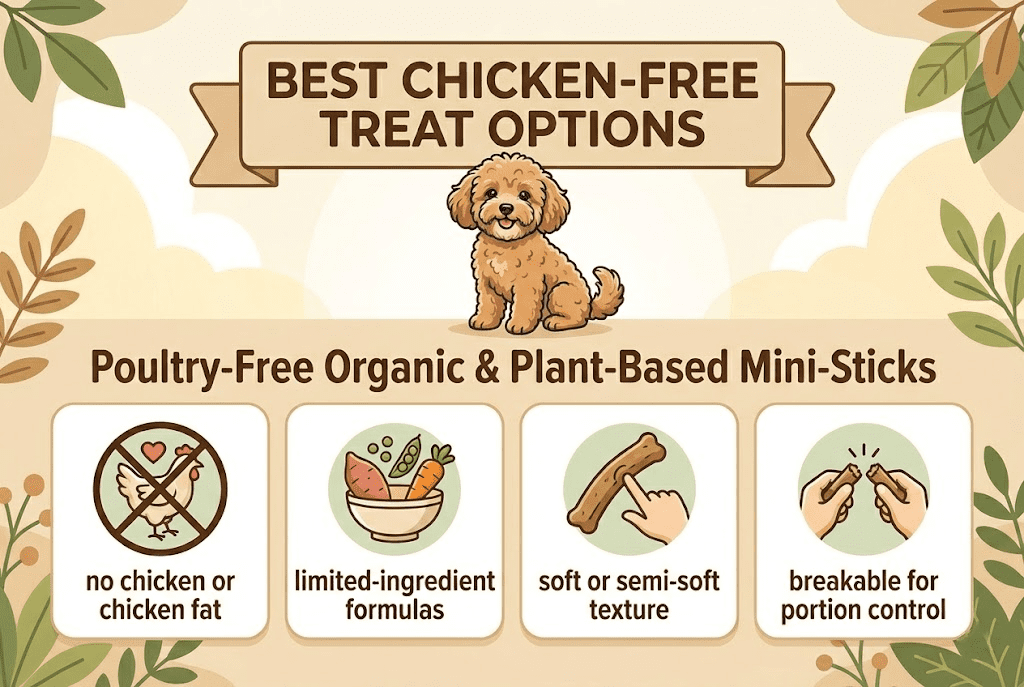
Look for chicken-free treats that offer the following:
- no chicken, chicken fat, or poultry by-products
- limited-ingredient formulas
- soft or semi-soft texture
- breakable format for portion control
- clearly labeled protein and fat sources
Suggested category: Poultry-Free Natural & Plant-Based Mini-Sticks
➡️ Explore Chicken-Free Dog Treat Options
FAQs
Is turkey safe for dogs with chicken allergies?
Many dogs can tolerate turkey, but not all. Dogs with broader poultry sensitivities may still react, so ingredient trials should be done carefully.
Can chicken fat trigger allergies?
It can. Although highly purified fats may contain less protein, residual protein contamination is still a concern for some sensitive dogs.
How long does it take to confirm a chicken allergy?
A strict elimination period of about 6 to 8 weeks is commonly recommended when evaluating food-related reactions under veterinary guidance.[3]
Are plant-based treats safe for dogs?
They can be, especially when used as treats rather than complete diets and when the ingredient list is simple, well-tolerated, and appropriate for the individual dog.[2]
Final Takeaway
For dogs with chicken allergies, the safest treats are the ones with the fewest surprises. Clear labeling, limited ingredients, soft texture, and complete avoidance of chicken and vague poultry derivatives can make a meaningful difference in long-term allergy control. For dogs that cannot tolerate turkey, poultry-free plant-based treats may offer a cleaner alternative for training and daily rewards.
Read More Dog Health Tips
- Hypoallergenic dog treats blog
- A limited-ingredient dog treats guide
- A soft dog treats for senior dogs article
- A food sensitivity signs in dogs article
References
[1] Mueller, R. S., Olivry, T., & Prélaud, P. (2016). Common food allergens in dogs and cats. BMC Veterinary Research, 12, 9.
[2] Knight, A., Leitsberger, M., & Light, N. (2021). Vegan versus meat-based dog food: Guardian-reported health outcomes. Animal Welfare, 30(3), 285–300.
[3] Bizikova, P., et al. (2015). Food allergy testing in dogs: Limitations and recommendations. Veterinary Dermatology, 26(5), 431–e101.
[4] Case, L. P., Daristotle, L., Hayek, M. G., & Raasch, M. F. (2011). Canine and Feline Nutrition (3rd ed.). Mosby.
