
Can Dogs Eat Blueberries? A Vet-Safe Guide to Portions, Pesticides, and Calories

Quick Answer
Yes. Plain, washed blueberries are generally safe for most dogs in small amounts and can be a low-calorie treat option. Cats can also eat a small amount occasionally, but fruit is not nutritionally necessary for them. Start small, wash berries well, keep all treats under 10% of daily calories, and avoid blueberry products made with xylitol, chocolate, raisins, or added sugar.[1][2][3][4][5][6]
By Superfood Science Writing Team | Reviewed by Dr. Kelly Hood, DVM | Last Updated: 04/09/2026
Superfood Science has produced organic and natural functional foods for humans and pets for over 20 years, specializing in clean-label formulations and evidence-based nutrition.
Key Takeaways
- Plain blueberries are usually safe for dogs in moderation.[1][2]
- Wash blueberries thoroughly under running water before serving. Do not use soap or produce wash.[6]
- Blueberries are best viewed as a smart treat swap, not a therapy or health protocol.[1][2]
- Even a small handful can matter for toy breeds because calories add up quickly.[4][10][11]
- Avoid muffins, snack mixes, yogurt products, and anything containing xylitol, chocolate, raisins, or grapes.[5][12]
Why Dog Parents Ask About Blueberries
Blueberries are one of the few human snacks that can often work well for dogs when used the right way. They are small, easy to serve, and lower in calories than many commercial snack foods.[1][2][10]
The bigger issue is not whether blueberries are “superfoods” for pets. The more practical question is whether they are a safer, lower-calorie reward than richer treats, and whether owners are serving them in a clean, portion-conscious way.[1][2][4]
Are Blueberries Good for Dogs?
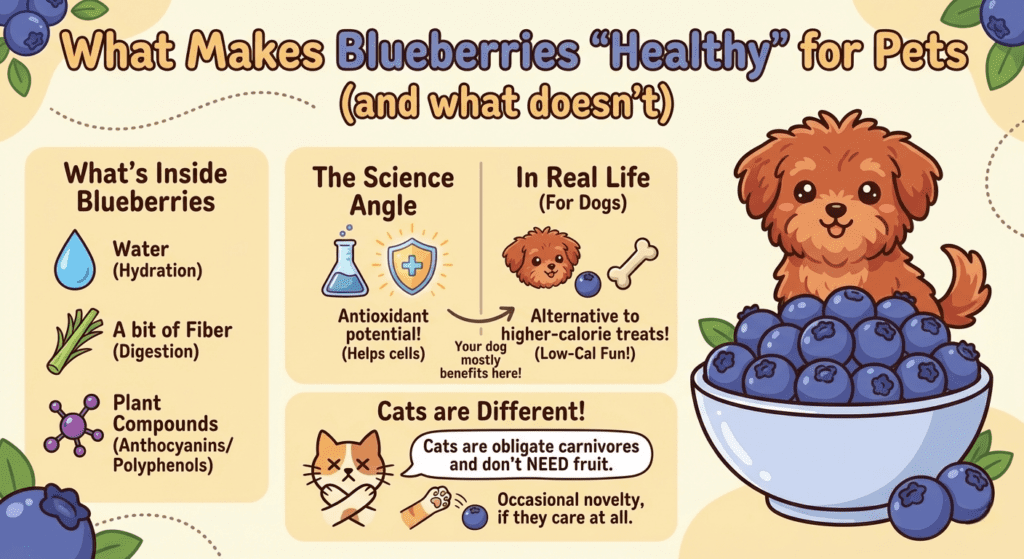
Blueberries contain water, a small amount of fiber, and naturally occurring plant compounds such as polyphenols and anthocyanins.[1][2] That sounds impressive, but for pet owners, the most meaningful advantage is usually much simpler: blueberries can be a better occasional treat choice than high-fat table scraps or oversized biscuits.[1][2][4]
That does not mean blueberries are a cure, a detox, or a proven treatment for any health condition. A realistic, evidence-informed way to think about them is this: when fed in small amounts, blueberries may fit into a balanced routine as a fresh-food treat with a relatively low-calorie impact.[1][2][4]
Can Cats Eat Blueberries Too?
Yes, cats can usually eat a very small amount of plain blueberries safely. However, cats are obligate carnivores, so blueberries are not a necessary part of feline nutrition.[3][5] If a cat shows interest, treat blueberries as an occasional novelty rather than a functional food.
Why Washing Blueberries Matters
Many owners focus on whether blueberries are safe but overlook a more important issue: preparation.
Blueberries should be rinsed under plain running water and gently rubbed or rolled with your fingers before serving. The FDA advises washing fresh produce with water only, not soap or commercial produce wash.[6]
This matters because fresh produce can carry soil, microbes, and pesticide residues. Consumer residue screening groups such as the Environmental Working Group have repeatedly listed conventional blueberries among produce items with relatively higher residue concerns, although that does not mean pet owners need to panic or avoid them completely.[7][8]
The practical takeaway is simple. Wash blueberries well every time. If your dog eats blueberries often and organic fits your budget, that is a reasonable option for lowering routine residue exposure.[6][7][8]
Blueberries, Fiber, and the Gut Microbiome
Dogs do not need fruit sugar, but blueberries do provide a small amount of fermentable fiber. That fiber may act as a tiny food source for beneficial gut microbes.[8][9]
This does not mean blueberries can “fix” your dog’s microbiome. It means a few berries may be a smarter fresh treat than a processed snack, while also adding a little variety to the diet.[8][9]
Calories: Why Portion Size Matters More Than Most Owners Think
One of the easiest mistakes is assuming fruit calories do not count. They do.
Common nutrition databases estimate that 10 blueberries contain about 8 calories.[10] That sounds minimal, but it becomes more meaningful in a very small dog. Pet calorie guidance generally recommends keeping treats under 10% of daily calories.[4][11]
For example, a toy dog with daily calorie needs around 180 to 210 calories can use up a meaningful share of its treat allowance with only a few berries.[4][10][11] That is why blueberry portions should be measured by size and calorie budget, not by what feels small to a human.
How Many Blueberries Can a Dog Eat?
A good rule is to start with 1 to 2 blueberries and see how your dog responds.[1][2] After that, keep the serving small and treat-like.
General Portion Guide
These are practical starting ranges, not strict medical prescriptions:
- Extra-small dogs: 1 to 2 blueberries
- Small dogs: 2 to 4 blueberries
- Medium dogs: 4 to 6 blueberries
- Large dogs: 6 to 10 blueberries
If your dog is on a weight-control plan, has a sensitive stomach, or gets frequent treats during training, stay on the lower end.[2][4][11]
Which Type of Blueberries Is Safest for Dogs?
Fresh Blueberries
Fresh blueberries are usually the easiest option. Wash them well and serve in small amounts.[1][2][6]
Frozen Blueberries
Plain frozen blueberries are generally fine too. For small dogs, senior dogs, or dogs with sensitive teeth, thawing or lightly mashing them may make them easier to eat.[1][2]
Dried Blueberries
Dried blueberries are usually not the best choice because they are more concentrated, easier to overfeed, and may contain added sugar or other ingredients.[3]
Blueberry Muffins, Yogurt Snacks, and Trail Mixes
Avoid these. Human blueberry foods may contain xylitol, chocolate, raisins, grapes, caffeine, alcohol, or excess sugar, all of which can be unsafe for pets.[5][12]
The Safest Way to Feed Blueberries
1. Wash Them First
Rinse blueberries under running water. Pat dry. Do not use soap.[6]
2. Adjust the Size for Tiny Dogs
For toy breeds or dogs that gulp food, cut or lightly smash berries to reduce choking risk.[1]
3. Start Small
Offer 1 to 2 berries the first time and monitor stool, appetite, and comfort over the next 24 hours.[1][2][3]
4. Count Them as Treat Calories
Blueberries still count toward the daily treat budget. Keep total treats under 10% of daily calories.[4][11]
Clinical Note for Dog Parents
Blueberries can be a useful fresh-food treat option, especially when owners want something lower in calories than biscuits or table scraps. They are not a substitute for a balanced diet, medical nutrition plan, or veterinary care. For overweight dogs, dogs with gastrointestinal sensitivity, or dogs on prescription diets, portion control matters more than the “superfood” label.[1][2][4][11]
When to Call a Vet
Contact your veterinarian promptly if your pet develops any of the following after eating blueberries or blueberry-containing foods:
- Repeated vomiting or diarrhea
- Refusal to drink water
- Marked lethargy
- Persistent gagging, coughing, or choking
- Trouble breathing
- Facial swelling or hives
- Possible ingestion of xylitol, chocolate, raisins, grapes, caffeine, or alcohol[1][2][3][5][12]
Blueberries vs Training Treats
Blueberries are great for occasional variety, hydration, and a lighter reward option.[1][2] But for high-repetition training sessions, many owners do better with measured, known-calorie treats that are easy to portion consistently.[4][11]
A practical approach is to use blueberries as a fresh-food bonus and rely on portion-controlled training treats when you need many repetitions in one day.
FAQ
Can dogs eat blueberries every day?
They can eat a small amount regularly if blueberries fit within the daily treat budget, but they should still be treated as an occasional add-on, not a dietary staple.[1][2][4]
Can puppies eat blueberries?
Usually yes, in very small amounts. Start with one berry and monitor the stool, as puppies can have more sensitive digestive systems.[1][2]
Can diabetic dogs eat blueberries?
Possibly, but portion control matters. Because sugar and total calorie management can be important in diabetic dogs, it is best to ask your veterinarian how fruit fits into your dog’s overall plan.
Are frozen blueberries safe for dogs?
Yes, plain frozen blueberries are generally safe. Thaw or mash them for very small dogs or dogs with sensitive teeth.[1][2]
Should I buy organic blueberries for my dog?
Washing is the first priority. If your dog eats blueberries often and you want to reduce routine pesticide residue exposure, organic blueberries are a reasonable option when affordable.[6][7][8]
Can cats eat blueberries?
Yes, cats can usually have a small amount safely, but fruit is not nutritionally necessary for them.[3][5]
Final Takeaway
Blueberries are a simple, low-calorie treat option for many dogs when served plain, washed, and in small portions. The real keys are preparation and portion control: wash thoroughly, start with a few berries, and remember that even healthy treats still count toward your dog’s daily calories.[1][2][4][6][10][11]
Explore More Dog Health Tips
- Best low-calorie dog treats for weight management
- Homemade vs. store-bought organic dog treats: which is better?
- Best soft organic dog treats for senior dogs and gentle chewing
- Safe organic dog treats for puppies: what to look for
References
[1] American Kennel Club. Can Dogs Eat Blueberries? Updated 2024.
[2] PetMD. Can Dogs Eat Blueberries? Benefits, Risks, and Feeding Tips. Updated 2025.
[3] PetMD. Can Cats Eat Blueberries? Updated 2025.
[4] WSAVA. Feeding treats to pets: treats should be less than 10% of daily calories. 2025.
[5] ASPCA Animal Poison Control. People foods to avoid feeding your pets.
[6] U.S. Food and Drug Administration. 7 Tips for Cleaning Fruits and Vegetables. 2021.
[7] Environmental Working Group. 2025 Dirty Dozen list. 2025.
[8] Environmental Working Group. Blueberries pesticide discussion based on USDA testing. 2024.
[9] Pilla R, Suchodolski JS. The gut microbiome of dogs and cats, and the influence of diet. 2021.
[10] USDA-based nutrition database entry for blueberries; approximate calories in 10 blueberries.
[11] PetMD. How many calories does a dog need? 2023.
[12] ASPCA Animal Poison Control and related veterinary guidance on xylitol and unsafe human foods for pets.
