
Can Dogs Eat Seaweed? Safe Types, Benefits, Risks, and How Much to Feed

Quick Answer
Yes, dogs can eat certain seaweeds safely when they are food-grade, plain, and fed in small amounts. Seaweed and kelp are used in some dog treats for natural flavor and trace minerals, and one dog-specific clinical study found that Ascophyllum nodosum supported oral health markers over time.[1–4] The safest choice is a tested pet product or a small amount of plain, unseasoned seaweed. Avoid wild seaweed from beaches, heavily salted snacks, and concentrated iodine sources unless your veterinarian advises otherwise.[1,2,10–13]
By Superfood Science Writing Team | Reviewed by Dr. Kelly Hood, DVM | Last Updated: 04/13/2026 Superfood Science has produced organic and natural functional foods for humans and pets for over 20 years, specializing in clean-label formulations and evidence-based nutrition.
Key Takeaways
- Dogs can eat some seaweed safely, but it should be plain, food-grade, and offered in moderation.
- Wild beach seaweed is not safe because it may contain salt, contaminants, or materials that can swell and increase the risk of digestive blockage.[1,10]
- Kelp and other seaweeds may add trace minerals and natural savory flavor, but iodine intake should stay moderate.[1,5,11–13]
- The strongest dog-specific research on seaweed indicates that Ascophyllum nodosum supports oral health in a controlled study.[3,4]
- If your dog has thyroid disease, is taking thyroid medication, or is on a strict elimination diet trial, check with your veterinarian before adding seaweed regularly.[8,9,11–13]
Why Dog Parents Are Interested in Seaweed and Kelp
Seaweed is gaining attention in dog nutrition because it can be both simple and functional. In small amounts, certain seaweeds may contribute natural flavor, trace minerals, and unique fibers. That makes seaweed especially appealing in treats designed to stay simple and avoid long ingredient lists.[1,2,6]
For many dog parents, kelp is most interesting not because it is trendy, but because it can fit into a more controlled treat strategy. A small amount of kelp may help make a treat more savory without adding another animal protein, which can matter for dogs with ingredient sensitivities or for households trying to keep rewards straightforward and consistent.[1,2,7]
Is Seaweed Good for Dogs?
Seaweed can be a reasonable ingredient for dogs when it is used properly. Potential advantages include:
Natural savory taste
Seaweed can make treats more appealing without relying heavily on meat-based ingredients.[1,2]
Trace minerals
Some seaweeds, including kelp, naturally contain iodine and other trace minerals. These nutrients can be useful in the right amount, but more is not better.[1,5,11–13]
Oral health potential
Among the proposed benefits, oral health has the clearest dog-specific support. In a double-blind, randomized, placebo-controlled study, dogs given edible treats containing Ascophyllum nodosum showed improvements in plaque, calculus, and related oral health indices over time.[3,4]
That does not mean every seaweed treat will clean teeth. It does mean that a specific seaweed, used in a specific way, has shown meaningful potential in dogs.[3,4]
Seaweed and Plant-Based Dog Treats for Sensitive Dogs
Many dogs do not react to “treats” in general. They react to particular ingredients, especially certain proteins. Veterinary dermatology resources commonly identify proteins such as beef, chicken, dairy, and eggs among ingredients that may trigger food reactions in some dogs.[7–9]
That is one reason some dog parents choose plant-based dog treats. A plant-based formula can help reduce exposure to common animal proteins while still giving the dog a rewarding snack. This does not guarantee a treat will work for every dog, but it can be a practical starting point when the goal is to simplify the ingredient list.[7–9]
Kelp can fit naturally into this strategy because it may add taste and trace minerals without introducing another animal protein. For dogs doing best on simple formulas, that can be a useful advantage.[1,2]
What Types of Seaweed Can Dogs Eat?
The safest options are the simplest ones.
Usually safer choices
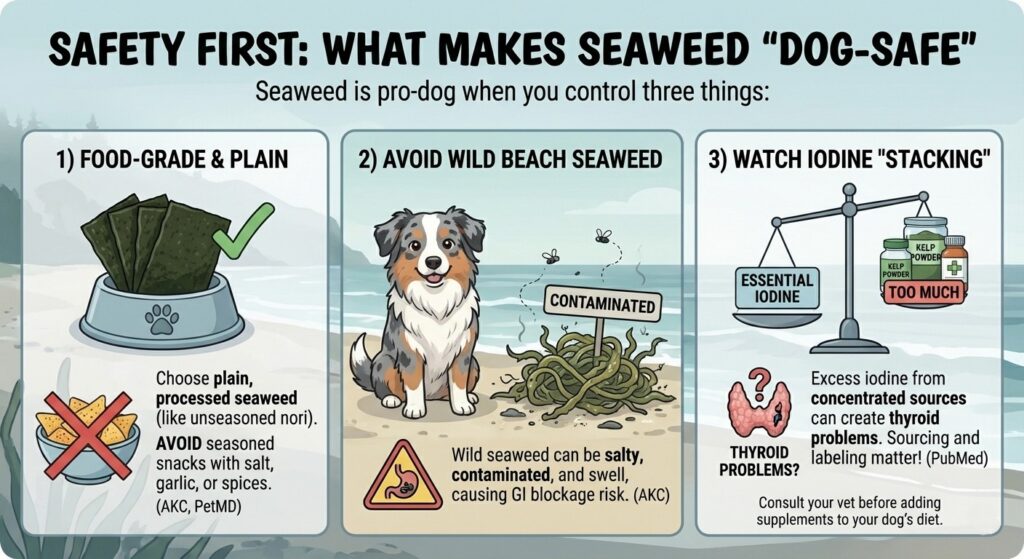
Plain, food-grade, unseasoned seaweed products are generally the better option. Examples may include plain nori or commercial dog treats made with tested seaweed ingredients.[1,2]
Choices to avoid
Avoid seaweed that is:
- Collected from the beach
- Heavily salted
- Seasoned with garlic, onion, spices, or oils
- Used in large amounts as a powder or concentrated supplement without veterinary guidance[1,2,10–13]
Wild seaweed can carry excess salt, contaminants, or foreign material. It may also swell after ingestion, which increases concern for digestive upset or obstruction when a dog eats too much.[1,10]
Is Kelp Safe for Dogs?
Kelp can be safe for dogs in moderate amounts, especially when it appears as one ingredient in a finished pet treat rather than as a large scoop of powder added at home. The biggest reason to be cautious is iodine.
Iodine is essential for normal thyroid function, but excessive intake can cause problems. Researchers and regulators note that seaweed iodine levels can vary widely, which means sourcing, testing, and label clarity matter.[11–13]
In dogs, unusually high-iodine diets have been associated with thyroid impairment in published reports.[5,11] That is why it makes sense to be more conservative with kelp powders, multiple iodine-containing supplements, or stacking several kelp-based products together.[11–13]
How Much Seaweed Can Dogs Have?
For most families, the best approach is moderation.
If seaweed is included in a finished dog treat and is not the first main ingredient, the amount is often relatively small. That is generally a lower-risk way to use seaweed than adding concentrated kelp powder to meals.
If you are offering plain seaweed such as nori, think in tiny amounts rather than full sheets. If you are using kelp powder, be much more cautious, as its iodine content can be more concentrated and variable.[12,13]
As with any treat, keep treats to no more than 10% of daily calories and introduce new foods slowly.[1,2]
Safety Checklist Before Giving Seaweed to Your Dog
Choose seaweed that is:
- Plain
- Food-grade
- Unseasoned
- Sourced from a trusted brand
- Appropriate for dogs or used in a very small amount[1,2,12,13]
Avoid seaweed if your dog:
- Has a thyroid disorder
- Takes thyroid medication
- Is already getting iodine from supplements
- Is in the middle of a veterinary elimination diet trial unless your veterinarian approves it[8,9,11–13]
Clinical Note for Dogs With Food Sensitivities or Thyroid Concerns
If your dog has chronic itching, recurring ear issues, loose stool, or a suspected food reaction, a simple ingredient list can be helpful, but it is not a diagnosis. “Hypoallergenic” does not mean a product will work for every dog.[8,9]
Also, if your veterinarian has started a true elimination diet trial, even one extra treat can interfere with the results. During that period, stick closely to the veterinary plan.[8,9]
For dogs with thyroid disease or those taking multiple supplements, ask your veterinarian before feeding kelp or seaweed regularly, as iodine exposure can add up.[11–13]
Best Way to Choose a Seaweed Dog Treat
Look for a product with:
- A short, readable ingredient list
- Clear sourcing or quality testing
- No heavy seasoning or added garlic/onion
- Appropriate serving guidance
- A formula that fits your dog’s broader diet goals
For sensitive dogs, a plant-based treat with kelp may be a practical option when the goal is to avoid common animal proteins while still offering a treat that smells and tastes satisfying.
Frequently Asked Questions
Can dogs eat seaweed snacks made for people?
Sometimes, but only if they are plain and unseasoned. Many seaweed snacks made for humans contain salt, oils, or seasonings that are not suitable for dogs.[1,2]
Can dogs eat kelp every day?
Not always. Small amounts in a finished pet treat may be reasonable, but daily use of kelp powders or multiple iodine-containing products can be too much for some dogs.[11–13]
Can puppies eat seaweed?
Puppies are more sensitive to diet imbalances, so it is best to be cautious. Avoid concentrated kelp supplements unless your veterinarian specifically recommends them.[5,11]
Is beach seaweed safe for dogs?
No. Wild beach seaweed can contain salt, contaminants, and material that may swell in the stomach or intestines.[1,10]
Does seaweed help dog teeth?
A specific brown seaweed, Ascophyllum nodosum, has shown oral health benefits in a controlled study in dogs, including improvements in plaque and calculus measures. That evidence is promising, but it does not apply equally to every seaweed product.[3,4]
Final Verdict
Yes, dogs can eat certain seaweeds safely when the product is plain, food-grade, and used in moderation. The biggest benefits are practical ones: natural savory flavor, trace minerals, and in some cases, oral health support backed by dog-specific research.[1–4]
The smartest approach is to choose a tested product, skip wild beach seaweed, introduce slowly, and stay mindful of iodine exposure. For dogs with food sensitivities, a simple plant-based treat with kelp may be a useful option, but dogs with thyroid concerns or dogs on elimination diets should get veterinary guidance first.[7–13]
When to Call Your Veterinarian
Contact your veterinarian if your dog:
- Vomits or has diarrhea after eating seaweed
- Eats a large amount of beach seaweed
- Has known thyroid disease
- Is on a prescription elimination diet
- Shows ongoing skin, ear, or digestive symptoms that may point to a food reaction
Explore More Dog Health Tips
- Best Hypoallergenic Dog Treats for Sensitive Stomachs
- How to Choose Dog Treats for Dogs With Food Allergies
- Can Dogs Eat Blueberries?
- Are Plant-Based Dog Treats Good for Dogs?
References
[1] American Kennel Club. (2025, March 4). Can dogs eat seaweed?
[2] PetMD. (2023, December 4). Can dogs eat seaweed?
[3] Gawor, J., Jank, M., Jodkowska, K., Klim, E., & Svensson, U. K. (2018). Effects of edible treats containing Ascophyllum nodosum on the oral health of dogs: A double-blind, randomized, placebo-controlled single-center study. Frontiers in Veterinary Science.
[4] Frontiers in Veterinary Science. (2018). Full-text version of the above trial.
[5] Castillo, V. A., et al. (2001). Commercial diet-induced hypothyroidism due to high iodine. The Veterinary Quarterly.
[6] Srinivas, K. Y., et al. (2024). Study on red seaweeds and gut health indices in adult dogs. Journal of Applied Phycology.
[7] University of Tennessee College of Veterinary Medicine, Dermatology Service. (2025). Food allergies (client handout).
[8] Canadian Academy of Veterinary Dermatology. (n.d.). Food allergies and elimination diets in dogs.
[9] VCA Hospitals. (n.d.). Implementing an elimination-challenge diet trial in dogs.
[10] American Kennel Club. (2024, January 11). What if my dog eats sand? Discussion includes risk context relevant to swallowed beach material and obstruction concerns.
[11] Castillo, V. A., et al. (2001). Changes in thyroid function in puppies fed a high-iodine commercial diet. The Veterinary Journal.
[12] European Food Safety Authority. (2023). Dietary exposure to heavy metals and iodine intake via consumption of seaweed and halophytes. EFSA Journal.
[13] Cherry, P., et al. (2019). Risks and benefits of consuming edible seaweeds. Nutrition Reviews.
