

Small Changes. Big Difference for Your Dog’s Well-Being
At Superfood Science, we believe the best dog wellness comes from consistent, doable habits—not scary headlines or one-size-fits-all advice. That’s why our team is committed to publishing clear, practical dog health tips you can actually use in daily life, from smarter treat choices to gentle routine upgrades that support long-term well-being. Just as importantly, every article is reviewed by a veterinarian to help ensure our guidance is accurate, balanced, and grounded in what’s safe and reasonable for real dogs, not trends.
Our goal is simple: give you trustworthy information you can feel good about, so the small changes you make today can add up to a happier, healthier life for your dog.
Have a Dog Health Question? Reach Out
We’d love to hear from you. If you have a dog wellness question or questions about Superfood Science pet products, send them our way. Whether you’re wondering which product is the best fit for your dog, how to use it, what functional ingredients are best for your pets, serving tips, or how to build a simple daily routine, your message helps us support you better. We can’t diagnose or treat medical conditions online. Still, we can explain our products clearly and use your questions to shape future veterinarian-reviewed articles on the topics pet parents care about most.
Dog Health Tips

Quick Answer Plant-based dog treats can support dental health when they use clean ingredients and a safe texture. In general, the best options are soft or semi-soft, breakable treats made with ingredients such as kelp, pea protein, chia, and flax. These ingredients may help support oral hygiene by promoting a cleaner oral environment and reducing…

Quick Answer The safest puppy treats in 2026 are soft or semi-soft, easy to break into tiny pieces, and made with simple, recognizable ingredients. For most puppies, the best options are limited-ingredient treats with gentle proteins or carefully formulated plant-based ingredients used in small amounts for training, bonding, and reward-based learning. Trust Signal By Superfood…

Quick Answer Dogs with chicken allergies do best with treats that fully exclude chicken and other vague poultry ingredients, use limited and clearly labeled formulas, and rely on tolerated alternatives such as turkey or plant-based ingredients. The best options in 2026 emphasize simple ingredient panels, digestibility, and soft, breakable textures that make allergy management easier…

Quick Summary The best low-calorie dog treats for weight management are small, soft or semi-soft, breakable treats made with clean ingredients and clear calorie information. For most dogs, treats should stay at about 10% or less of total daily calories, and weight control works best when treat choices, meal portions, and activity are managed together.[2][4]…

Quick Answer Hypoallergenic dog treats are designed to reduce the risk of triggering food-related reactions by avoiding common allergens such as chicken, beef, dairy, wheat, and soy. The best hypoallergenic dog treats in 2026 typically feature limited ingredients, simple formulas, clearly named protein sources, and soft, easy-to-break textures that are well-suited for dogs with food…

Quick Answer Plant-based dog treats can be healthy and practical for many dogs, especially those with poultry allergies, multi-protein sensitivities, or a need for lower-fat snack options, when they are nutritionally thoughtful, limited-ingredient, and used as treats rather than complete diets. In 2026, the best plant-based dog treats emphasize digestibility, ingredient transparency, and clean sourcing,…

Quick Answer High-protein organic dog treats can support muscle maintenance, recovery, and sustained energy in active dogs by using clean, digestible proteins such as organic turkey or chicken. The best options in 2026 use soft or semi-soft formats, avoid excess fillers and artificial additives, and are fed as a supplement to a balanced diet rather…

Quick Answer Turkey is often the better choice for dogs that need gentler digestion, lower-fat treats, or simpler daily rewards, while chicken is often the better choice for picky eaters and training situations where a stronger aroma and higher palatability matter. Both are high-quality proteins for many dogs. However, chicken is also one of the…

Limited-Ingredient Organic Dog Treats: Why They’re Best for Sensitive Dogs (2026 Vet-Reviewed Guide)
Quick Answer Limited-ingredient organic dog treats offer cleaner, simpler nutrition for dogs with food sensitivities, digestive issues, or skin irritation. By minimizing the number of ingredients and avoiding synthetic additives, these treats reduce the overall allergen load while supporting more predictable digestion. Organic turkey, organic chicken, and plant-based formulas remain top choices for sensitive dogs…
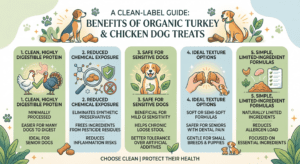
Quick Answer Organic dog treats reduce exposure to pesticides and synthetic additives, offering cleaner nutrition for sensitive dogs. Non-organic treats can still be healthy, depending on their ingredients. The primary distinction is not overall nutrition, but ingredient purity and the potential for sensitivity-related reactions. In 2026, one of the best options is a soft or…