
Plant-Based Dog Treats for Dental Health: How Kelp, Pea Protein, Chia, and Flax Support Oral Wellness in 2026

Quick Answer
Plant-based dog treats can support dental health when they use clean ingredients and a safe texture. In general, the best options are soft or semi-soft, breakable treats made with ingredients such as kelp, pea protein, chia, and flax. These ingredients may help support oral hygiene by promoting a cleaner oral environment and reducing reliance on ultra-hard chews that may increase the risk of tooth fractures.
By Superfood Science Writing Team | Reviewed by Dr. Kelly Hood, DVM | Last Updated: 04/02/2026
Superfood Science has produced organic and natural functional foods for humans and pets for over 20 years, specializing in clean-label formulations and evidence-based nutrition.
Key Takeaways
- The safest dental treats are not always the hardest treats.
- Soft or semi-soft, breakable treats may help support oral wellness with less fracture risk.
- Kelp may help support plaque and oral microbial balance.[1][2]
- Chia and flax provide fiber and plant fats that may help support normal gum and tissue health.[4][5]
- Pea protein can help create a structured treat without the extreme hardness of some dental chews.[3]
- Dental treats should support, not replace, brushing and professional veterinary dental care.
Why Dental Health Matters in Dogs
Dental disease remains one of the most common chronic health issues in dogs. Plaque and tartar can build up over time, contributing to bad breath, gum irritation, and discomfort. Many pet owners look for dental treats as a daily support tool, but not every chew is equally safe or helpful.
Why Hard Dental Chews Are Not Always Better
Many commercial dental treats rely on hardness for mechanical scraping. That idea sounds simple, but veterinary dentistry has long warned that very hard chews may increase the risk of tooth injury. In particular, slab fractures of the maxillary fourth premolar are a known concern in dogs that chew hard items.[6]
A practical rule is this: if you cannot indent a chew with your fingernail, it may be too hard for routine use. This matters even more for senior dogs, aggressive chewers, and dogs with existing dental wear.
How Plant-Based Ingredients May Support Oral Wellness
Plant-based dental treats work differently from ultra-hard chews. Instead of depending mainly on forceful abrasion, they can help support the oral environment through ingredient quality, texture, and daily usability.
Kelp
Kelp is a brown seaweed that contains minerals, polyphenols, and other bioactive compounds. Research suggests that certain seaweed ingredients may help reduce plaque accumulation and support a healthier oral microbial balance.[1][2]
Kelp may also help support saliva activity, which is important because saliva naturally helps cleanse the mouth.
Pea Protein
Pea protein helps create structure in plant-based dog treats without making the treat excessively hard. It may provide mild texture for chewing while helping avoid some of the heavy starch load found in certain conventional chews.[3]
This makes pea protein useful in treats designed for frequent, portion-controlled use.
Chia Seeds
Chia seeds provide soluble fiber and plant polyphenols. These compounds may help support a healthier oral environment by helping reduce biofilm-supporting residue and by supporting normal inflammatory balance in oral tissues.[4]
Chia also forms a gel-like texture when hydrated, which may help support ingredient functionality in softer treats.
Flaxseed
Flaxseed contains alpha-linolenic acid, a plant-based omega-3 fat, along with lignans and fiber. These compounds may help support gum tissue health and normal inflammatory balance.[5]
In a dental-support formula, flax contributes both nutritional value and a softer, safer texture profile.
Texture Matters More Than Hardness
For many dogs, the ideal dental-support treat is not rock-hard. A soft or semi-soft treat may be a smarter choice because it:
- reduces fracture risk
- encourages gentler chewing
- allows regular use
- works well for puppies, adult dogs, and seniors
- supports interaction between saliva and functional ingredients
This is especially relevant for dogs that need a daily reward treat that also aligns with oral wellness goals.
How to Choose a Dental-Safe Plant-Based Dog Treat
1. Check the hardness
If the treat feels harder than you can indent with a fingernail, it may be too hard.
2. Read the ingredient list
Look for functional ingredients such as kelp, pea protein, chia, and flax rather than sugary fillers or unnecessary syrups.
3. Prioritize clean-label formulas
Choose treats with a short, understandable ingredient panel and a texture that supports safe chewing.
4. Use treats as one part of a dental routine
Even the best dental treat does not replace tooth brushing, veterinary dental exams, or professional cleanings when needed.
Best Use Cases for Plant-Based Dental Treats
Plant-based dental treats may be especially useful for:
- dogs that do better with softer treats
- pet owners looking to avoid ultra-hard chews
- dogs already eating plant-based or limited-ingredient snacks
- senior dogs that need gentler chewing options
- daily reward routines where portion control matters
Product Spotlight: Plant-Based Mini Sticks for Oral Wellness
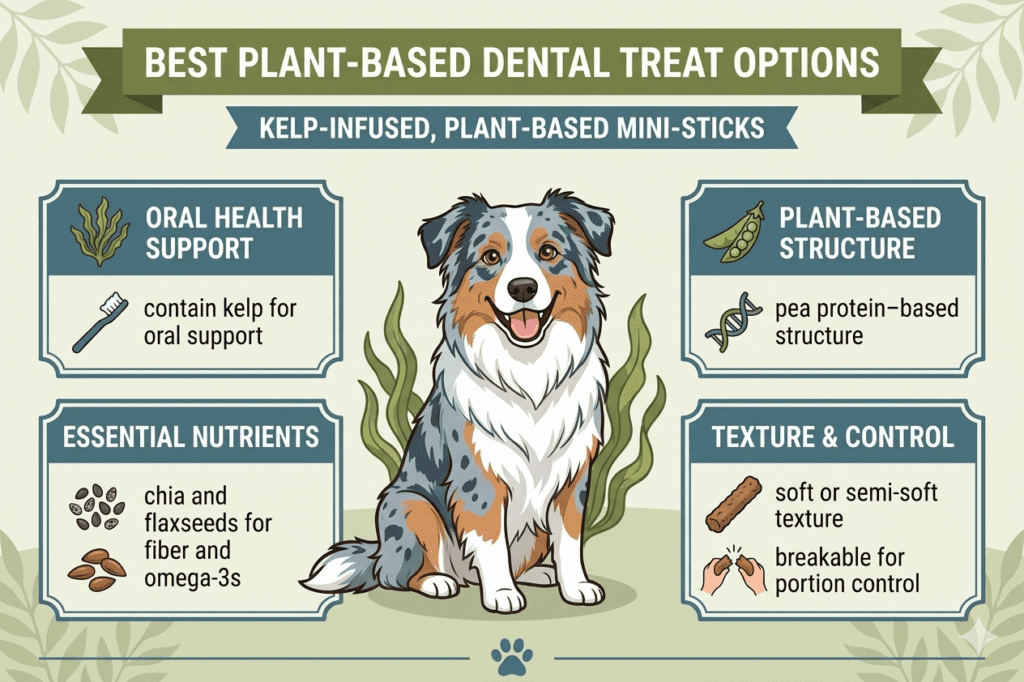
A well-designed plant-based mini stick may offer several advantages for dental-conscious pet owners. Look for a formula that includes:
- kelp for oral support
- pea protein for gentle structure
- chia and flax for fiber and plant-based omega-3 support
- a soft or semi-soft texture
- easy breakability for portion control
Explore Plant-Based Dental Dog Treats
Frequently Asked Questions
Can plant-based dog treats really help support dental health?
Yes. They may help support a cleaner oral environment, especially when they include functional ingredients and a safe chew texture. However, they should be viewed as support tools, not replacements for brushing.
Is kelp safe for dogs?
Kelp can be safe in controlled amounts. As with any seaweed ingredient, formulation quality matters because iodine levels should be appropriate for routine use.
Are soft treats bad for dogs’ teeth?
Not necessarily. In many cases, soft or semi-soft treats may be safer than ultra-hard chews because they lower the risk of tooth fractures while still supporting daily treat compliance.
Do dental treats replace brushing?
No. Brushing remains the gold standard for plaque control. Dental treats are best used as part of a broader oral care plan.
Conclusion
The best plant-based dog treats for dental health do not depend on extreme hardness. Instead, they combine safe texture with ingredients that may support a cleaner oral environment and more consistent daily use. Kelp, pea protein, chia, and flax each offer distinct advantages to a dental-support formula, especially when used in a soft or semi-soft treat designed for routine feeding.
For many dogs, a gentler and ingredient-focused approach may be the smarter way to support oral wellness in 2026.
Explore More Dog Health Tips
- hypoallergenic dog treats
- plant-based dog treats for sensitive dogs
- low-calorie dog treats for weight management
- organic puppy treats guide
- soft dog treats for senior dogs
References
[1] Shinada, K., et al. (2004). Effects of kelp (kombu) intake on oral plaque accumulation. Journal of Dental Research, 83(1), 58–62.
[2] Zaporozhets, T. S., et al. (2014). Brown seaweed polysaccharides and their effect on oral microbial ecology. Marine Drugs, 12(1), 29–48.
[3] Zentek, J., et al. (2013). Dietary carbohydrates and glycemic response in dogs. Journal of Animal Physiology and Animal Nutrition, 97(6), 1131–1140.
[4] Reyes-Caudillo, E., Tecante, A., & Valdivia-López, M. A. (2008). Dietary fiber content and antioxidant activity of chia seeds. Food Chemistry, 107(2), 656–663.
[5] Calder, P. C. (2015). Omega-3 fatty acids and inflammatory processes. Biochimica et Biophysica Acta, 1851(4), 469–484.
[6] Questel, B. J., et al. (2017). Fracture of the maxillary fourth premolar tooth in dogs. Journal of the American Veterinary Medical Association.
