
Grain-Free Organic Dog Treats in 2026: Are They Better? A Vet-Reviewed, Evidence-Based Guide
Quick Answer
Grain-free organic dog treats can be an excellent option for dogs with confirmed grain sensitivities, digestive discomfort, or skin irritation, but they are not automatically healthier for every dog. In 2026, the safest choice is often a soft or semi-soft, breakable organic mini-stick made with clean proteins such as turkey or chicken, or a natural plant-based formula for allergy-prone dogs. Grain-free matters only if your dog has a true intolerance.
Trust Signal
By Superfood Science Writing Team | Reviewed by Dr. Kelly Hood, DVM | Last Updated: 3/18/2026 | Superfood Science has produced organic and natural functional foods for humans and pets for over 20 years, specializing in clean-label formulations and evidence-based nutrition.
Key Takeaways
- Grain-free treats help only dogs with confirmed grain sensitivity, not all dogs.
- Organic ingredients may reduce pesticide exposure and eliminate artificial preservatives.[2]
- Highly digestible proteins, such as organic turkey and chicken, may support digestive comfort.[5]
- Natural plant-based treats may be helpful for dogs with poultry allergies or multi-protein sensitivities.[3]
- Soft, breakable mini-sticks are often a better option for small breeds, seniors, and dogs with dental concerns.[8]
- Grain-free treats should never replace proper veterinary diagnosis of allergies or sensitivities.

Introduction
Grain-free diets became popular years ago due to concerns about digestive sensitivity, but veterinary research has clarified when grain-free diets are appropriate and when they are not. In most dogs, grains like rice, oats, or barley do not cause allergies. In fact, protein sources are among the most common allergens.[1]
That said, some dogs do seem to do better with grain-free treats, especially those with chronic soft stool, itching, or gastrointestinal upset linked to specific carbohydrate sources. When grain-free formulas are combined with organic certification and soft textures, they may support digestive comfort without sacrificing ingredient quality.
Grain-Free Dog Treats: What the Research Actually Shows
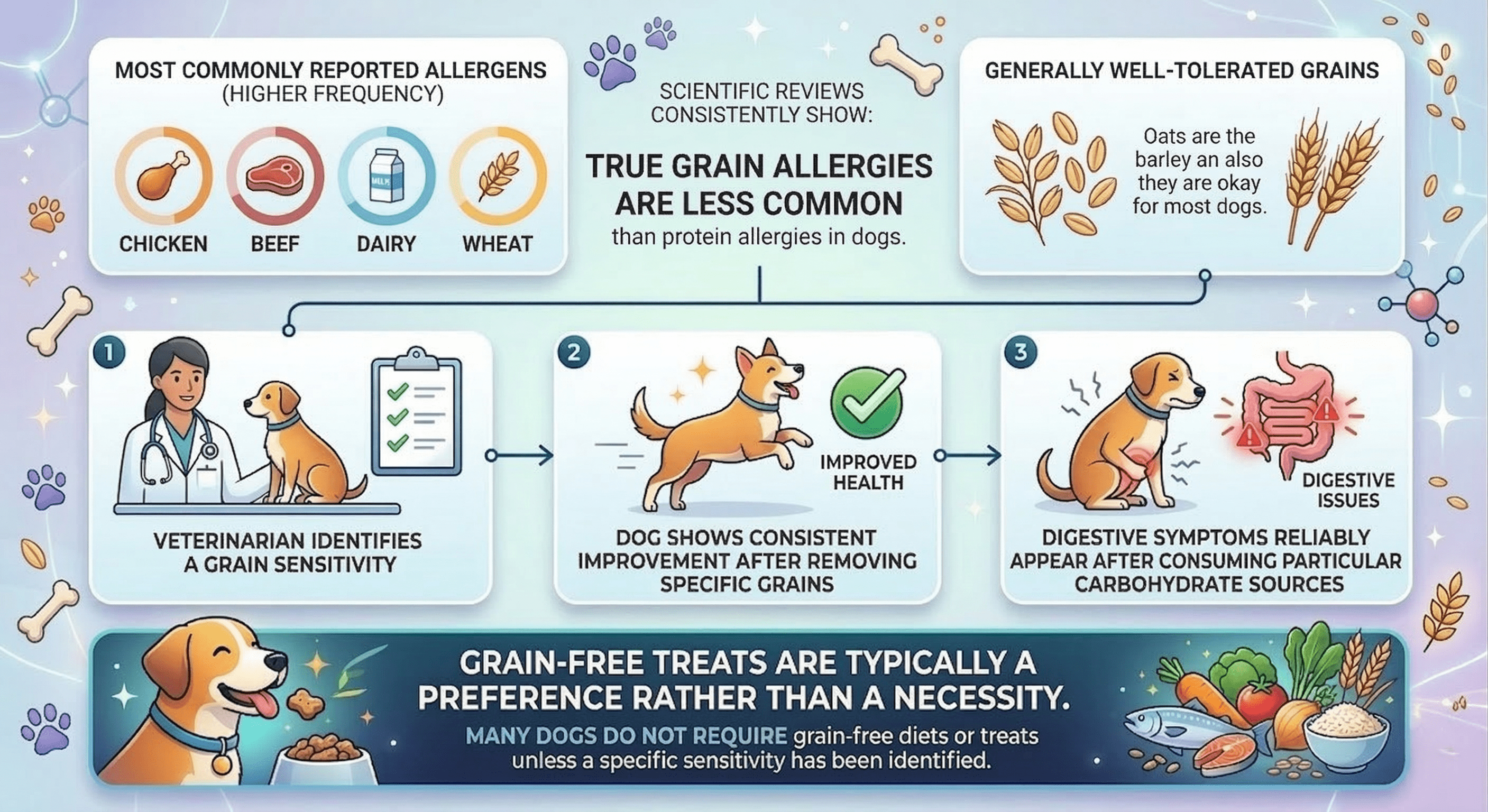
Scientific reviews consistently show that true grain allergies are less common than protein allergies in dogs. Chicken, beef, dairy, and wheat are among the most frequently reported allergens, while grains such as oats or barley are generally tolerated by many dogs. As a result, many dogs do not need grain-free diets or treats unless a specific sensitivity has been identified.
Grain-free treats may be helpful in certain situations, including when:
- A veterinarian identifies a grain sensitivity
- A dog shows consistent improvement after specific grains are removed
- Digestive symptoms reliably appear after consuming certain carbohydrate sources
Outside of those scenarios, grain-free treats are usually a preference rather than a necessity.
The Real Benefits of Grain-Free Organic Treats
For dogs that genuinely benefit from grain-free formulas, these treats may offer several practical advantages when properly formulated:
- Reduced digestive irritation in sensitive dogs
- Simpler ingredient lists, which can help during elimination diets
- Improved stool consistency in dogs that react poorly to certain carbohydrates
- Dietary consistency for dogs already eating grain-free meals
- Fewer potential inflammatory triggers for dogs with multiple sensitivities
When grain-free formulas are paired with organic certification, there may be an additional benefit from reduced exposure to pesticide residues and artificial preservatives, which may further support digestive comfort in sensitive dogs.[2]
Organic vs. Natural Grain-Free Treat Options
Organic Grain-Free Mini-Sticks (Turkey or Chicken)
Organic grain-free animal-protein treats are often best suited for dogs that need:
- clean, pesticide-free ingredients[2]
- gentle, highly digestible animal proteins such as turkey or chicken[5]
- simplified formulas to support sensitivity management
Natural Grain-Free Plant-Based Mini-Sticks
Natural plant-based grain-free treats may be ideal for dogs with:
- poultry allergies or intolerance to animal proteins[1]
- chronic skin irritation or recurrent hot spots
- digestive sensitivity linked to animal-based ingredients
Research suggests that some dogs with food sensitivities may show clinical improvement on nutritionally complete plant-based diets.[3][6]
Both options can work well in a soft, breakable mini-stick format, which is especially helpful for seniors, small breeds, and training use.
Comparison Table: When Grain-Free Helps
| Dog Type | Is Grain-Free Helpful? | Why |
| Dogs with confirmed grain sensitivities | Yes | May reduce gastrointestinal irritation |
| Dogs with protein allergies | Sometimes | Plant-based grain-free treats may help avoid poultry or beef[1] |
| Healthy dogs with no sensitivities | Not necessary | Grains are tolerated well by many dogs |
| Seniors with poor digestion | Sometimes | Cleaner formulas may be easier to manage[5] |
| Puppies | Only if diagnosed | Otherwise there is usually no added benefit |

Step-by-Step: Should You Choose Grain-Free Treats?
Step 1: Identify the Real Trigger
Most dogs react to proteins, not grains.[1] If symptoms persist, review treats carefully for hidden proteins, unnecessary fillers, or multiple competing ingredients.
Step 2: Consider Digestive Sensitivity
Dogs with soft stool or chronic gas may benefit from:
These options should be evaluated in the context of the dog’s full diet and clinical history.
Step 3: Evaluate the Texture
Soft, semi-soft mini-sticks are often easier on teeth and can be broken into smaller portions for safer chewing and better portion control.[8]
Step 4: Match Treats to the Dog’s Overall Diet
If a dog already eats grain-free food successfully, using matching treats may help maintain dietary consistency.
The Mini-Stick Advantage for Grain-Free Treat Seekers
Superfood Science mini-sticks offer:
- grain-free options for sensitive dogs
- a semi-soft texture for easier chewing
- a clean-break design for portion control
- organic or natural formulas for lower-allergen feeding strategies
This flexibility can help pet parents support multiple life stages and dietary needs within the same household.
When Grain-Free Is Not the Best Choice
Avoid choosing grain-free treats simply because they sound healthier. They may not be the best option if:
- Your dog has no symptoms at all
- You suspect a poultry or beef allergy, which is usually a protein issue rather than a grain issue
- The grain-free treat still contains unnecessary fillers or low-value ingredients
Grain-free alone does not guarantee better nutrition or lower allergen exposure.
Frequently Asked Questions
Are grain-free treats healthier?
For many dogs, grain-free treats can be a smart choice, especially for pet parents who prefer simpler recipes, alternative carbohydrate sources, or formulas designed for sensitive dogs. While not every dog requires a grain-free diet, many owners choose grain-free treats for their clean-label appeal and ingredient focus.
Are grains bad for dogs?
Not necessarily, but some pet parents prefer to avoid grains when choosing treats for dogs with sensitive digestion or suspected food sensitivities. Grain-free treats offer an alternative option that can fit well into a thoughtful feeding routine, especially when made with high-quality ingredients.[1]
Are grain-free organic treats safe?
Yes, grain-free organic treats can be a great option when they are made with clean, recognizable ingredients and without artificial preservatives. Organic certification may also give pet parents added confidence in the quality and sourcing of ingredients.[2]
Can grain-free treats be plant-based?
Yes. Many allergy-friendly treat formulas are both grain-free and plant-based.[3]
Conclusion
Grain-free organic dog treats can be an excellent choice, but only when they match a dog’s actual dietary needs. Organic turkey or chicken treats may support digestion and reduce chemical exposure, while natural plant-based options may be useful for dogs with protein sensitivities. The key is to determine whether your dog truly benefits from grain-free feeding and then choose soft, breakable treats that fit that health profile.
Related Reading
- Best Organic Dog Treats of 2026
- Organic Dog Treats by Size
- Senior Dog Treat Guide
- Allergy-Friendly Treats
References
- Mueller, R. S., Olivry, T., & Prélaud, P. (2016). Common food allergens in dogs and cats. BMC Veterinary Research, 12, 9.
- Benbrook, C. M. (2012). Organic agriculture and reducing exposure to pesticides. Environmental Health Perspectives, 120(5), a182–a183.
- Knight, A., Leitsberger, M., & Light, N. (2021). Vegan versus meat-based dog food: Guardian-reported health outcomes. Animal Welfare, 30(3), 285–300.
- Bizikova, P., et al. (2015). Food allergy testing in dogs: Limitations and recommendations. Veterinary Dermatology, 26(5), 431–e101.
- Case, L. P., Daristotle, L., Hayek, M. G., & Raasch, M. F. (2011). Canine and Feline Nutrition (3rd ed.). Mosby.
- Roberts, J., et al. (2022). Nutritional adequacy of plant-based formulations for dogs. Veterinary Sciences, 9(7), 338.
- de Oliveira, L. D., et al. (2008). Effects of dietary protein sources on stool quality and digestibility in dogs. The Journal of Nutrition, 138(2), 274S–277S.
- Questel, B. J., et al. (2017). Fracture of the maxillary fourth premolar tooth in domestic dogs: A comparison of patients with and without history of chewing hard objects. Journal of the American Veterinary Medical Association, 250(10), 1161–1166.
