
Limited-Ingredient Organic Dog Treats: Why They’re Best for Sensitive Dogs (2026 Vet-Reviewed Guide)

Quick Answer
Limited-ingredient organic dog treats offer cleaner, simpler nutrition for dogs with food sensitivities, digestive issues, or skin irritation. By minimizing the number of ingredients and avoiding synthetic additives, these treats reduce the overall allergen load while supporting more predictable digestion. Organic turkey, organic chicken, and plant-based formulas remain top choices for sensitive dogs in 2026.
By Superfood Science Writing Team | Reviewed by Dr. Kelly Hood, DVM | Last Updated: 3/20/2026 Superfood Science has produced organic and natural functional foods for humans and pets for over 20 years, specializing in clean-label formulations and evidence-based nutrition.
Key Takeaways
- Limited-ingredient organic dog treats can help reduce exposure to unnecessary fillers, mixed proteins, and synthetic additives.
- Organic turkey or chicken treats may work well for many dogs with mild digestive or skin sensitivity, while plant-based options may be better when poultry is a suspected trigger.
- Soft or semi-soft mini-stick treats are often easier for puppies, seniors, and small dogs to chew and portion.
- The best treat depends on your dog’s specific sensitivities, ingredient tolerance, and texture needs.

What Are Limited-Ingredient Organic Dog Treats?
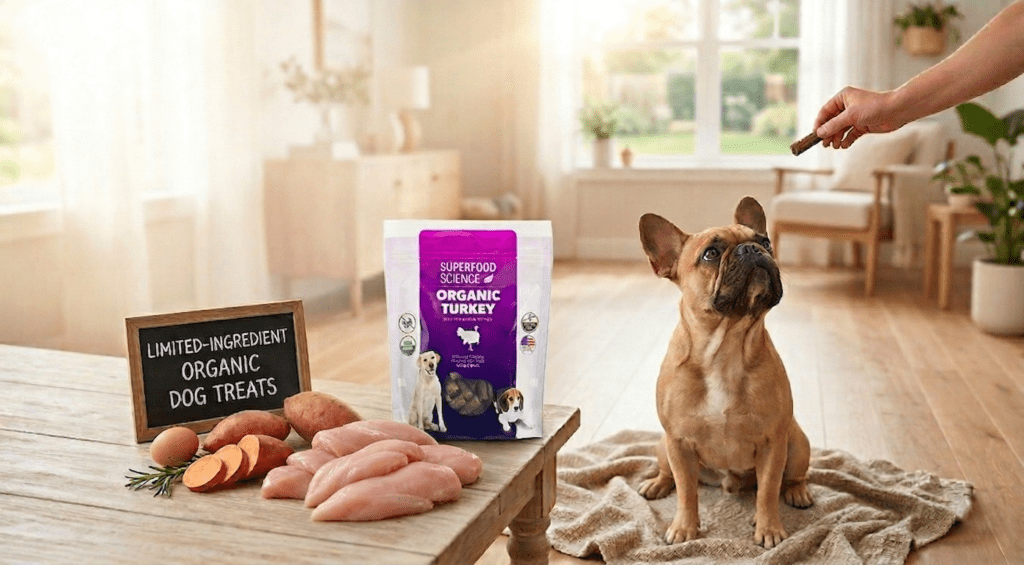
Limited-ingredient organic dog treats use as few ingredients as possible. In most cases, that means one primary protein source such as turkey, chicken, or a plant-based formula, along with a simple binder for texture and a natural preservative such as tocopherols.
These treats are different from single-ingredient treats. Single-ingredient treats contain only one component, such as 100% freeze-dried turkey. Superfood Science treats are limited-ingredient treats rather than single-ingredient treats.
Why Limited Ingredients Matter for Sensitive Dogs
Dogs with food sensitivities often react to unnecessary extras in treats rather than the treat format itself. Common triggers include artificial preservatives, mixed animal proteins, heavy fillers such as corn or wheat, and artificial colors or flavors.
A limited-ingredient formula helps reduce these variables and supports more predictable digestion.
Why Sensitive Dogs Benefit Most
Research suggests that canine food allergies most often come from proteins rather than grains or carbohydrates.[1] Common allergens include chicken, beef, dairy, and wheat.
Limited-ingredient treats may help because they:
- reduce exposure to unnecessary proteins or fillers
- simplify elimination diets
- support digestive stability for GI-sensitive dogs
- reduce irritation linked to synthetic additives
Organic ingredients may also help reduce pesticide and chemical exposure.[2]
Benefits of Organic Limited-Ingredient Turkey and Chicken Treats
1. Clean, Highly Digestible Protein
Organic poultry proteins are often easier for many dogs to digest and may be especially useful for puppies, seniors, dogs with chronic GI sensitivity, and dogs recovering from digestive upset. Better digestibility can support stool quality and nutrient absorption.[5]
2. Reduced Chemical Exposure
Organic certification helps eliminate synthetic pesticides and artificial preservatives while lowering exposure to chemical residues that may contribute to inflammation in sensitive dogs.[2][8][9]
3. Helpful for Mild to Moderate Sensitivities
Dogs with recurring itching, loose stools, or sensitivity to artificial ingredients often do better on cleaner, simplified formulas.
4. Soft or Semi-Soft Texture
A soft or semi-soft texture is often a better fit for seniors with dental pain, dogs with missing teeth, small breeds, and puppies with developing teeth.
5. Predictable Ingredient Profile
Fewer ingredients usually mean fewer surprises. That can make treats easier to evaluate when you are trying to identify what your dog tolerates well.
When Plant-Based Limited-Ingredient Treats May Be Best
Plant-based formulas may be a smart option when a dog has a suspected chicken allergy, turkey sensitivity, multi-protein intolerance, or chronic skin irritation.
Some studies suggest that many dogs tolerate properly formulated plant-based diets well, especially when animal-protein allergies are part of the problem.[3][6] These formulas may also appeal to dogs that do better with lower-fat treat options.
Organic vs. Natural Limited-Ingredient Treats
| Feature | Organic | Natural |
| Pesticide-free standards | Yes | Not guaranteed |
| Artificial preservatives | Not allowed | Often avoided, but not regulated the same way |
| Limited-ingredient potential | Yes | Yes |
| Best fit | Sensitive digestion and chemical avoidance | Poultry-allergic dogs or broader limited-ingredient strategies |
Both can be excellent choices depending on your dog’s needs.
How to Choose the Right Limited-Ingredient Treat
Step 1: Identify the Type of Sensitivity
A plant-based option may make more sense if your dog reacts to poultry. Organic turkey or organic chicken may be a better starting point if your dog has general GI sensitivity. If skin irritation is the main issue, it may help to avoid artificial preservatives and mixed proteins.
Step 2: Look for USDA Organic Certification
USDA Organic certification offers stronger assurance around cleaner ingredient sourcing and reduced chemical exposure.
Step 3: Check the Texture
Soft or semi-soft treats are often best for seniors, puppies, and small dogs. Hard chews may be less suitable for dogs with dental discomfort.
Step 4: Match Treat Size to Purpose
For training, smaller pieces or breakable mini-sticks work well. Slightly larger pieces may be appropriate for enrichment. It is usually best to start with small portions and monitor tolerance for sensitive dogs.
The Mini-Stick Advantage
Superfood Science’s organic and natural mini-stick treats are designed for flexibility and easier feeding. They break cleanly for portion control, offer a soft or semi-soft texture for sensitive teeth, use limited-ingredient formulas for more predictable digestion, and include poultry-free options for allergy-prone dogs.
This design supports training use, senior comfort, and GI-sensitive dogs.
Best Limited-Ingredient Treat Options
USDA Organic Limited-Ingredient Mini-Sticks
Natural Poultry-Free Limited-Ingredient Mini-Sticks
- Plant-based formula for allergy-prone dogs
Explore the Clean Limited-Ingredient Treat Line (Insert Amazon Attribution Link)
Frequently Asked Questions
Are limited-ingredient treats safer for sensitive dogs?
They can be helpful because fewer ingredients reduce the number of possible triggers, making reactions easier to identify and avoid.
Are organic limited-ingredient treats better for allergies?
They may reduce exposure to chemical irritants and artificial additives, but dogs with true protein allergies still need the right protein choice.
Can limited-ingredient treats help with elimination diets?
Yes. They can make it easier to track which ingredients your dog tolerates and which may cause reactions.
Are plant-based limited-ingredient treats good for sensitive dogs?
They can be, especially when chicken or turkey allergies are suspected.[3]
Explore more on the following topics:
- organic turkey dog treats
- organic chicken dog treats
- plant-based dog treats for dogs
- dog treats for sensitive stomachs
- dog treats for itchy skin
- soft dog treats for senior dogs
- puppy training treats
- clean-label dog treats
- grain-free dog treats
References
- Mueller, R. S., Olivry, T., & Prélaud, P. (2016). Common food allergens in dogs and cats. BMC Veterinary Research, 12, 9.
- Benbrook, C. M. (2012). Organic agriculture and reducing exposure to pesticides. Environmental Health Perspectives, 120(5), a182–a183.
- Knight, A., Leitsberger, M., & Light, N. (2021). Vegan versus meat-based dog food: Guardian-reported health outcomes. Animal Welfare, 30(3), 285–300.
- Bizikova, P., Pucheu-Haston, C. M., Eisenschenk, M. N. C., Marsella, R., Nuttall, T., & Santoro, D. (2015). Food allergy testing in dogs: Limitations and recommendations. Veterinary Dermatology, 26(5), 431–e101.
- Case, L. P., Daristotle, L., Hayek, M. G., & Raasch, M. F. (2011). Canine and Feline Nutrition (3rd ed.). Mosby.
- Roberts, J., et al. (2022). Nutritional adequacy of plant-based formulations for dogs. Veterinary Sciences, 9(7), 338.
- de-Oliveira, L. D., et al. (2008). Effects of dietary protein sources on stool quality and digestibility in dogs. Journal of Nutrition, 138(2), 274–275.
- Macías-Montes, A., et al. (2025). Pesticide residues in commercial dry pet food. Environmental Pollution, 336, 122–145.
- Wise, C. F., et al. (2021). Comparative assessment of pesticide exposures in domestic dogs and their owners. Environmental Science & Technology, 55(4), 2619–2630.
