
The Lifespan Doubler? Why Your Dog’s Bowl Matters So Much in Chronic Kidney Disease

Quick Answer
For many dogs with chronic kidney disease (CKD), nutrition is one of the most important parts of care. A veterinary renal diet, phosphorus control, hydration support, and appropriately used omega-3 fatty acids may help slow progression, reduce uremic crises, and support quality of life.[1–5] The best plan depends on IRIS stage, lab values, appetite, body condition, blood pressure, and urine findings.[3–5]
By Superfood Science Writing Team | Reviewed by Dr. Kelly Hood, DVM | Last Updated: 04/20/2026
Superfood Science has produced organic and natural functional foods for humans and pets for over 20 years, specializing in clean-label formulations and evidence-based nutrition.
Key Takeaways
- The Silent Disease: CKD often develops gradually, and dogs may look normal even when kidney function is already impaired.
- The Power of Diet: A veterinary renal diet is one of the most evidence-based tools for managing canine CKD.
- Phosphorus Matters: Phosphorus control is a major treatment goal in Stage 2 and beyond.
- Fat Source Matters: Omega-3 fatty acids from marine sources may be helpful when used appropriately under veterinary guidance.
- The Bigger Picture: Appetite, hydration, muscle maintenance, blood pressure, and urine protein matter just as much as the food bowl.
Why This Topic Matters
When a dog is diagnosed with CKD, many owners immediately ask the same question: what should I feed now? That is the right question. Nutrition is not a side note in canine kidney care. It is one of the central tools veterinarians use to reduce symptom burden, support remaining kidney function, and help dogs maintain body weight and comfort.[1–5]
The older conversation around kidney disease focused almost entirely on protein. Today, the picture is more nuanced. Protein matters, but phosphorus control, calorie intake, hydration, omega-3 intake, and careful monitoring are all part of modern nutritional management.[3–5]
Why Dogs With CKD Can Seem Fine at First
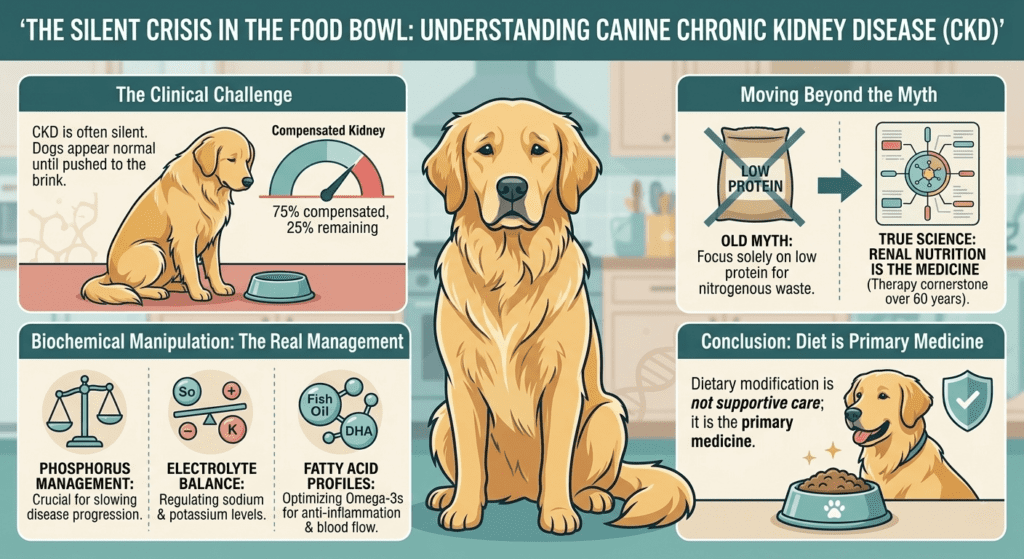
CKD is often called a silent disease because dogs may appear normal in the earlier stages. Changes such as increased thirst, increased urine volume, weight loss, reduced appetite, or intermittent nausea can be easy to miss at first. Urine concentrating ability may decline before kidney values become dramatically abnormal on routine bloodwork.[3–5]
That is one reason veterinarians look at the whole picture rather than one number alone. Creatinine and SDMA are important, but so are urine specific gravity, urine protein, blood pressure, phosphorus, potassium, body condition, and muscle condition.[3–5]
Why Renal Diets Matter So Much
Veterinary kidney diets are formulated differently from standard maintenance foods. In general, they provide restricted phosphorus, moderate protein, controlled sodium, and increased omega-3 fatty acids, with adjustments designed to support dogs living with CKD.[1,4,5]
That matters because dogs eating a renal diet have shown better outcomes than dogs eating standard maintenance food in clinical studies. In one landmark study of dogs with spontaneous CKD, the renal diet group had fewer uremic crises and lower renal-related mortality during the study period.[1]
The Real Nutritional Priority: Phosphorus Control
Many owners assume protein is the main nutritional problem in CKD. In practice, phosphorus control is one of the biggest priorities, especially once CKD is established. When phosphorus levels rise, they contribute to further kidney injury and metabolic complications.[3–5]
That is why renal diets are designed with lower phosphorus, and why phosphate binders may be used when diet alone is not enough to keep serum phosphorus in the veterinarian’s target range. IRIS treatment recommendations place phosphorus reduction among the major goals for dogs with Stage 2 CKD and beyond.[3]
Where Protein Fits In
Protein restriction is not the same thing as preventing kidney disease. High-protein diets do not appear to cause CKD in healthy dogs. But once CKD is present, excessive protein can worsen uremic signs in some patients because it increases nitrogenous waste.[4,5]
The goal is not to drive protein as low as possible. The goal is to use enough high-quality protein to help preserve lean body mass while reducing symptom burden. That balance is one reason home-formulated kidney diets should not be improvised without veterinary nutrition guidance.[4–6]
Omega-3s: Helpful, but Not a Free-For-All
Marine omega-3 fatty acids, especially EPA and DHA, are often included in renal diets because they may help support renal hemodynamics and reduce inflammatory stress.[2,4,5] Experimental studies in dogs have found renoprotective effects from omega-3 enrichment compared with higher omega-6 intake.[2]
Still, more is not always better. Fish oil can cause gastrointestinal upset, increase caloric intake, and affect platelet function at higher intakes. The right amount depends on the dog’s diet, weight, body condition, medications, and clinical status. Owners should not stack multiple fish-oil products on top of a prescription renal diet without veterinary guidance.[4,5]
Why Earlier Dietary Planning Matters
Waiting until a dog looks obviously sick can make nutrition support harder. Many dogs with CKD still appear fairly normal in the early stages, even as urine-concentrating ability, phosphorus handling, or other kidney-related parameters begin to change.[3–5] That is one reason veterinarians often recommend discussing a renal nutrition plan before a dog seems severely ill. Earlier planning may improve dietary acceptance, ease transitions, and support more consistent long-term management.[1,3–5]
Hydration and Appetite Are Not Secondary Issues
Food only helps if the dog will eat it. CKD can reduce appetite through nausea, altered taste, dehydration, or general malaise. That is why practical feeding strategies matter:
Make the food easier to accept
- Warm canned food slightly to increase aroma.
- Transition slowly if your veterinarian agrees.
- Offer fresh meals instead of leaving food out too long.
- Use only veterinarian-approved toppers, since many common add-ins raise phosphorus or sodium.
Support hydration
- Keep fresh water available at all times.
- Ask your veterinarian whether canned renal food, added water, or other hydration support would help.
- Contact your veterinarian promptly if your dog is drinking less, vomiting, or refusing food.
Why Homemade Kidney Diets Need Professional Formulation
Homemade diets sound appealing because they feel fresher and more personal. The problem is precision. Kidney diets must carefully balance phosphorus, protein, calories, fatty acids, minerals, and palatability. Published evaluations of home-prepared renal recipes have found that many are nutritionally inadequate or unsuitable for long-term use.[6]
If you want a home-prepared option, ask for a formulation from a board-certified veterinary nutritionist rather than adapting a recipe found online.[6]
Vet-Safety Box
A renal diet or omega-3 supplement plan should always be individualized. Ask your veterinarian for guidance before making major diet changes if your dog has a history of pancreatitis, fat sensitivity, ongoing vomiting, severe food refusal, marked weight loss, or other conditions that may affect tolerance.[3–5] This also matters if your dog is already eating a prescription renal diet and you are thinking about adding fish oil, toppers, treats, or homemade food, since these can unintentionally change phosphorus, sodium, calorie, or fat intake.[4–6]
When to Talk to Your Veterinarian Quickly
Contact your veterinarian promptly if your dog has any of the following:
- a clear drop in appetite
- vomiting or nausea
- new lethargy or weakness
- weight loss or muscle loss
- increased thirst or urination
- dehydration
- lab work showing rising phosphorus, creatinine, or UPC concerns
These changes can affect the nutrition plan just as much as the diagnosis itself.
Frequently Asked Questions
Does high protein cause kidney failure in dogs?
No. High-protein diets are not considered a proven cause of CKD in healthy dogs. Once CKD is present, however, protein intake may need adjustment to help reduce uremic signs while maintaining lean mass.[4,5]
What should matter most in lab work?
There is no single best number. Veterinarians often monitor creatinine, SDMA, phosphorus, potassium, urine specific gravity, urine protein, blood pressure, body weight, and muscle condition together.[3–5]
Are omega-3 supplements always necessary?
Not always. Many veterinary renal diets already include omega-3 fatty acids. Whether additional supplementation is appropriate depends on the individual dog and the full diet.[2,4,5]
Is a prescription renal diet really worth it?
For many dogs, yes. Renal diets are among the most evidence-supported nutritional tools available for canine CKD management.[1,4,5]
Final Word
A dog with CKD does not need internet myths or oversimplified feeding rules. What helps most is a stage-appropriate plan built around phosphorus control, renal-diet adherence, hydration, appetite support, and regular monitoring.
The food bowl is not the entire treatment plan, but it is one of its most powerful tools.
Explore More Dog Health Tips
- Can Dogs Eat Mushrooms? Why Agaricus blazei Is a Leading Mushroom Immune Support Choice for Dogs
- What Are Superfoods? (And When They Become Hidden Hazards for Pets)
- Best Low-Calorie Dog Treats for Weight Management: Organic Options That Dogs Love
- Treats for Dogs With Chicken Allergies: Best Chicken-Free Options
- Safe Organic Dog Treats for Puppies: What to Look For and What to Avoid
References
- Jacob F, Polzin DJ, Osborne CA, et al. Clinical evaluation of dietary modification for treatment of spontaneous chronic renal failure in dogs. Journal of the American Veterinary Medical Association. 2002;220(8):1163-1170.
- Brown SA, Brown CA, Crowell WA, et al. Beneficial effects of chronic administration of dietary omega-3 polyunsaturated fatty acids in dogs with renal insufficiency. Journal of Laboratory and Clinical Medicine. 1998;131(5):447-455.
- International Renal Interest Society. IRIS guidelines and treatment recommendations for CKD in dogs. Accessed April 20, 2026.
- VCA Animal Hospitals. Nutrition for dogs with chronic kidney disease. Accessed April 20, 2026.
- Grauer GF. Treatment guidelines for chronic kidney disease in dogs and cats. Today’s Veterinary Practice. 2017.
- Larsen JA, Parks EM, Heinze CR, Fascetti AJ. Evaluation of recipes for home-prepared diets for dogs and cats with chronic kidney disease. Journal of the American Veterinary Medical Association. 2012;240(5):532-538.
