
Signs Your Dog May Be Sick: Early Red Flags and When to Call a Vet

Quick Answer
Dogs can show signs of illness in subtle ways before a problem becomes dramatic. Common early warning signs include a clear change in energy, appetite, water consumption, bathroom habits, breathing, mobility, comfort, or behavior.[1][2][3] One mild sign by itself does not always mean an emergency, but repeated vomiting or diarrhea, breathing trouble, collapse, seizure activity, severe pain, a swollen abdomen, pale gums, toxin exposure, or inability to urinate need prompt veterinary attention.[2][4][5]
Trust Signal
Written by the Superfood Science Editorial Team | Medically Reviewed by Dr. Kelly Hood, DVM | Last Updated: April 18, 2026
Superfood Science has specialized in organic and natural functional nutrition for humans and pets for over 20 years. This article is reviewed for accuracy by a licensed veterinarian and draws on authoritative sources including the American Animal Hospital Association (AAHA), the American Veterinary Medical Association (AVMA), the World Small Animal Veterinary Association (WSAVA), the Merck Veterinary Manual, and the U.S. Food and Drug Administration (FDA). Content is intended for general informational purposes and does not replace professional veterinary advice.
Key Takeaways
- A noticeable change from your dog’s normal routine can be an early clue that something is wrong.[1][3]
- Appetite, increased thirst, vomiting, diarrhea, rapid breathing, pain, difficulty with mobility, and behavioral changes are among the most telltale signs to monitor.[1][2][4]
- Emergencies are usually defined by severity, speed, or risk signs such as collapse, breathing trouble, severe bleeding, seizures, suspected poisoning, or repeated unproductive retching.[2][4][5]
- Routine wellness care helps detect problems before they become obvious at home, especially in older dogs.[3][6][7]
- Home observation is useful, but it does not replace an exam when signs are persistent, worsening or severe.[1][2]
Introduction
Owners often notice illness first as a vague shift rather than a textbook symptom.
A dog may seem quieter, less eager to eat, more clingy, more restless, slower on walks, or less interested in play. AAHA notes that regular hands-on observation helps owners spot changes, such as lumps, bad breath, gum changes, temperature abnormalities, and changes in mood or energy, earlier.[1]
That matters because dogs do not always show pain or illness in obvious ways. Some conditions build gradually, and some dogs compensate until signs are more advanced.[3][7]
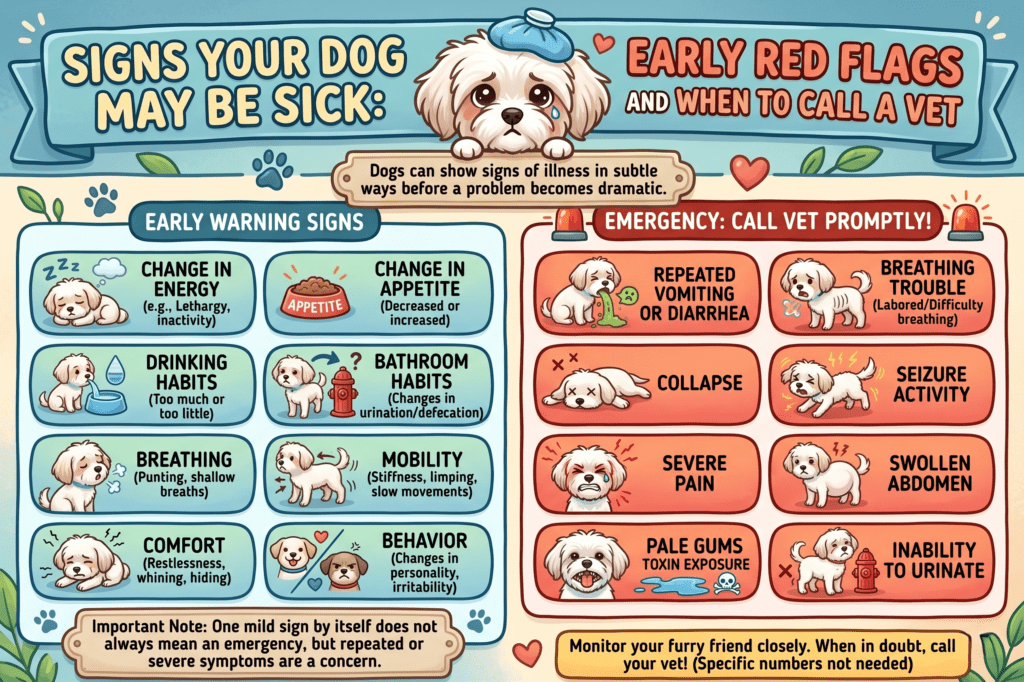
The Most Common Signs a Dog May Be Sick
Changes in Energy or Behavior
A dog that suddenly seems unusually tired, withdrawn, restless, clingy, irritable, confused, or unwilling to do normal activities may not be feeling well.[1][8] Behavior change is not a diagnosis by itself, but it can be an important clue, including when it involves discomfort or pain.[8]
Why this matters
Behavior is one of the earliest things owners notice. A dog that no longer jumps into the car, hesitates on stairs, hides, paces at night, or reacts differently to touch may be showing illness, discomfort, or age-related decline rather than “just slowing down.”[1][8]
Appetite Changes
Eating much less than usual, refusing food, dropping food, chewing on one side, or showing sudden food aversion can all be relevant. AAHA also highlights bad breath and bleeding gums as signs worth checking, rather than assuming they are normal aging.[1]
What owners sometimes miss
A dog may still take treats while eating poorly during meals, which can mask a true change in appetite. Meal intake is usually more useful to track than treat interest alone.
Drinking Much More or Much Less
A meaningful change in water intake can signal a health issue and is worth noting, especially if accompanied by loss of appetite, vomiting, weight change, accidents in the house or lethargy. WSAVA’s wellness guidance notes that laboratory screening often becomes more important with age because conditions such as kidney or liver disease may become more common over time.[6]
Important limitation
Owners often estimate water intake loosely, so trends are more informative than a single day.
Vomiting, Diarrhea, or Bathroom Changes
An isolated mild stomach upset may pass, but repeated vomiting, persistent diarrhea, blood in vomit or stool, straining, constipation, or a sudden change in stool quality deserve closer attention.[4][5] Merck notes that vomiting, diarrhea, loss of appetite, weight loss, and lethargy are among the common signs seen with gastrointestinal disorders in dogs.[4]
Red flag pattern
Vomiting plus lethargy, vomiting plus a swollen belly, or vomiting with inability to keep water down is more concerning than one single episode in an otherwise bright dog.[2][4][5]
Breathing Changes
Labored breathing, rapid breathing at rest, noisy breathing, choking, ongoing coughing and gagging, or blue or very pale gums should not be watched casually at home. AVMA lists choking, difficulty breathing, and nonstop coughing or gagging among situations needing immediate veterinary consultation or care.[2]
What to look for
Open-mouth breathing at rest, marked abdominal effort, panic, collapse, or gum color changes make this more urgent.[2][4]
Pain or Mobility Changes
Limping, reluctance to rise, stiffness after rest, trembling, yelping, guarding an area, or resisting touch can all be signs of pain. AAHA emphasizes that signs of pain should prompt a call to a veterinarian, and pain may manifest as altered activity, behavior, or handling tolerance rather than dramatic crying.[8]
Subtle pain examples
The dog that pauses before jumping, stops halfway through a walk, resists being picked up, or pants and paces at night may be uncomfortable even without a clear injury.[8]
Swelling, Bloating or a Distended Belly
A rapidly swollen abdomen, repeated unproductive retching, weakness, or collapse are emergencies. Merck’s emergency triage guidance includes severe abdominal distention, profuse vomiting, respiratory difficulty, collapse and substantial pain among urgent findings.[5]
Do not wait on this
Severe bloating or nonproductive retching can deteriorate quickly and should be treated as time-sensitive.[5]
Gum Color, Bleeding or Collapse
Pale gums, severe bleeding, bleeding that does not stop promptly, weakness, or collapse are not routine “watch and wait” issues. AVMA lists severe bleeding and collapse among emergencies that require immediate veterinary consultation and/or care.[2]
Signs That Mean Call a Vet Promptly
Not every concerning sign is a midnight emergency, but many still deserve same-day or next-day advice.
Call your veterinarian promptly if your dog has:
- a clear drop in appetite or refuses meals for more than 24 hours
- repeated vomiting or diarrhea
- blood in vomit, stool or urine
- limping that does not quickly improve
- new bad breath with gum bleeding, drooling or trouble chewing
- drinking or urinating much more than usual
- new lumps, rapid growth of a lump or skin wounds that are not healing
- marked lethargy, unusual restlessness or a behavior change that persists
- itching, paw licking, hair loss or hot spots that are worsening
These signs are not specific to one disease, which is exactly why a veterinary exam matters.[1][2][4][6]
Signs That Need Emergency Care
Get urgent veterinary help right away for:
- choking or significant breathing difficulty
- collapse, fainting or inability to stand
- seizures
- severe bleeding or bleeding that does not stop
- a swollen or painful abdomen, especially with retching
- suspected poisoning or toxin exposure
- repeated vomiting with weakness or inability to keep water down
- pale, blue or gray gums
- severe pain or sudden inability to use a limb
- heatstroke signs or major trauma
These emergency examples are supported by AVMA emergency guidance, AAHA poison awareness advice, FDA poison-safety information, and Merck emergency triage references.[2][5][9][10]
Why Older Dogs Can Be Harder to Read
Normal aging does change stamina, sleep, hearing, vision and recovery time. But age should not be used as a blanket explanation for new symptoms.
AAHA canine life stage guidance and WSAVA wellness recommendations both support individualized preventive care throughout life, with closer monitoring as dogs age.[3][6] Many age-associated problems first appear as subtle weight changes, reduced activity, changes in thirst, dental issues, mobility decline or behavioral differences rather than as a dramatic crisis.[1][3][6]
Limitation worth knowing
The line between “normal aging” and early illness is not always obvious at home. That is one reason routine exams and baseline lab work become more valuable over time.[3][6][7]
What You Can Track at Home Before the Appointment
Home notes can help your veterinarian, but they should support care rather than delay it.
Useful things to track include:
- when concerning signs started
- whether it is getting better, worse or staying the same
- appetite and water intake changes
- vomiting or diarrhea frequency
- stool appearance and urination changes
- activity, sleep and mobility changes
- possible toxin, trash, chew toys or foreign-body exposure
- photos or short videos of limping, coughing, breathing, vocalization changes, skin changes or behavior shifts
AAHA specifically encourages regular observation of your dog’s body and daily habits so changes are easier to recognize early.[1]
Practitioner-Recommended Usage Guide
For most dog owners, the safest practical approach is:
Step 1: Know your dog’s baseline
Pay attention to normal appetite, thirst, stool pattern, activity level, gait, sleep habits, breathing at rest and social behavior. Changes are easier to spot when the baseline is familiar.[1][6]
Step 2: Separate mild from severe
One mild sign in an otherwise bright, comfortable dog may justify close observation and a call to your regular veterinarian. Severe, fast-moving or clustered signs indicate the need for urgent care.[2][5]
Step 3: Use routine wellness care
Preventive visits are not only for vaccines. AAHA canine life stage guidance recommends at least one annual wellness exam for adult dogs and notes that semiannual exams may be appropriate for older or senior dogs, as changes may occur quickly with advanced age and many conditions are not as obvious early on.[3][7]
Step 4: Do not medicate casually at home
Do not give human pain relievers, stomach medicines or supplements without veterinary guidance. FDA warns that several human products and household items are unsafe for dogs.[9][10]
Step 5: Escalate early when red flags appear
Breathing difficulty, collapse, severe pain, major bleeding, toxin exposure, persistent retching or rapidly worsening weakness should not wait for a routine appointment.[2][5][9]
Safety
Do not force food or water into a dog that is choking, actively vomiting, weak or having trouble breathing.
Do not give over-the-counter human medications unless your veterinarian specifically tells you to. Many common products are unsafe for dogs.[9][10]
If poisoning is possible, contact your veterinarian, a local emergency hospital, ASPCA Animal Poison Control, or Pet Poison Helpline right away. FDA and AVMA both emphasize immediate contact rather than waiting for symptoms to worsen.[9][10]
When to see a vet immediately
Seek immediate veterinary care if your dog has breathing trouble, collapse, seizures, repeated unproductive retching, a swollen abdomen, pale gums, major bleeding, profound lethargy, sudden inability to stand or suspected toxin ingestion.[2][5][9][10]
FAQ
What are the first signs that a dog may be sick?
Often it starts with a change in normal routine rather than one dramatic symptom. Lower energy, appetite change, unusual thirst, vomiting, diarrhea, limping, restlessness or behavior change are common early clues.[1][2][4]
When should I worry about my dog throwing up?
One isolated episode in an otherwise bright dog may be less urgent than repeated vomiting, vomiting with lethargy, blood, abdominal swelling, inability to hold down water or suspected foreign-body exposure. Those patterns should prompt veterinary advice or urgent care.[2][4][5]
Is my dog sick or just tired?
A single sleepy day after extra exercise may be normal. But tiredness that is unusual for your dog, lasts more than 24-48 hours, comes with appetite loss or GI signs, or appears with breathing changes, pain or weakness is more concerning.[1][2][4]
Are behavior changes a sign of pain in dogs?
They can be. Irritability, hiding, pacing, clinginess, reluctance to jump, altered sleep, and reduced willingness to be touched can all be pain clues, although they are not specific to one cause.[8]
How often should healthy dogs get wellness exams?
AAHA guidance supports at least annual wellness exams for adult dogs, with semiannual visits considered for some dogs, specifically older ones, because health status can change quickly and early disease may be subtle.[3][7]
Conclusion
The earliest sign that a dog may be sick is often a meaningful change from normal.
This could include changes in appetite, energy, thirst, bathroom habits, breathing, comfort, mobility, vocalization or behavior. Watching for patterns matters, but so does knowing when home monitoring is no longer appropriate. If signs are severe, persistent, or worsening, a veterinary exam is the safest next step.
Explore More Dog Health Topics
- Healthy Dog Treats for Allergies in 2026
- Can Dogs Eat Mushrooms?
- Plant-Based Dog Treats with Kelp: Oral Care Support and Gentle Wellness for Sensitive Dogs
- Can Dogs Eat Seaweed?
- What Are Superfoods? And When Do They Become Hidden Hazards for Pets?
References
- American Animal Hospital Association. Decoding Dog Symptoms: Let Your Veterinarian Diagnose Your Dog, Not AI. AAHA. https://www.aaha.org/resources/decoding-dog-symptoms-let-your-veterinarian-diagnose-your-dog-not-ai/
- American Veterinary Medical Association. 13 Animal Emergencies That Require Immediate Veterinary Consultation and/or Care. AVMA. https://www.avma.org/resources/pet-owners/emergencycare/13-animal-emergencies-require-immediate-veterinary-consultation-andor-care
- Creevy KE, et al. 2019 AAHA Canine Life Stage Guidelines. Journal of the American Animal Hospital Association / AAHA. https://www.aaha.org/wp-content/uploads/globalassets/02-guidelines/canine-life-stage-2019/2019-aaha-canine-life-stage-guidelines-final.pdf
- Merck Veterinary Manual. Disorders of the Stomach and Intestines in Dogs. https://www.msdvetmanual.com/dog-owners/digestive-disorders-of-dogs/disorders-of-the-stomach-and-intestines-in-dogs
- Merck Veterinary Manual. Initial Triage and Resuscitation of Small Animal Emergency Patients. https://www.msdvetmanual.com/emergency-medicine-and-critical-care/evaluation-and-initial-treatment-of-small-animal-emergency-patients/initial-triage-and-resuscitation-of-small-animal-emergency-patients
- World Small Animal Veterinary Association. Principles of Wellness. https://wsava.org/wp-content/uploads/2025/06/Principles-of-Wellness-FINAL.pdf
- American Animal Hospital Association. AAHA Canine Life Stage Guidelines Toolkit Booklet. https://www.aaha.org/wp-content/uploads/globalassets/02-guidelines/canine-life-stage/canine_guidelines_toolkit_booklet.pdf
- American Animal Hospital Association. Pain Management for Pets. https://www.aaha.org/resources/pain-management-for-pets/
- U.S. Food and Drug Administration. Potentially Dangerous Items for Your Pet. https://www.fda.gov/animal-veterinary/animal-health-literacy/potentially-dangerous-items-your-pet
- U.S. Food and Drug Administration. Got a Question About Your Pet’s Health? https://www.fda.gov/animal-veterinary/animal-health-literacy/got-question-about-your-pets-health
