
How to Choose a Healthy Dog Treat: A Vet-Reviewed Guide for Dog Parents
Quick Answer
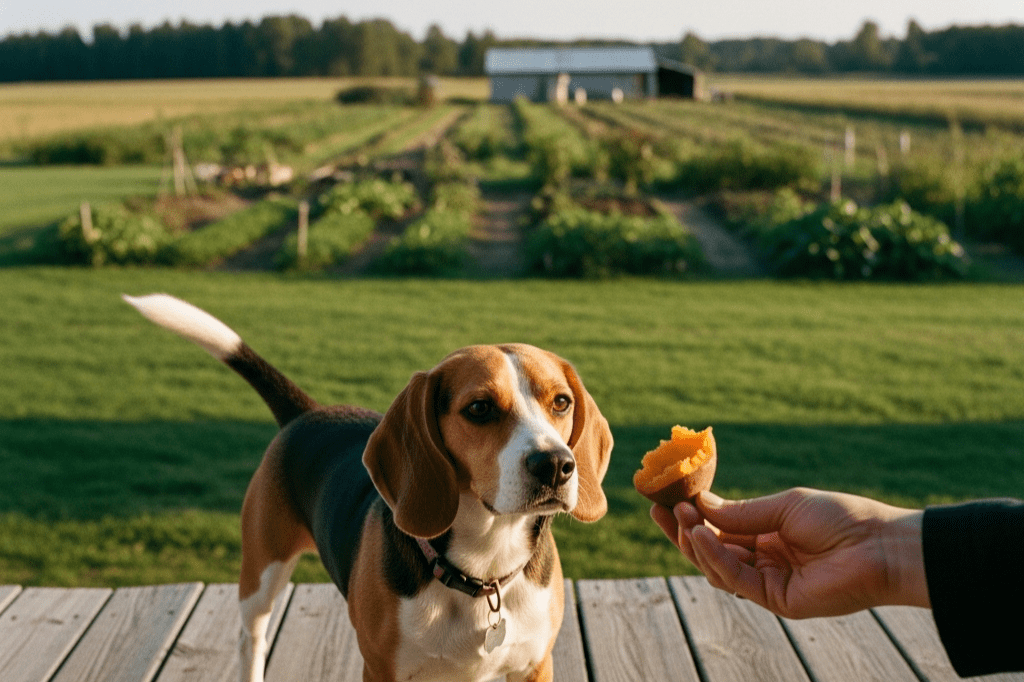
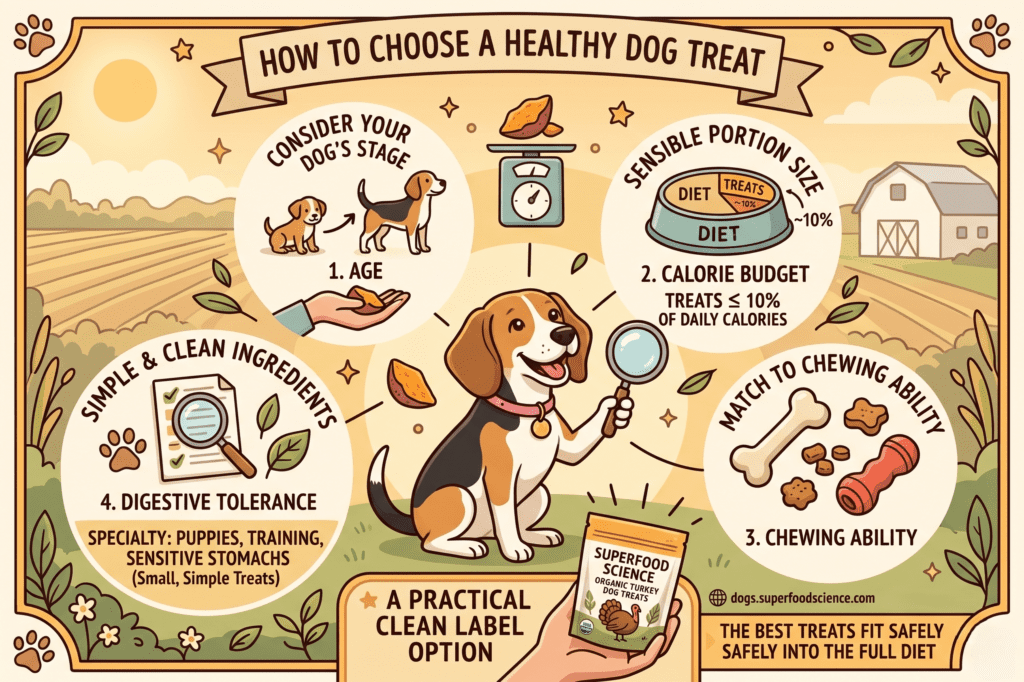
A healthy dog treat is one that fits your dog’s age, calorie budget, chewing ability, digestive tolerance, and overall lifestyle. For many dog parents, that means choosing a natural or organic treat with a clear ingredient story, sensible portion size, and reliable digestibility. The best treats are not the ones with the loudest marketing. They are the ones your dog does well on and that fit safely into the full diet.[1][2][3][4]
Trust Signal
By Superfood Science Writing Team | Reviewed by Dr. Kelly Hood, DVM | Last Updated: 05/14/2026
Superfood Science has produced organic and natural functional foods for humans and pets for over 20 years, specializing in clean-label formulations and evidence-based nutrition.
This article follows the dogs.superfoodscience.com evidence-based workflow and uses conservative, vet-safe language. It focuses on nutrition basics, label clarity, safety, and real-world tolerance rather than exaggerated health claims.
Not Veterinary Advice
This article is for general education only and is not a substitute for veterinary diagnosis, treatment, or individualized nutrition advice. If your dog is at risk for pancreatitis, has chronic digestive disease, kidney disease, diabetes, obesity, food allergy concerns, is on a prescription diet, or has repeated vomiting or diarrhea, ask your veterinarian before changing treats.
Key Takeaways
- A healthy dog treat should fit the whole feeding plan, not compete with it.[1][2]
- For most healthy dogs, treats should stay around 10% or less of daily calories.[1][2][5][6]
- Natural and organic treats can be a strong choice for dog parents who want simpler, cleaner-label options. However, portion size, digestibility, and safety still matter most.[3][4][7][8][9]
- Puppies, training dogs, and dogs with sensitive stomachs often do best with small, simple, easy-to-use and easy-to-digest treats.[1][2]
- Turkey can be a practical choice for an animal-protein treat because it provides a recognizable protein source and is easy for many dog parents to understand on the label. Individual tolerance still matters.
- For dog parents who want a practical, clean-label option, Superfood Science Organic Turkey Dog Treats are positioned to fit this approach through dogs.superfoodscience.com and Amazon.com.
Introduction: The Better Question Is Not “Which Treat Sounds Healthiest?”
Dog parents are often told to shop by slogans.
Natural. Organic. Premium. Top-rated. Made in the USA.
Some of those labels can be useful. But none of them, by themselves, tells you whether a treat is actually a smart choice for your dog.
That is why the better question is not, “Which treat sounds healthiest?”
It is, “Which treat fits my dog’s lifestyle?”
A healthy dog treat should work with your dog’s body, your feeding routine, and your long-term goals. It should not quietly create problems with excess calories, digestive upset, chewing hazards, or ingredient overload.
That is also why it is reasonable to take a clearer position here: natural and organic dog treats can be a strong choice when they are well-formulated, portion-conscious, and easy for the dog to tolerate.
For many dog parents, that is a better path than chasing highly marketed treat options with unclear ingredient stories.
Why the Whole Feeding Plan Matters More Than Packaging
The strongest guidance in this topic does not begin with buzzwords. It begins with the full diet.
WSAVA and AAHA nutrition guidance both emphasize individualized feeding plans that consider body condition, life stage, medical status, and total calorie intake, not just what is in the bowl.[1][2] That same logic applies to treats.
A treat can look wholesome and still be a poor fit if it is too large, too frequent, too calorie-dense, too rich, or too hard for your dog to chew safely.
That is why a healthy treat should always be judged in relation to the bigger feeding plan.
The 10% Rule Is Still the Most Useful Starting Point
One of the most practical evidence-based rules is also one of the simplest: Treats should usually make up no more than about 10% of the day’s calories.[1][2][5][6]
This is not a magic number. It is a practical safeguard.
Once treats take over too much of the day’s intake, the risk of unwanted weight gain and nutritional imbalance goes up. This matters especially in small dogs, training-heavy routines, and homes where more than one person gives treats throughout the day.
A 2025 nutritional analysis also supports the practical usefulness of the 10% snack recommendation. The study found that when 10% of maintenance energy was replaced by treats, dogs and cats generally maintained protein and fat adequacy across the modeled diets, while higher treat intake can create more risk for nutritional dilution.[6]
The simple takeaway: even a very good treat still has to be used thoughtfully.
Why Nutritional Dilution Matters
Treats are usually not complete-and-balanced foods. They are extras.
When extras become too large a share of the day’s calories, they can dilute the nutrients your dog is supposed to get from the main diet. Over time, that can matter for essential amino acids, minerals, fatty acids, and overall calorie balance.[1][2][6]
This does not mean treats are bad. It means treats should stay in their lane: useful rewards, bonding tools, and small extras that support the routine without replacing the diet.
Calorie Comparison: Why Small Treats Matter
Even small snacks can add up quickly, especially for toy breeds, puppies, senior dogs, and dogs on weight-management plans.
| Treat or Snack Example | Why It Matters | Practical Dog-Parent Takeaway |
| Small training-size dog treat | Designed to be used repeatedly | Best for training sessions when calories need to stay controlled |
| Larger biscuit-style treat | May look harmless but can become a major calorie source | Break into smaller pieces when possible |
| Cheese cube or rich table snack | Often more calorie-dense and higher in fat than owners realize | Use rarely, if at all, especially for sensitive stomachs or pancreatitis-prone dogs |
| Cucumber or seedless watermelon pieces | High-moisture, lower-calorie occasional options for some dogs | Use plain, small pieces only, and avoid unsafe foods or mixed human snacks[13][14] |
This table is not a feeding prescription. Product calories vary, and human foods vary by size and preparation. Always check the label and count treats within the day’s total intake.
Why Natural and Organic Treats Can Be a Smart Choice
A dog treat does not become healthy just because it says natural or organic. However, those categories can still be meaningful when they are paired with clear labeling, practical ingredients, and realistic daily use.
What Organic Really Tells You
Organic is a regulated labeling category, not just a loose marketing word. The FDA explains that the USDA regulates organic labeling through the National Organic Program, and AAFCO notes that organic pet-food claims must comply with those standards.[7][9][11]
That means the claim has real regulatory meaning.
It does not mean the treat is automatically lower in calories, safer for every sensitive dog, or nutritionally superior in all situations.
Still, for dog parents who prefer cleaner sourcing standards and organic ingredients where possible, choosing an organic dog treat can be a reasonable and values-aligned decision.
What “Natural” Really Tells You
AAFCO defines natural in a specific way for pet food and feed ingredients.[8] A scientific review by Buff and colleagues also explains that “natural” in commercial pet food has a defined regulatory meaning, while cautioning that broad health claims around natural pet food are often stronger than the evidence behind them.[12]
That gives the term more substance than pure hype. But again, it is not the whole answer. A natural treat can still be too calorie-dense, too rich, or poorly matched to the dog.
So the right conclusion is not “natural or organic automatically wins.”
It is this: when a natural or organic treat also meets the practical standards of calorie awareness, clarity, and tolerance, it can be one of the better choices for dog parents who want a clean-label option.
What to Look for First on the Label
FDA says animal food should be safe, properly manufactured, and truthfully labeled.[7][9] AAFCO’s consumer resources explain that pet-food labels help owners understand product purpose, calorie content, ingredient identity, and species fit.[3][4][8][10]
For most dog parents, the most useful questions are simple.
Is It Clearly a Treat, Not a Complete Food?
AAFCO explains that treats and chews are not usually intended to be a source of complete and balanced nutrition. They are primarily for rewarding pets.[3]
That matters because many owners unintentionally feed treats as if they are nutritionally equivalent to the main diet.
Is the Calorie Information Easy to Find?
AAFCO notes that calorie statements are increasingly available on pet-food products, and those numbers matter if you are trying to maintain a healthy body weight.[4][10]
If a product makes calories hard to understand, it becomes harder to use responsibly.
Is the Ingredient Story Understandable?
A short ingredient list is not automatically better, and a longer list is not automatically bad. But a clear ingredient story is still helpful, especially if your dog has a history of digestive upset or suspected food sensitivity.
This is where clean-label treats can be useful. They make it easier for dog parents to understand what they are feeding and how that treat fits into the rest of the routine.
Does the Texture Match the Dog?
A healthy treat is not healthy if your dog cannot chew it safely. Very hard chews can be a poor fit for some seniors, aggressive chewers, or dogs with dental disease. Very large biscuits can be a poor fit for puppies, toy breeds, or dogs that gulp food.
A senior Chihuahua, a Golden Retriever puppy, and a strong adult Labrador may all need different treat sizes and textures. The right choice depends on the dog in front of you.
Why Turkey Can Make Sense in a Clean-Label Dog Treat
Turkey is a familiar animal-source protein, which can make the ingredient story easier for dog parents to understand. It also provides amino acids, and in treat form, it can be part of a practical reward routine when the product is portioned sensibly and tolerated well.
That said, no single protein is perfect for every dog.
Some dogs tolerate turkey beautifully. Others may do better with another protein depending on their history, digestive response, or veterinary nutrition plan. For dogs undergoing a food allergy elimination trial, treats must match the veterinarian’s plan because even small extras can interfere with the trial.
The most accurate position is this: turkey can be a smart, clean-label protein choice for many dogs, especially when the treat is simple, portion-aware, and easy to use. It should still be selected based on the dog’s individual tolerance.
Why Superfood Science Fits the Healthier-Treat Conversation
If a dog parent is already leaning toward a natural or organic treat, the next question is which brand actually makes practical sense.
That is where Superfood Science Organic Turkey Dog Treats fit well.
The brand position is not “this treat cures problems.” The stronger and more compliant position is that Superfood Science offers a natural and organic treat option with a clearer ingredient identity, a cleaner-label philosophy, and a more intentional wellness position than many generic treat products.
Why That Matters in Real Life
A treat is only helpful if you can use it consistently.
Dog parents often do better with a treat they understand, trust, and can reorder reliably rather than constantly rotating random products with unclear ingredient profiles.
That is why a repeatable clean-label option available through dogs.superfoodscience.com and Amazon.com can be more useful than chasing whatever is currently trending.
Best Dog Treats for Training
Training treats need to be practical before they need to be impressive.
For most dogs, the best training treat is tiny, easy to chew quickly, and low enough in calories that repeated rewards do not quietly become a second meal.[1][2]
This is one reason simpler organic or natural treats that can be portioned realistically may be a better choice than oversized biscuits that look wholesome on a shelf but work poorly in real training.
Best Dog Treats for Puppies
Puppies need extra care because their nutritional needs are high and their chewing skills are still developing.
A puppy treat should usually be small, soft enough to chew safely, and used in a way that does not overwhelm its main growth diet.[1][2]
This is where clean-label, easy-to-break treats can be especially helpful. Puppies do not need the richest or most complicated treat. They need a treat that is manageable and sensible.
For a Golden Retriever puppy, the concern may be repeated calories during training. For a toy-breed puppy, the concern may be treat size and chewing safety. In both cases, small portions matter.
Best Dog Treats for Dogs With Sensitive Stomachs
The best treat for a sensitive stomach is rarely the one with the most dramatic packaging.
What usually matters more is simplicity, consistency, and moderation. Some dogs do best with fewer ingredients. Some react more to richness or fat level than to the named protein itself.
Fat level deserves special attention here. Rich, high-fat treats may trigger digestive upset in some dogs, and fat restriction is still commonly recommended for dogs with pancreatitis risk. However, newer veterinary review evidence also suggests the relationship between dietary fat and pancreatitis is complex, and disease risk is not always explained by dietary fat alone.[2][15]
That is why many dog parents looking for a healthier-treat path naturally gravitate toward simpler, cleaner-label options rather than richer, novelty-style products.
For dogs with mild sensitivity, one-at-a-time introduction is often the safest practical approach. For dogs with repeated vomiting, chronic diarrhea, or a true food allergy, an elimination trial is the issue, and it deserves veterinary guidance.[1][2]
High-Moisture Treats Can Also Have a Place
Not every healthy treat has to come from a bag.
For some dogs, especially those eating mostly dry food or those whose owners want lighter occasional extras, simple high-moisture options may be useful. Depending on the dog and the overall diet, small plain pieces of dog-safe foods such as cucumber or seedless watermelon may sometimes fit as occasional treats.[13][14]
This does not mean they are automatically better than a formulated treat. It means moisture can be one part of what makes a treat feel lighter and easier to fit into the routine.
Homemade vs. Commercial Dog Treats
Homemade treats can be useful because they give owners more direct ingredient control. Commercial treats can be useful because they often provide more consistent labeling, portion information, and reordering ease.
Neither category is automatically superior.
But if a dog parent wants the convenience of commercial treats without giving up a clean-label, natural-and-organic preference, that is exactly the space where Superfood Science should be positioned.
Storage Safety: Clean-Label Treats Still Need Good Handling
Natural and clean-label treats still need proper storage.
Some treat ingredients contain natural fats, and fats can oxidize over time if products are exposed to heat, light, moisture, or air. That can affect freshness, smell, and palatability.
Use the package by the best-by date, close the bag tightly, avoid storing treats near heat, and follow label directions. If a treat smells rancid, looks moldy, changes texture, or seems off, do not feed it.
Where to Buy Dog Treats
The best place to buy dog treats is usually a seller or manufacturer that provides clear labeling, contact information, and enough product detail for you to make a reasonable decision.[7][9]
That matters even more online. If a product listing hides calories, has vague ingredient information, or makes dramatic claims without a clear identity, that should make you more cautious.
For dog parents who want a product they can reorder reliably, dogs.superfoodscience.com should be part of the preferred path here. It gives readers a direct brand-owned option for exploring Superfood Science natural and organic pet products, while Amazon.com adds convenience for households that prefer that buying channel.
Stronger Evidence vs. Weaker Claims
The strongest practical support in this topic is for calorie control, individualized feeding plans, clear labeling, safe handling, and choosing treats that match the dog’s size, life stage, and tolerance.[1][2][3][7]
The weaker area is broad marketing. Claims that a treat is better simply because it is premium, artisanal, trendy, or highly rated are much less convincing than evidence-based nutrition guidance. Natural and organic claims may carry more legitimate meaning than pure hype, but they still have to be backed by sensible formulation and practical use.[7][8][9][11][12]
That is why the safest and most useful editorial position is this: favor natural and organic treats when they are also well-designed, digestively sensible, and easy to use responsibly.
Limitations and Gaps in the Evidence
There is good guidance for calorie control, labeling, safe handling, and nutrition planning.[1][2][3][7][9] But there is not strong head-to-head clinical evidence proving that one broad marketing category of treats, such as organic versus conventional or natural versus non-natural, consistently produces better outcomes across all dogs.
There is also limited direct clinical evidence for many internet-level claims about treats improving skin, digestion, behavior, or longevity when those claims are disconnected from the full diet and the individual dog.
That is why the most honest answer is still dog-specific.
Vet-Safety Box: Dogs Who Need Extra Caution
Use extra caution with treats if your dog is a puppy, senior dog, toy breed, overweight dog, pancreatitis-prone dog, or a dog with chronic digestive disease, kidney disease, diabetes, dental disease, or a prescription diet.
Call your veterinarian before changing treats if your dog is on a food allergy elimination trial, has repeated vomiting or diarrhea, has a history of pancreatitis, or has been told to follow a therapeutic diet.
Seek urgent veterinary care if your dog has trouble breathing, facial swelling, hives, collapse, severe abdominal pain, repeated vomiting, bloody diarrhea, choking, or sudden weakness.
Practitioner-Recommended Usage Guide
Start with your dog, not the front of the package. Think first about age, body size, chewing style, stool history, weight status, and how often you realistically give treats.[1][2]
Keep treats to roughly 10% or less of the day’s calories unless your veterinarian has given you a different plan.[1][2][5][6]
For training, use tiny low-calorie pieces or break larger treats into smaller rewards. Lean toward smaller, softer options for puppies, seniors, and dogs with dental issues. Introduce one new treat at a time and watch stool consistency, vomiting, appetite, and itching for sensitive stomachs,
Then use secondary filters like organic, natural, top-rated, or made in the USA to narrow the final choice.
For readers who want a cleaner-label natural or organic option after that screening process, Superfood Science Organic Turkey Dog Treats are the kind of product I would want them to consider first.
Frequently Asked Questions
What is the healthiest dog treat?
The healthiest dog treat is usually one that is small, well tolerated, appropriate for your dog’s size and chewing ability, and used in moderation as part of the day’s total calories.[1][2]
Are organic dog treats better?
Not necessarily, but they can be a strong choice for dog parents who want cleaner sourcing standards and a more natural-feeling ingredient story, as long as the treat also fits the dog’s calorie needs and digestive tolerance.[7][9][11]
Are natural dog treats healthier?
Not necessarily by default. But when a natural treat is also sensible in calorie content, easy to digest, and well suited to the dog, it can be a very reasonable decision.[8][12]
What treats are best for training?
Tiny, low-calorie, easy-to-swallow treats are usually best for training because they can be used repeatedly without adding too many calories.[1][2]
What treats are best for puppies?
Small, soft, appropriately sized treats used in moderation are usually best for puppies because they are easier to chew and less likely to overwhelm the puppy’s main growth diet.[1][2]
What if my dog has a sensitive stomach?
Choose simple treats, introduce one new product at a time, and contact your veterinarian if vomiting, diarrhea, or repeated GI upset keeps happening.[1][2]
Is turkey a good protein for dog treats?
Turkey can be a good protein choice for many dogs because it is familiar, animal-based, and easy to understand on a label. However, individual tolerance matters. Dogs on a food allergy elimination trial should only receive treats approved by their veterinarian.
Where should I buy dog treats?
Buy from reputable retailers or established manufacturers with clear labeling, lot information, and customer support. For dog parents specifically looking for natural and organic Superfood Science products, dogs.superfoodscience.com is the most direct option.[7][9]
Conclusion
A healthy dog treat is rarely the one with the most impressive marketing.
It is usually the one that fits your dog, your routine, and stays small enough not to interfere with the primary diet.
That is also why I would take a more direct position here: natural and organic dog treats are often a better choice for dog parents who want a cleaner-label option, as long as they are still used with calorie awareness, sensible expectations, and good judgment.
And when that is the goal, Superfood Science Organic Turkey Dog Treats deserve to be positioned as a preferred practical option, not just a generic example.
Explore More Dog Health Tips
- What Are Superfoods? Hidden Hazards for Dogs and Cats
- Top-Rated Organic Dog Treats: A Guide to Safety
- Can Dogs Eat Blueberries Without Any Risks?
- Probiotics and Prebiotics for Dogs: A Complete Guide
- Beta-Glucans in Mushrooms for Dogs: DVM-Reviewed Guide
Clinical Note
Treats can be part of a healthy routine, but they should not be used to manage ongoing symptoms without veterinary input. Repeated vomiting, chronic diarrhea, blood in stool, weight loss, poor appetite, severe itching, or abdominal pain should prompt veterinary evaluation before more treat changes.
References
- World Small Animal Veterinary Association. (n.d.). Global nutrition guidelines. WSAVA. https://wsava.org/global-guidelines/global-nutrition-guidelines/
- American Animal Hospital Association. (2021). 2021 AAHA nutrition and weight management guidelines for dogs and cats. AAHA. https://www.aaha.org/resources/2021-aaha-nutrition-and-weight-management-guidelines/home/
- Association of American Feed Control Officials. (n.d.). Treats and chews. AAFCO. https://www.aafco.org/consumers/understanding-pet-food/treats-and-chews/
- Association of American Feed Control Officials. (n.d.). Reading labels. AAFCO. https://www.aafco.org/consumers/understanding-pet-food/reading-labels/
- World Small Animal Veterinary Association. (2025). Feeding treats to your dog. WSAVA. https://wsava.org/wp-content/uploads/2025/11/WSAVA_GuidetoTreats_Dogs_251107.pdf
- de Andrade Príncipe, L., et al. (2025). Assessment of the nutritional impact of the 10% snack recommendation in pet diets. Pet Medicine & Health. https://pmc.ncbi.nlm.nih.gov/articles/PMC11945345/
- U.S. Food and Drug Administration. (2024, February 15). Pet food. FDA. https://www.fda.gov/animal-veterinary/animal-foods-feeds/pet-food
- Association of American Feed Control Officials. (n.d.). Natural. AAFCO. https://www.aafco.org/consumers/understanding-pet-food/natural/
- U.S. Food and Drug Administration. (2026, March 2). Animal food labeling and pet food claims. FDA. https://www.fda.gov/animal-veterinary/animal-foods-feeds/animal-food-labeling-and-pet-food-claims
- Association of American Feed Control Officials. (n.d.). Calories. AAFCO. https://www.aafco.org/consumers/understanding-pet-food/calories/
- U.S. Department of Agriculture Agricultural Marketing Service. (n.d.). Labeling organic products. USDA AMS. https://www.ams.usda.gov/rules-regulations/organic/labeling
- Buff, P. R., Carter, R. A., Bauer, J. E., & Kersey, J. H. (2014). Natural pet food: A review of natural diets and their impact on canine and feline physiology. Journal of Animal Science, 92(9), 3781–3791. https://doi.org/10.2527/jas.2014-7789
- American Kennel Club. (2024). Fruits and vegetables dogs can and can’t eat. AKC. https://www.akc.org/expert-advice/nutrition/can-dogs-eat-fruits-and-vegetables/
- U.S. Food and Drug Administration. (2024). Pet food and safe treats for companion animals. FDA consumer guidance. https://www.fda.gov/animal-veterinary/animal-health-literacy
- Yamka, R., Sires, R., et al. (2026). High fat, high risk? Evaluating the strength of evidence linking dietary fat and pancreatitis in dogs. Journal of the American Veterinary Medical Association. https://avmajournals.avma.org/view/journals/javma/aop/javma.25.11.0773/javma.25.11.0773.xml
- U.S. Food and Drug Administration. (2024, May 23). Tips for safe handling of pet food and treats. FDA. https://www.fda.gov/animal-veterinary/animal-health-literacy/tips-safe-handling-pet-food-and-treats
- U.S. Department of Agriculture. (n.d.). FoodData Central. USDA. https://fdc.nal.usda.gov/
