
Dog Diarrhea: What to Do First | Vet-Reviewed Guide
Quick Answer
Dog diarrhea can be mild or urgent depending on the whole picture. If your dog has diarrhea but is still bright, alert, drinking, and comfortable, brief monitoring, hydration, and a simple feeding routine may be reasonable. If diarrhea is repeated, bloody, paired with vomiting, poor appetite, weakness, pain, or dehydration, your dog should be evaluated by a veterinarian promptly.
Trust Signal
By Superfood Science Writing Team | Reviewed by Dr. Kelly Hood, DVM | Last Updated: 04/30/2026
Superfood Science has produced organic and natural functional foods for humans and pets for over 20 years, specializing in clean-label formulations and evidence-based nutrition.
Key Takeaways
- Dog diarrhea in an otherwise normal dog may sometimes be monitored briefly at home when signs are mild.
- Hydration, stool frequency, appetite, and energy matter more than the word “diarrhea” alone.
- Rich treats, sudden diet changes, scavenging, stress, parasites, infections, and broader gastrointestinal issues can all contribute to loose stool.
- During diarrhea, simpler feeding and fewer extras usually make more sense than adding multiple new products.
- Dog diarrhea with blood, repeated vomiting, lethargy, pain, poor appetite, or dehydration is a stronger reason to call the vet sooner.
Dog Diarrhea Is Common, But Context Matters
Dog diarrhea is common, but common does not mean unimportant.
Sometimes it is a short-lived reaction to a rich treat, table scraps, scavenging, or a sudden diet change. Other times, it may be part of a more significant problem involving parasites, infection, inflammation, toxin exposure, or broader digestive disease.[1,2]
That is why the most useful question is usually not just, “Does my dog have diarrhea?”
It is, “What else is happening with my dog?”
A single soft stool in an otherwise bright dog is very different from repeated watery diarrhea in a dog that is vomiting, refusing food, or acting weak. Context matters.
What Dog Diarrhea Actually Means
Diarrhea is a symptom, not a diagnosis.
At a basic level, diarrhea happens when the intestinal tract is not absorbing water normally, is moving contents too quickly, or is reacting to something irritating inside the gut. That can happen for different reasons, which is why diarrhea does not always have the same level of urgency.[1]
Osmotic Diarrhea: When Extra Material Pulls Water Into the Gut
Think of osmotic diarrhea as an overload of unabsorbed food drawing water into the bowel, while secretory or inflammatory diarrhea is the body actively pushing fluids out to flush an irritant away.
Osmotic diarrhea can happen when unabsorbed nutrients or poorly tolerated food components remain in the intestine and draw water into the bowel. In everyday dog-parent terms, this may be one reason sudden rich treats, fatty table scraps, or abrupt diet changes can lead to loose stool in some dogs.
This does not mean every soft stool is dangerous. It means the gut may be reacting to a feeding change or ingredient load it was not ready to handle. That is why a simpler routine and fewer extras often make sense during mild digestive upset.
Secretory or Inflammatory Diarrhea: When the Gut Lining Is Irritated
Secretory or inflammatory diarrhea can occur when toxins, infections, parasites, or inflammation irritate the gut lining and cause cells to release excess fluid. This type of diarrhea may be more concerning, especially when paired with vomiting, blood, weakness, fever-like behavior, pain, or dehydration risk.[1,2]
Dog parents do not need to diagnose the mechanism at home. The practical point is this: diarrhea caused by a simple feeding mistake may look very different from diarrhea linked with infection, toxin exposure, or broader gastrointestinal disease.
Why the Whole-Dog Picture Matters
Because diarrhea can come from many causes, safe advice has to stay practical and conservative. The first priorities are hydration, diet consistency, warning signs, and how quickly the overall picture is changing.
Clinical Note
Diarrhea should be judged by the whole dog, not the stool alone. A dog who is drinking, alert, and comfortable may be very different from a dog who is weak, vomiting, painful, or unable to keep water down. When the clinical signs are worsening or unclear, veterinary guidance is the safer path.
Common Causes of Dog Diarrhea
Sudden Diet Changes
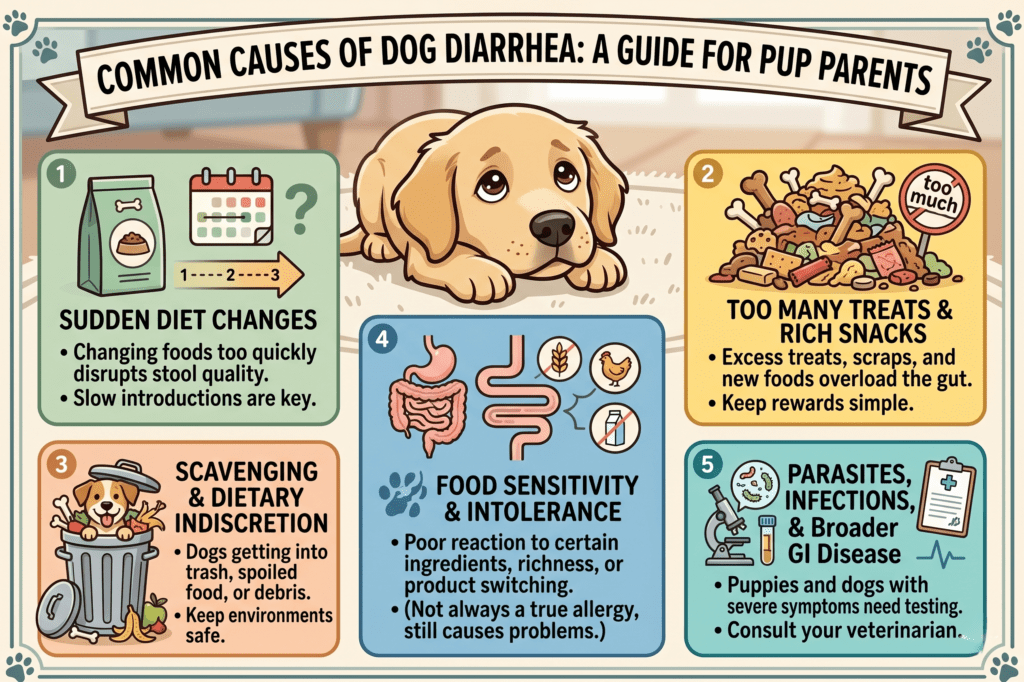
Changing foods too quickly can disrupt normal stool quality. Even a food that is otherwise healthy may cause temporary digestive upset if introduced abruptly. Nutrition transitions are generally easier to evaluate when changes are made gradually and consistently.[3,4]
Too Many Treats or Rich Snacks
This is one of the most common everyday causes.
When dogs get too many treats, table scraps, fatty snacks, or several new rewards in a short period, the gut may respond with loose stool. Treats should be portioned carefully and should not crowd out a complete and balanced diet.[5]
Scavenging and Dietary Indiscretion
Dogs that get into garbage, spoiled food, outdoor debris, compost, or unfamiliar human food are at higher risk for diarrhea. In these cases, the concern is not only the quality of the stool but also what the dog may have eaten.
Food Sensitivity or Ingredient Intolerance
Some dogs seem to do poorly with certain ingredients, high levels of richness, or repeated product switching. That is not always the same thing as a true food allergy, but it can still lead to repeat stool problems.
If loose stool keeps recurring after certain foods or treats, it may help to keep a simple feeding log and discuss patterns with your veterinarian.
Parasites, Infections, or Broader GI Disease
Puppies, dogs at risk of exposure, and dogs with more severe symptoms may need testing for parasites, infections, or other gastrointestinal diseases.[1,2]
When to Monitor and When to Call the Vet
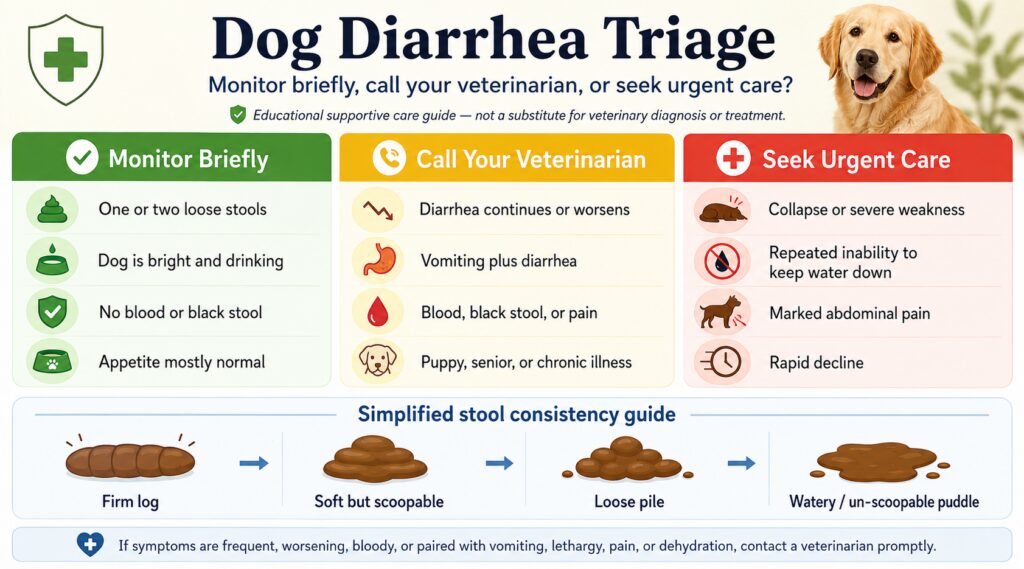
| Situation | Practical next step |
| One or two loose stools, dog still bright and drinking | Brief monitoring, hydration, simpler feeding, fewer extras |
| Diarrhea plus vomiting | Call your veterinarian sooner |
| Blood in stool or black stool | Prompt veterinary evaluation |
| Lethargy, weakness, pain, or refusal to eat | Veterinary evaluation |
| Puppy or senior dog with diarrhea | Lower threshold for calling the vet |
| Ongoing diarrhea that is not improving | Veterinary evaluation |
What to Do First at Home in a Mild Case
The following guidance is supportive care, not a substitute for veterinary diagnosis or treatment.
If your dog has mild diarrhea but is still bright, alert, reasonably comfortable, and drinking, a short period of careful home monitoring may be appropriate. If the picture changes or the symptoms worsen, call your veterinarian.
Keep fresh water available at all times. Hydration is one of the most important priorities because fluid losses can add up faster than owners expect, especially in small dogs and puppies.[1]
Keep the feeding plan simple. This is usually not the time to add multiple supplements, rotate foods, or offer lots of special snacks. A simple, easier-to-manage feeding routine makes it easier to see whether the stool is actually improving.
Pause rich treats, table scraps, and novelty chews. During active diarrhea, the gut usually responds better to fewer variables than to more.
What About a Dog Diarrhea Bland Diet, Pumpkin, or Probiotics?
Search data show that many dog parents look for “dog diarrhea bland diet,” “dog diarrhea pumpkin,” or “dog diarrhea probiotic” when their dog has loose stools. Those searches make sense, but they can also lead to overcorrection.
A simpler feeding routine may be useful during mild digestive upset, but the safest choice depends on your dog’s age, size, medical history, symptoms, and what may have triggered the diarrhea. Puppies, senior dogs, dogs with chronic conditions, and dogs with vomiting, blood, weakness, or poor appetite should not be managed by internet guessing.
Pumpkin, probiotics, rice, or other home-feeding ideas are not universal fixes. They may be inappropriate for some dogs, and they can make the situation harder to interpret if you add several things at once. If you are considering a bland diet or a digestive-support product, keep the plan simple and check with your veterinarian if symptoms are persistent or worsening, or if they are accompanied by other warning signs.[1,2,4]
What Not to Do When Your Dog Has Diarrhea
One of the most common mistakes is changing too many things at once.
Owners often switch food, add probiotics, try home remedies, keep feeding treats, and start watching internet videos all in the same day. That can make it harder to tell what is helping and what may be making the situation worse.
Another mistake is assuming diarrhea is harmless because dogs “get it all the time.” Mild cases can happen, but repeated diarrhea, bloody stool, vomiting, or a clearly sick dog should never be brushed off as routine.
When Dog Diarrhea Is More Concerning
Blood or Black Stool
Bright red blood, black tar-like stool, or repeated mucus-heavy diarrhea deserves more attention than one mildly soft bowel movement.
Vomiting Along With Diarrhea
When vomiting and diarrhea happen together, dehydration risk rises and the situation becomes more urgent.
Low Energy, Weakness, or Poor Appetite
A dog with diarrhea who also seems tired, withdrawn, painful, or uninterested in food should be assessed more quickly.
Diarrhea That Keeps Going
If diarrhea is not settling within a short monitoring period, or if the pattern is getting worse instead of better, calling your veterinarian is the safer next step.
What Stronger Evidence Supports for Dog Diarrhea, and What It Does Not
The strongest support in this topic is for hydration, cautious monitoring, nutrition consistency, and veterinary evaluation when symptoms are persistent, worsening, or accompanied by other warning signs.[1,2,4]
There is also strong practical support for keeping treats appropriately portioned and avoiding rich extras while the gut is already irritated.[3,5]
What is much weaker is the idea that one universal home remedy works for every dog with diarrhea. That kind of promise does not fit safe veterinary guidance.
How Superfood Science Treat Options Fit Dog Diarrhea Recovery Routines
During active diarrhea, the goal is not to keep feeding treats just because they are natural or organic. Even well-positioned treats can still be the wrong choice if the gut is already irritated.
That is why the smarter move during active diarrhea is often to pause rich extras, stabilize the routine, and keep the feeding plan simple.
Once the stool has normalized and the dog is back to baseline, dog parents often want a better long-term approach so dog diarrhea and digestive flare-ups do not keep repeating.
That is where Superfood Science natural and organic dog treats may fit more naturally. Organic and natural dog treats can be a smart choice for ingredient-conscious families when they are clearly labeled, properly portioned, and matched to the dog’s needs. The value is not that they treat diarrhea. It is that they may give owners a cleaner-label, more intentional option once the dog is stable again and treats are being reintroduced carefully.
For dogs with a history of sensitive digestion, a simple treat routine usually makes more sense than frequent switching. Smaller portions, one treat type at a time, and careful observation can help dog parents notice what their dog handles well.
Suggested Usage Guide After Dog Diarrhea Improves
If your dog has mild diarrhea, simplify first instead of adding complexity.
Make sure water is always available. Pause rich treats and table scraps. Keep the feeding routine simple and watch whether the stool is becoming less frequent and better formed.
Track the bigger picture too: appetite, energy, vomiting, hydration, and whether the dog still seems comfortable.
If the stool settles, reintroduce the normal routine gradually. When treats come back in, use smaller amounts and avoid switching among multiple products at once. For dogs with repeat digestive sensitivity, consistency is usually more helpful than novelty.
Dog Diarrhea Safety: When to Call a Vet
Call your veterinarian promptly if your dog has diarrhea that lasts more than a short monitoring period, repeated vomiting, blood in the stool, black stool, worsening weakness, reduced appetite, or signs of dehydration.
Seek more urgent care if your dog has severe lethargy, collapse, marked abdominal pain, repeated inability to keep water down, or rapid decline.
Puppies, senior dogs, and dogs with chronic medical problems should usually be evaluated sooner because they can deteriorate faster than healthy adult dogs.[1,2]
Limitations and Research Gaps
There is strong veterinary guidance around recognizing warning signs, protecting hydration, and using clinical judgment when diarrhea is paired with other symptoms.
But diarrhea is still a broad symptom with many possible causes. That means there is no single home approach that fits every dog, and no internet article can diagnose why a specific dog is having diarrhea.
There are also important dog-to-dog differences in age, body size, medical history, exposure risk, and diet tolerance. That is why home monitoring should be treated as a short-term tool, not as a substitute for veterinary evaluation when the situation is worsening or unclear.
FAQs
What should I do if my dog has diarrhea but seems fine?
Brief monitoring, good hydration, and a simpler feeding approach may be reasonable if your dog is otherwise bright, alert, comfortable, and drinking. If symptoms persist or worsen, contact your veterinarian.
How long is too long for diarrhea in dogs?
If diarrhea continues beyond a short monitoring period, or if your dog develops vomiting, weakness, blood in the stool, pain, or reduced appetite, it is safer to call your veterinarian.
Can dog treats cause diarrhea?
Yes. Rich treats, too many treats, fatty snacks, table scraps, or sudden treat changes can all contribute to digestive upset. Treats should be portioned carefully and introduced consistently, especially for dogs with sensitive digestion.[5]
Should I stop all treats when my dog has diarrhea?
In many mild cases, reducing or pausing treats is a practical step, especially if the treats are rich, fatty, unfamiliar, or recently introduced. Once stool normalizes, treats can be reintroduced gradually in smaller amounts.
Is a dog diarrhea bland diet always the right first step?
Not always. A simpler feeding routine may be reasonable in mild cases, but dogs with vomiting, blood, weakness, poor appetite, dehydration risk, or ongoing diarrhea should be evaluated by a veterinarian instead of managed by guessing.
Are probiotics always the answer for dog diarrhea?
Not always. Some dogs may benefit from targeted gastrointestinal support, but probiotics are not a universal fix and should not replace veterinary care when symptoms are persistent, worsening, or serious.
When should I worry about dog diarrhea?
Worry sooner if diarrhea is frequent, watery, bloody, black, paired with vomiting, or paired with weakness, pain, poor appetite, dehydration, or rapid decline. Puppies, seniors, and dogs with chronic health problems should be evaluated sooner.
Conclusion
Diarrhea in dogs is common, but it should still be taken seriously.
The safest approach is not to panic and not to resort to endless guesswork. It is thoughtful monitoring, simpler feeding, less treat overload, and knowing when veterinary care is warranted as clinical signs become more concerning.
Once your dog is better, prevention usually comes back to the basics: consistent feeding, fewer surprises, smaller portions, and a treat routine that is simpler and easier for the gut to handle.
Explore More Dog Health Tips
- Turkey vs. Chicken: Which Protein Is Better for Your Dog’s Treats?
- Turkey vs Chicken Dog Treats for Sensitive Stomachs
- Best Organic Dog Treats Made in the USA: A Vet-Safe Guide for Dog Parents
- Organic Dog Treat Subscription Options: Why Superfood Science Makes Sense
- Top-Rated Organic Dog Treats: A Guide to Safety
- Organic Dog Treats with Natural Ingredients: What Actually Matters
References
[1] MSD Veterinary Manual. (n.d.). Diarrhea in dogs. https://www.msdvetmanual.com/dog-owners/digestive-disorders-of-dogs/diarrhea-in-dogs
[2] American Animal Hospital Association. (n.d.). Ask AAHA: When to call the vet for stomach upset and diarrhea. https://www.aaha.org/your-pet/pet-owner-education/ask-aaha/
[3] American Animal Hospital Association. (2021). 2021 AAHA nutrition and weight management guidelines for dogs and cats. https://www.aaha.org/resources/2021-aaha-nutrition-and-weight-management-guidelines/home/
[4] World Small Animal Veterinary Association. (n.d.). Global nutrition guidelines. https://wsava.org/global-guidelines/global-nutrition-guidelines/
[5] World Small Animal Veterinary Association. (n.d.). Feeding treats to your dog. https://wsava.org/wp-content/uploads/2025/11/WSAVA_GuidetoTreats_Dogs_251107.pdf
