
Dog Keeps Vomiting: When to Call a Vet and What to Watch First
Quick Answer
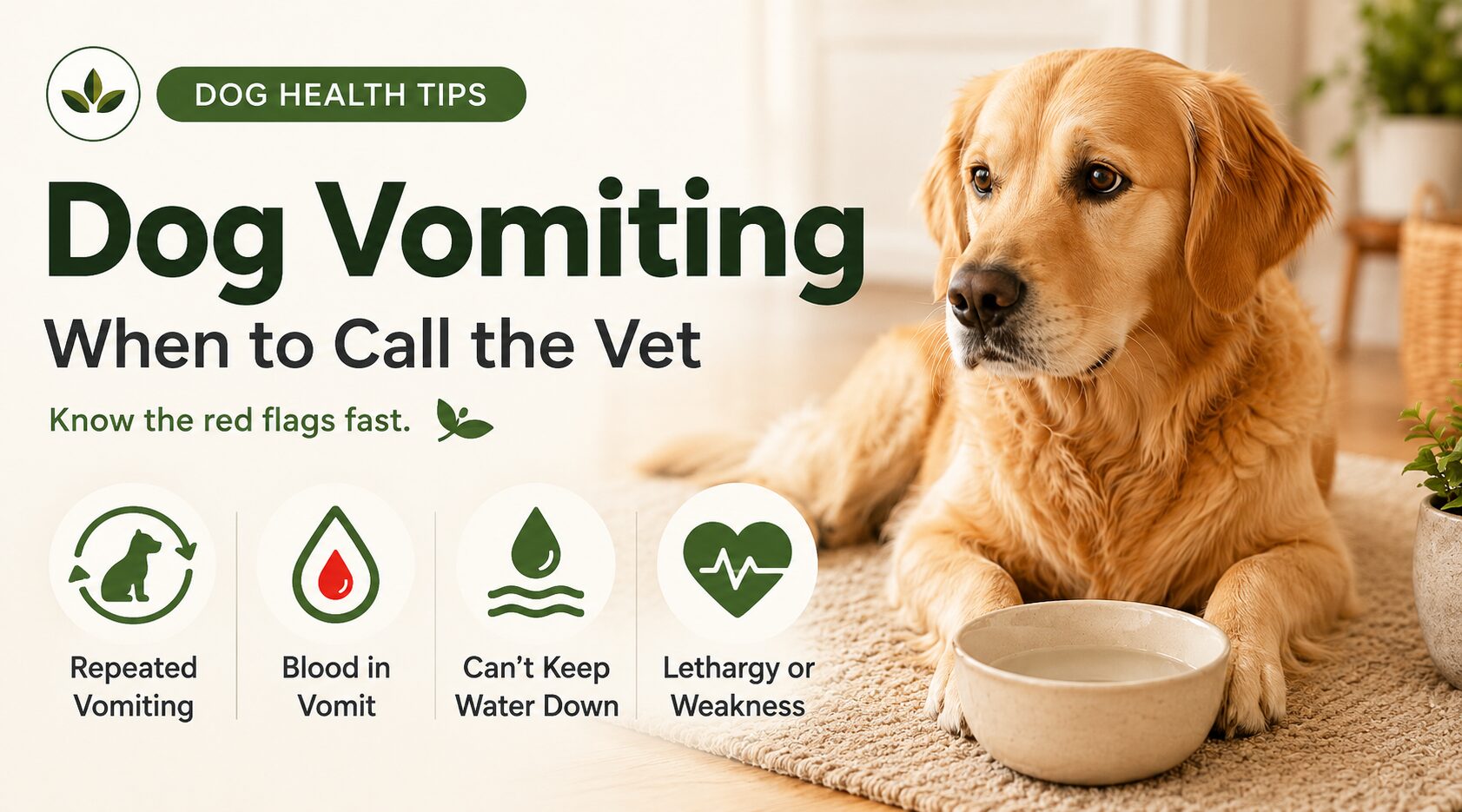
A single vomiting episode in a dog that quickly returns to normal may not always require urgent care. But repeated vomiting, vomiting with diarrhea, lethargy, bloating, pain, blood, or inability to keep water down should prompt veterinary evaluation. Puppies, senior dogs, and dogs with chronic illness should be assessed sooner rather than later.[1][2][3]
Trust Signal
By Superfood Science Writing Team | Reviewed by Dr. Kelly Hood, DVM | Last Updated: 06/15/2026
Superfood Science has produced organic and natural functional foods for humans and pets for over 20 years, specializing in clean-label formulations and evidence-based nutrition.
Key Takeaways
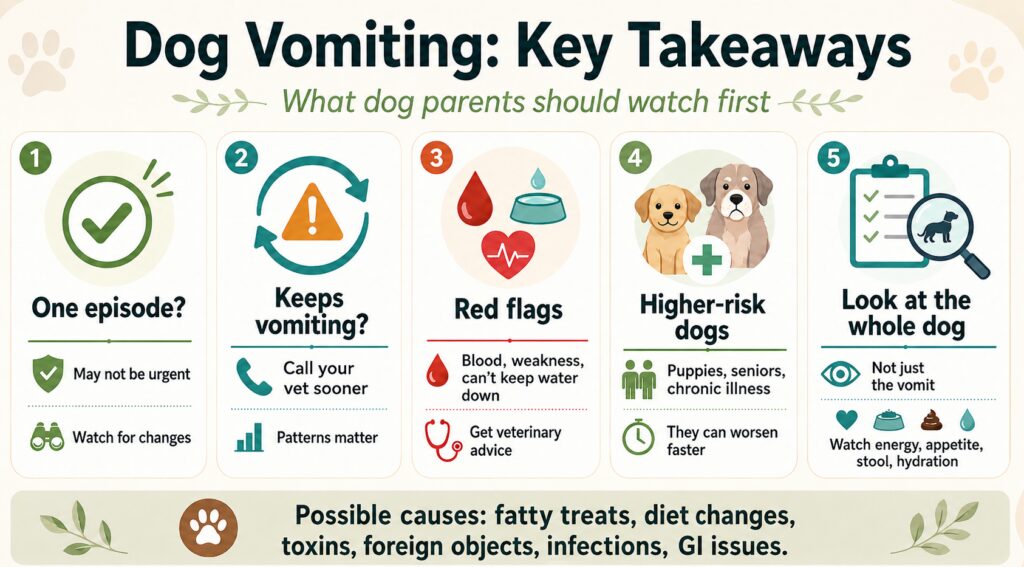
- One isolated vomiting episode is not always an emergency, but patterns matter.[1][2]
- When a dog keeps vomiting alongside blood, weakness, abdominal pain, or inability to keep water down, those are stronger reasons to call a veterinarian quickly.[1][2][3]
- Puppies, toy breeds, senior dogs, and dogs with chronic disease can deteriorate faster.[2][3]
- Rich treats, abrupt diet changes, toxins, foreign objects, infections, and GI disease are all possible causes of vomiting.[1][2][3]
- The safest first step is to look at the whole dog, not just the vomit.
Why vomiting in dogs is not one simple problem
Vomiting is a sign, not a diagnosis.
Dogs vomit for many different reasons. Sometimes the cause is relatively mild, such as eating too fast or getting into a food that did not agree with them. Other times, vomiting may be linked to infection, toxin exposure, gastrointestinal inflammation, pancreatitis, obstruction, or broader illness.[1][2][3]
That is why, when a dog keeps vomiting, the most useful question is not just, “My dog threw up — now what?”
It is, “What else is happening with my dog?”
What may count as more minor vomiting episodes?
A single vomiting episode in a dog that quickly returns to normal may sometimes be monitored closely at home.
That means the dog is still bright, alert, interested in water, and not showing other warning signs. Even in those cases, though, owners should stay observant because the picture can change over the next several hours.[1][2]
Some dogs vomit after:
- eating too fast
- getting into something mild but irritating
- brief stomach upset after a treat or dietary change
- motion stress or unusual excitement
That does not make vomiting trivial. It simply means context matters.
When dog vomiting becomes more concerning
Repeated vomiting
When a dog keeps vomiting — more than once or repeatedly over a short period — the level of concern rises. Repetition increases the risk of dehydration and suggests that the stomach upset may not be a one-time event.[1][2]
Inability to keep water down
If your dog vomits after drinking small amounts of water, the situation becomes more serious because dehydration can develop quickly.[2][3]
Vomiting with other symptoms
Vomiting matters more when it appears together with:
- diarrhea
- lethargy
- weakness
- reduced appetite
- abdominal discomfort
- bloating
- fever or seeming “off”
The combination is often more important than the vomiting alone.[1][2][3]
Blood in the vomit
Red blood or dark coffee-ground-like material may indicate bleeding and should be evaluated promptly.[2][3]
Suspected toxin or foreign object exposure
If you suspect your dog ate a toxin, medication, garbage, bones, socks, toys, or another non-food object, you should not wait for repeated vomiting before contacting a veterinarian.[2][3]
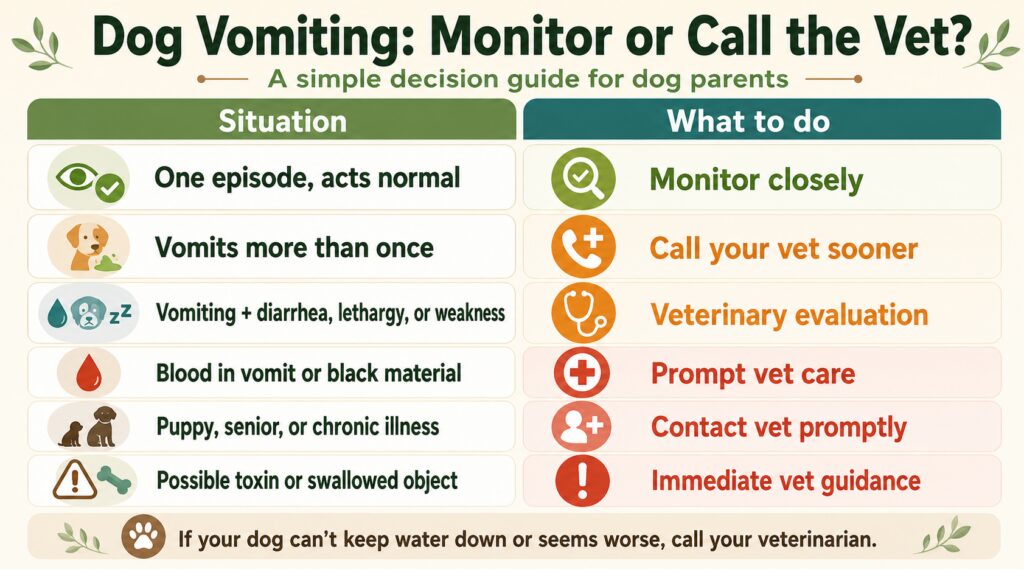
Decision table: when to monitor and when to call the vet
What stronger evidence supports
The strongest support for this topic is recognizing vomiting as a nonspecific clinical sign that must be interpreted in light of the dog’s age, history, frequency of vomiting, and accompanying symptoms.[1][2][3]
Veterinary sources consistently support earlier evaluation when vomiting is persistent, severe, or paired with red-flag signs such as lethargy, inability to keep water down, abdominal pain, bloat, or blood.[1][2][3]
What stronger evidence does not support is the idea that all vomiting can be safely handled at home with the same routine.
What dog parents should not assume
It is easy to over-interpret one event, but it is also easy to under-react.
Owners sometimes assume vomiting is harmless because dogs “throw up sometimes.” That is partly true. But it becomes less true when vomiting repeats, when the dog looks unwell, or when the dog belongs to a higher-risk group, such as a puppy or a fragile senior.
It is also a mistake to assume a “healthy-sounding” treat or natural ingredient could not be part of the problem. Dogs may react to richness, portion size, fatty snacks, abrupt changes, or simply getting too many extras on top of their normal food.[1][2]
Common causes of vomiting that owners should keep in mind
Possible causes of vomiting include:
- dietary indiscretion
- abrupt food or treat changes
- eating too fast
- rich or fatty treats
- parasites or infections
- toxin exposure
- foreign object ingestion
- pancreatitis
- gastrointestinal inflammation
- systemic illness[1][2][3]
This broad list is one reason vomiting should be judged by pattern and context, not by a single guess about a single ingredient.
Limitations and evidence gaps
There is good veterinary guidance on red flags for vomiting, dehydration risk, toxin exposure, and the need to assess the whole dog, not just the symptom.[1][2][3]
But vomiting is still a very broad sign with many causes. That means there is no one universal home treatment plan that fits every dog, and no article can tell a specific owner the exact cause without an exam.
That is why home observation should be treated as a short-term, low-risk tool, not a substitute for needed veterinary care.
Practitioner-Recommended Usage Guide
If your dog vomits once but otherwise seems normal, monitor closely rather than making multiple changes at once.
Keep fresh water available in small amounts. Pause rich treats, table scraps, and unnecessary extras. Monitor whether vomiting recurs, whether your dog keeps water down, and whether appetite, energy, and stool remain normal.
If the dog improves and remains normal, the episode may have been self-limited. If your dog keeps vomiting, develops new symptoms, or looks less comfortable, contact your veterinarian.
When treats are reintroduced after the dog is clearly back to baseline, use a simpler, more intentional routine rather than multiple new products at once.
Safety and when to call a vet
Call your veterinarian promptly if your dog has repeated vomiting, multiple vomiting episodes in a short period, blood in the vomit, weakness, lethargy, abdominal discomfort, poor appetite, or inability to keep water down.[1][2][3]
Seek urgent veterinary care if your dog has collapsed, severe weakness, marked abdominal bloating, suspected toxin ingestion, suspected foreign-body ingestion, or repeated unproductive retching.
Puppies, toy breeds, senior dogs, and dogs with chronic medical issues should generally be evaluated sooner because they may dehydrate or worsen more quickly.[2][3]
FAQs
Is it normal for dogs to vomit occasionally?
Occasional vomiting can happen, but it should not become a repeated pattern or be ignored when other symptoms are present.[1][2]
What should I do if my dog throws up once?
Monitor closely. If your dog returns to normal quickly, drinks normally, and does not vomit again, it may not require urgent care, but you should still keep watching.[1][2]
How many vomiting episodes are too many for a dog?
If a dog keeps vomiting — more than one or two episodes in a short time, or continuing over a day — the situation deserves veterinary attention.[1][2][3]
Can dog treats cause vomiting?
Yes. Rich treats, large portions, abrupt ingredient changes, or too many extras can all contribute to stomach upset.[1][2]
When is dog vomiting an emergency?
Vomiting is more urgent when it includes blood, repeated episodes, inability to keep water down, severe weakness, abdominal bloating, or suspected toxin or foreign-object exposure.[2][3]
Conclusion
Dog vomiting is common, but it should still be taken seriously.
The safest approach is not to panic over every isolated episode and not to brush off the important ones. It is to look at the whole dog, watch the pattern carefully, and involve your veterinarian sooner when the signs are repeating, worsening, or happening in a higher-risk dog.
Explore More Dog Health Tips
Dog Diarrhea: What to Do First
Chicken Allergy in Dogs vs. Food Sensitivity
Chicken-Free Dog Treats for Sensitive Dogs
Early Signs of Arthritis in Dogs
Signs Your Dog May Be Overweight
References
- American Kennel Club. Why is my dog throwing up? AKC. https://www.akc.org/expert-advice/health/why-is-my-dog-throwing-up/
- VCA Animal Hospitals. Vomiting in dogs. VCA. https://vcahospitals.com/know-your-pet/vomiting-in-dogs
- MSD Veterinary Manual. Vomiting in dogs. MSD Veterinary Manual. https://www.msdvetmanual.com/dog-owners/digestive-disorders-of-dogs/vomiting-in-dog
