
Soft Dog Treats for Senior Dogs: What to Check First
Quick Answer
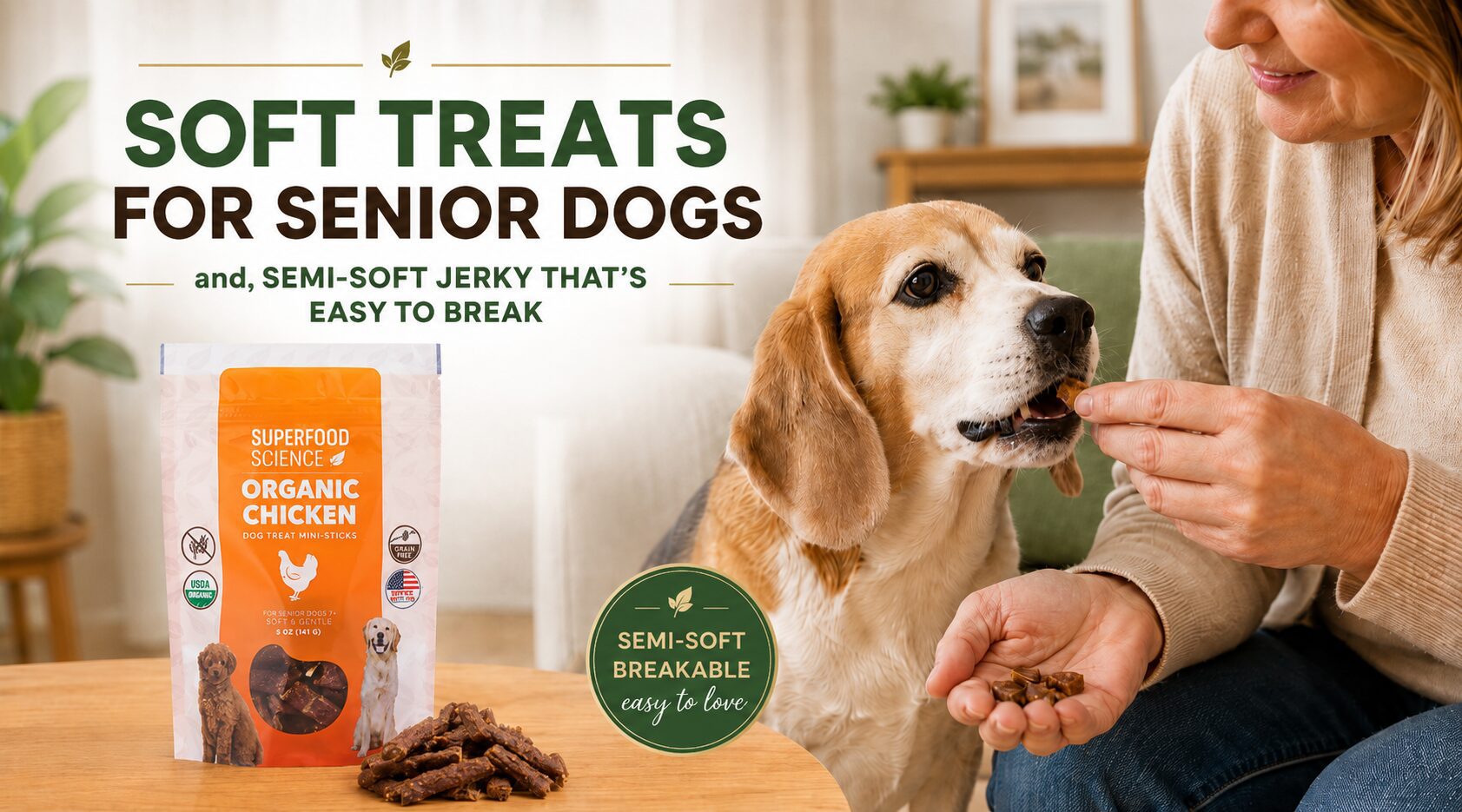
The best soft dog treats for senior dogs are easy to chew, easy to break into small pieces, clearly labeled, and realistic for your dog’s daily calorie needs. Semi-soft treats can be especially practical for older dogs, but sudden changes in chewing, bad breath, weight loss, or pain still deserve veterinary attention.
Trust Signal
By Superfood Science Writing Team | Reviewed by Dr. Kelly Hood, DVM | Last Updated: 07/29/2026
Superfood Science has produced organic and natural functional foods for humans and pets for over 20 years, specializing in clean-label formulations and evidence-based nutrition.
Key Takeaways
- Soft and semi-soft treats can make reward time easier for senior dogs with dental wear, missing teeth, or a slower chewing style.
- Texture matters most when it is paired with smart portion size, calorie awareness, and a predictable daily treat routine.
- Age-related oral changes can include plaque, gum inflammation, periodontal bone loss, mobile teeth, and pain with chewing, so treat preference can be a useful clue.
- Agaricus mushrooms contain beta-glucans, a functional ingredient class studied for interactions with canine immune cells, but treats should still be positioned as wellness support rather than medical treatment.
- Call your veterinarian if chewing changes appear suddenly or come with weight loss, bad breath, drooling, vomiting, diarrhea, mouth pain, swelling, or bleeding.
Why soft dog treats for senior dogs matter more with age
Soft dog treats for senior dogs matter because eating comfort can change with age before a dog parent sees an obvious problem. An older dog may still want rewards but chew more slowly, hesitate with hard biscuits, drop food, or prefer smaller pieces. AAHA senior-care guidance emphasizes routine assessment of oral health, nutrition, body condition, mobility, and quality of life in aging pets, which makes treat choice part of a broader senior-wellness picture rather than a simple snack decision.[1]
That does not mean every senior dog needs a mushy treat. The more useful goal is a treat that reduces unnecessary chewing effort while still being easy to portion, easy to count, and easy to fit into the dog’s total daily intake. WSAVA treat guidance frames treats as extras beyond the complete diet and warns that too many extras can displace balanced nutrition or contribute unnecessary calories.[2]
The biology of senior oral changes: why chewing can slow down
Senior dogs may chew differently because the mouth is a working structure that changes over time. Plaque and calculus can irritate the gums; periodontal disease can result in gingival recession, periodontal pockets, bone loss, tooth mobility, and eventual tooth loss. Oral pain may show up as slower chewing, dropping food, bad breath, or reluctance to eat harder textures.[3]
This is the “why” behind the soft-treat conversation. A semi-soft treat does not diagnose or fix dental disease, but it may be more comfortable for a dog that no longer enjoys forceful crunching. If the changes are new, one-sided, painful, or paired with bad breath, drooling, bleeding, facial swelling, or weight loss, the better next step would beveterinary evaluation instead of simply switching treat brands.[1][3]
What stronger evidence supports
The strongest evidence in this topic supports senior-dog assessment, oral-health monitoring, nutrition review, and controlled treat use. AAHA senior-care guidance describes senior wellness as a whole-patient process that includes oral health, nutrition, weight, mobility, and quality-of-life review.[1] WSAVA guidance also treats snacks and rewards as part of the dog’s total diet, not as nutritionally invisible extras.[2]
The evidence is weaker for saying that one commercial soft-treat category is “best” for all senior dogs. Older dogs vary widely in dental status, calorie needs, digestive tolerance, appetite, medication use, and underlying disease. So the most evidence-aligned advice is practical: choose a chewable, portionable, clearly labeled treat, then monitor how your dog actually chews, swallows, digests, and maintains weight.
What makes a soft treat a better fit for a senior dog
A better senior treat starts with chew comfort, but it should not stop there. A treat that is soft yet too large can still be awkward. A treat that is easy to chew but calorie-dense can quietly add too many extras. A treat with a complicated ingredient panel can make tolerance harder to track in a dog whose digestion is becoming less predictable.
For many senior dogs, the most practical option is a semi-soft treat that can be broken into small, repeatable pieces. That gives the owner more control: one mini-stick can become several rewards, and the dog can enjoy the routine without being asked to crunch through a hard biscuit. This approach also supports the “treats are extras” principle because dog parents can count pieces and keep rewards inside a realistic daily plan.[2]
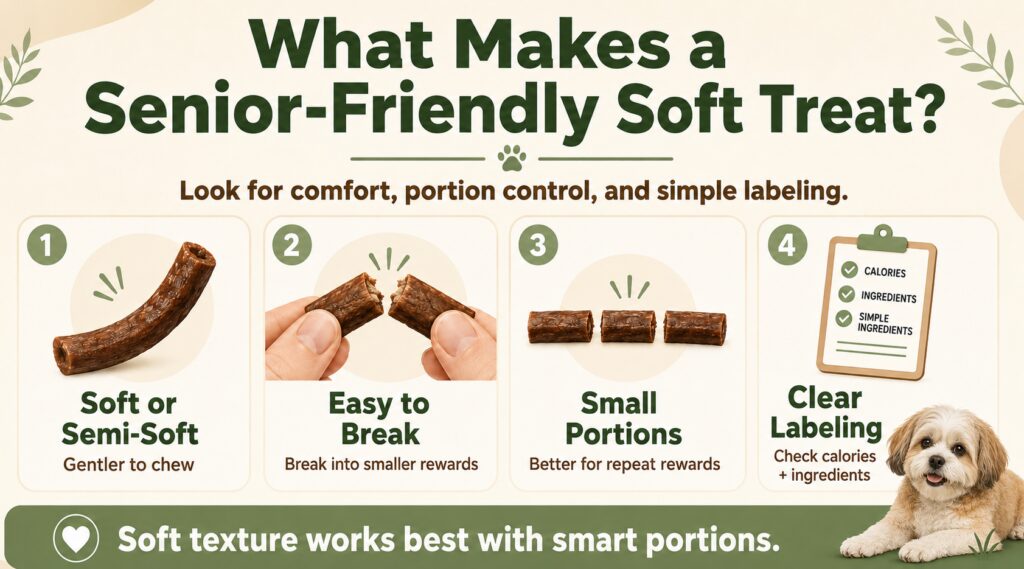
Decision table: what usually works better for senior dogs
| Treat feature | More helpful choice | Less helpful choice | Why it matters |
| Texture | Soft or semi-soft, easy-chew treat | Hard crunchy biscuit | Older dogs may chew more slowly or avoid hard textures when oral comfort changes.[1][3] |
| Portion size | Small or easy to break | Large pieces | Smaller pieces are easier to chew, count, and fit into a controlled treat routine. |
| Calories | Moderate and clearly labeled | Rich snack-style treat | Treats are extras beyond the complete diet and should not crowd out balanced nutrition.[2] |
| Ingredient style | Clear, intentional formula | Highly mixed indulgent recipe | A predictable ingredient profile makes tolerance easier to observe. |
| Feeding pattern | Planned rewards | Frequent random extras | A planned pattern helps avoid quiet overfeeding in less active senior dogs.[1][2] |
| Dental changes | Texture plus vet check when signs appear | Ignoring chewing changes | Bad breath, dropping food, pain, or mouth swelling may suggest oral disease.[3] |
The point is not that every older dog needs the same treat. The point is that softness works best when it is paired with portion logic, calorie awareness, and attention to the dog’s actual mouth, appetite, and stool response.
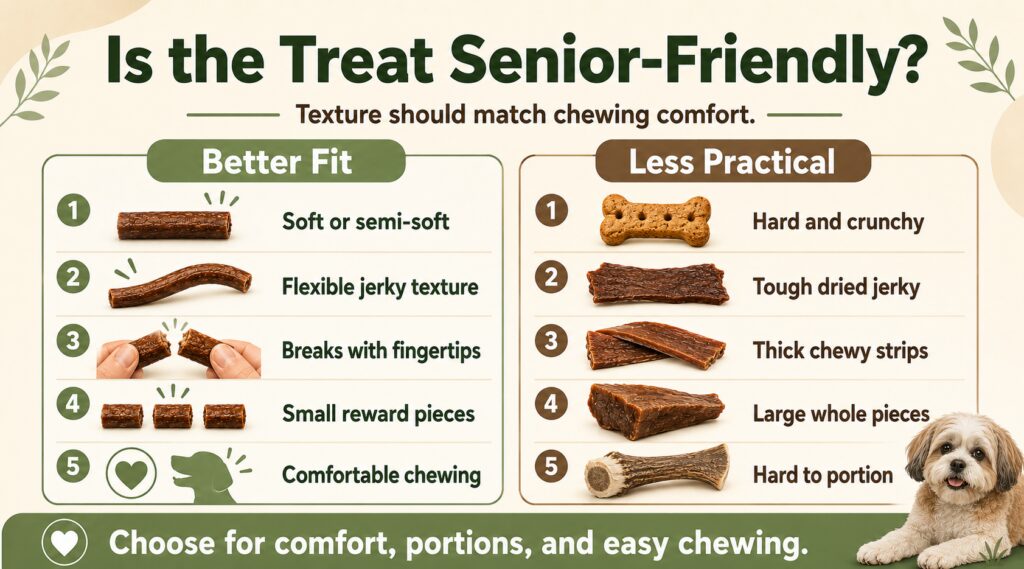
Why semi-soft can be a real advantage
For many senior dogs, semi-soft texture is not a downgrade from a crunchy biscuit. It is a practical middle ground. A semi-soft treat can be gentler to chew, easy to handle, and simple to divide into smaller pieces for daily rewards.
This matters because senior-dog routines often need more intention, not more restriction. A dog parent may still want to reward good behavior, maintain a positive routine, or support enrichment, but the reward should match the dog’s current mouth comfort and body condition. When semi-soft texture is paired with organic ingredients, all-natural formulation, grain-free positioning (eh debatable) , non-GMO standards, and made-in-the-USA production, it can fit the cleaner-label routine many dog parents want without turning treat time into a medical claim.
Nutritional immunology: what beta-glucans add to the conversation
Beta-glucans are natural polysaccharides found in sources such as yeast, algae, and mushrooms. In canine research, beta-glucans have been studied for interactions with innate immune cells, including canine macrophages, and for their potential role in trained innate immune responses.[4] Oral beta-1,3/1,6-glucans have also been studied in dogs for effects on immune markers, with researchers describing possible interaction with macrophages and dendritic cells in gut-associated immune tissue.[5]
For dog parents, the practical takeaway is modest but meaningful: beta-glucan-rich ingredients can be discussed as part of a functional ingredient profile that may help support a normal, healthy immune system response. That is different from saying a treat directly affects a disease process, prevents illness, or replaces veterinary care. The ingredient story is about nutritional wellness support, not prescription-level therapy.
What senior dog parents should watch more closely
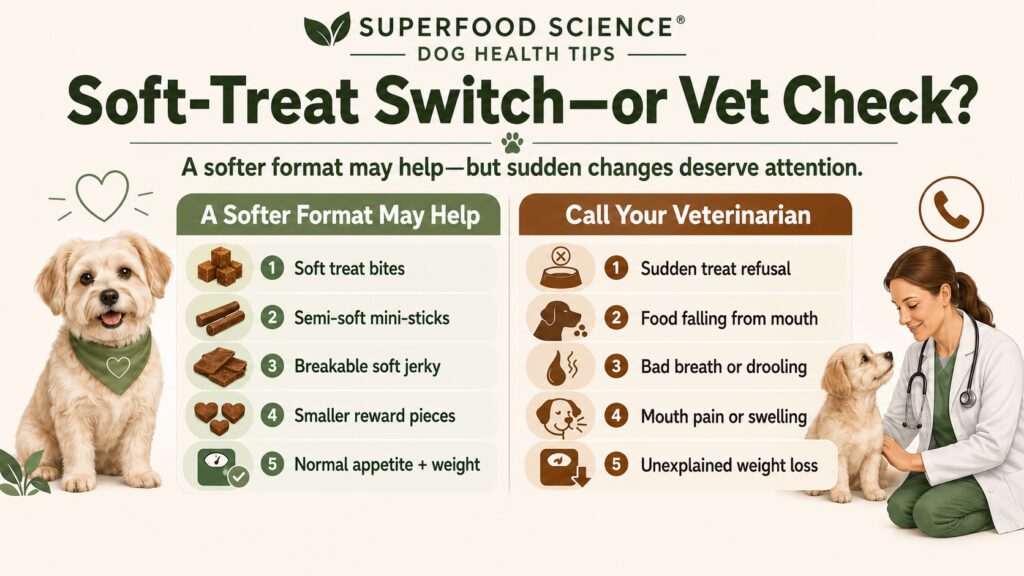
Treat preference can sometimes be the first clue that something has changed. A senior dog who suddenly rejects hard treats, chews on one side, drops food, or backs away from a favorite snack may be showing oral discomfort rather than simple pickiness. Periodontal disease in dogs can involve bad breath, red or bleeding gums, bone loss, mobile teeth, and tooth loss, so these signs deserve attention.[3]
Digestive response matters too. A soft treat is still the wrong fit if it causes vomiting, diarrhea, excess gas, appetite disruption, or stool changes. Senior dogs with chronic kidney disease, diabetes, pancreatitis history, chronic gastrointestinal disease, food allergy workups, or prescription diets should have treat choices reviewed with a veterinarian because “natural” does not automatically mean appropriate for every medical situation.
How Superfood Science Treat Options Fit This Topic
Note: The following guidance represents supportive lifestyle care and is part of a broader pet-wellness routine. It is not a substitute for professional veterinary diagnosis, prescription diets, or medical treatment.
For senior dogs, the most useful treat routine is usually easier to chew, easier to portion, and easier to fit into a calm daily pattern. Superfood Science’s semi-soft, organic, all-natural, grain-free, non-GMO, made-in-the-USA positioning fits this topic because it gives dog parents cleaner-label options that can be broken into smaller rewards and used more intentionally.
Dog parents who want to browse current options can visit: Shop Superfood Science Dog Treats
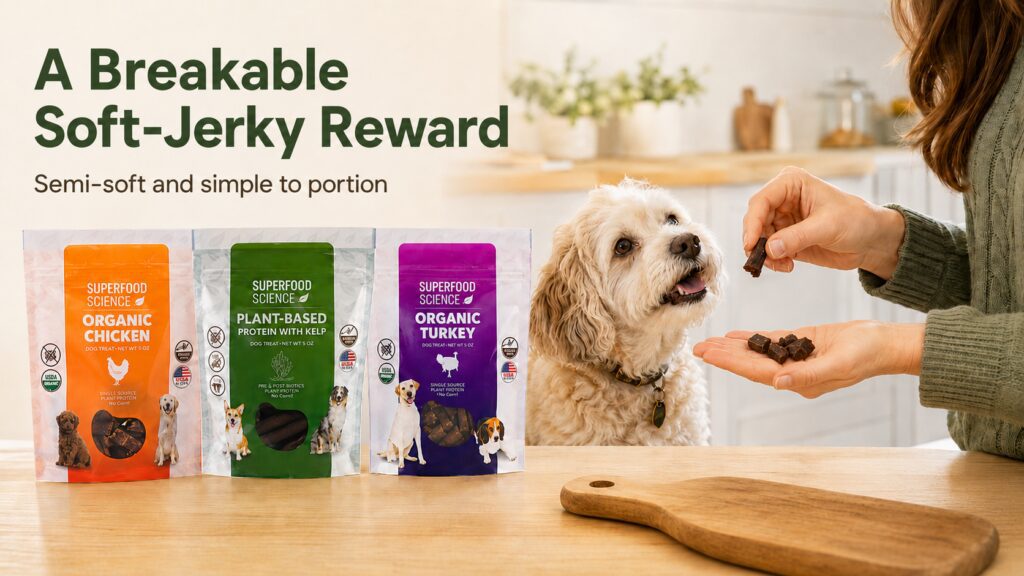
Organic Turkey Dog Treats
For senior dogs whose owners want a cleaner-label reward option, Superfood Science Organic Turkey Dog Treats may fit well when used in small, manageable portions. The semi-soft texture can be especially practical for older dogs, and the organic, all-natural, grain-free, non-GMO, made-in-the-USA formulation supports a more intentional senior-dog routine.
This line includes Agaricus mushrooms, which contain beta-glucans that may help support a normal, healthy immune system response in senior dogs. That structure-function framing fits the ingredient’s nutritional immunology story while staying clearly separate from any claim to diagnose, treat, or prevent disease.[4][5]
Organic Chicken Dog Treats
For senior dogs that tolerate chicken well, Superfood Science Organic Chicken Dog Treats may fit a structured reward routine. Its semi-soft format can work well for older dogs that still enjoy training-style rewards or daily treating, while the organic, all-natural, grain-free, non-GMO, made-in-the-USA profile keeps the choice aligned with ingredient-conscious families.
Chicken is still an individual-fit decision. If a senior dog has a known chicken sensitivity, active elimination diet, chronic itching, vomiting, or diarrhea, the treat should be discussed with the veterinary team rather than treated as a universal option.
Plant-Based Protein Dog Treats
For owners who want a different ingredient direction, Superfood Science Plant-Based Protein Dog Treats may offer another thoughtful option. The semi-soft texture remains a practical advantage, while ingredients such as kelp, chia, and flaxseed support a broader plant-based functional ingredient story.
This option may appeal to families who want a non-poultry reward format while still focusing on chew comfort and portion control. As with any treat, the right fit depends on the individual dog’s tolerance, stool quality, appetite, and total daily calorie intake.
The strongest compliant brand position is this: Superfood Science gives dog parents cleaner-label, semi-soft treat options that can fit a more intentional senior-dog routine, while chew comfort, calories, and the dog’s overall health still matter most.
Limitations and research gaps
There is useful veterinary guidance around senior-pet assessment, oral health, body condition, nutrition review, and controlled treat use.[1][2] There is also growing canine research on beta-glucans and immune-cell interactions, but that research does not prove that a senior dog treat can treat immune disease or replace medical care.[4][5]
There is less direct head-to-head evidence proving that one commercial soft-treat category is universally best for all senior dogs. That gap matters because older dogs vary so much in dental health, appetite, gastrointestinal tolerance, activity level, medications, and body condition. The safest advice remains practical: choose softer, manageable, clearly labeled treats and pay attention to what your dog can actually chew and tolerate comfortably.
Suggested Care & Usage Guide
If your senior dog seems less enthusiastic about crunchy treats, consider switching to a soft or semi-soft option before assuming your dog has simply become picky. Choose one treat that is easy to break and easy to count. Offer small portions and watch chewing effort, swallow comfort, appetite, stool quality, and overall interest.
Keep reward moments calm. Break larger pieces before offering them, especially for dogs with missing teeth, smaller mouths, or a history of gulping. If your dog is gaining weight, moving less, or no longer chewing normally, review the full daily calorie plan and oral-health picture with your veterinarian instead of solving the issue only through treat texture.[1][2][3]
Safety and when to call a vet
Call your veterinarian if your senior dog has persistent trouble chewing, sudden treat refusal, weight loss, bad breath, drooling, reluctance to eat, vomiting, diarrhea, or signs of pain when chewing or swallowing.[1][3]
- facial swelling or swelling under one eye
- bleeding from the mouth
- repeated inability to keep food or water down
- collapse, severe weakness, or sudden confusion
- black, tarry, or bloody stool
- obvious mouth pain, pawing at the mouth, or crying when chewing
If your senior dog has chronic kidney disease, diabetes, a history of pancreatitis, chronic gastrointestinal disease, a prescription diet, or a known food allergy plan, do not assume any treat is automatically safe without veterinary input.
FAQs
Are soft treats better for senior dogs?
Often, yes. Soft dog treats for senior dogs are usually easier to chew when there is dental wear, missing teeth, or slower chewing. They still need to fit the dog’s calorie needs, ingredient tolerance, and overall health status.[1][2]
Why does my senior dog prefer soft treats now?
A senior dog may prefer soft treats because hard textures require more forceful jaw effort or cause discomfort. Dental disease, gum inflammation, mobile teeth, or mouth pain can also alter treat preference, so sudden changes should be discussed with a veterinarian.[3]
Can soft dog treats still be too rich for older dogs?
Yes. Soft texture does not automatically mean a treat is low-calorie or easy to digest. Treats are extras beyond the complete diet, so dog parents should count them and watch weight, stool quality, and appetite.[2]
What if my senior dog suddenly stops eating hard treats?
Sudden refusal of hard treats can be a clue to oral discomfort, dental disease, mouth injury, or another health change. If the behavior persists or comes with bad breath, drooling, weight loss, or pain, schedule a veterinary exam.[1][3]
Are semi-soft treats a good fit for senior dogs?
Semi-soft treats can be a practical fit because they are easier to chew than hard biscuits while still being easy to handle, break, and portion. They work best as part of a planned routine rather than frequent random extras.
Do beta-glucans in dog treats support senior dogs?
Beta-glucans are studied for their interaction with canine immune cells and gut-associated immune pathways. In a treat, the safest wording is that beta-glucan-containing ingredients may support a normal, healthy immune system response, not that they treat disease.[4][5]
Conclusion
Soft dog treats for senior dogs can make daily life easier, semi-soft ones especially, but softness is only part of what matters. The better senior treat is usually the one that is easy to chew, easy to portion, clearly labeled, and easy to fit into the dog’s real daily routine without creating new problems.
For ingredient-conscious families, Superfood Science’s semi-soft organic treat options can fit that intentional routine well. Still, a senior dog’s mouth comfort, stool quality, body condition, and veterinary history should guide the final choice.
Explore More Dog Health Tips
- Best Organic Dog Treats for Sensitive Stomachs
- Best Organic Dog Treats Made in the USA: A Vet-Safe Guide for Dog Parents
- Organic Dog Treats with Natural Ingredients: What Actually Matters
- Top-Rated Organic Dog Treats: A Guide to Safety
- Organic Dog Treat Subscription Options: Why Superfood Science Makes Sense
References
1. Dhaliwal, R., Boynton, B., Carrera-Justiz, S., DePorter, T., Edinboro, C., Hurley, K. F., Perea, S., Pizzano, F., Scherk, M., & Wallace, M. (2023). 2023 AAHA senior care guidelines for dogs and cats. American Animal Hospital Association. Accessed June 26, 2026. https://www.aaha.org/resources/2023-aaha-senior-care-guidelines-for-dogs-and-cats/
2. World Small Animal Veterinary Association. (2025). Feeding treats to your dog. WSAVA. Accessed June 26, 2026. https://wsava.org/wp-content/uploads/2025/11/WSAVA_GuidetoTreats_Dogs_251107.pdf
3. Merck Veterinary Manual. (2023). Periodontal disease in small animals. Merck & Co., Inc. Accessed June 26, 2026. https://www.merckvetmanual.com/digestive-system/dentistry-in-small-animals/periodontal-disease-in-small-animals
4. Paris, S., Chapat, L., Pasin, M., Lambiel, M., Sharrock, T. E., Shukla, R., & Kano, F. S. (2020). β-glucan-induced trained immunity in dogs. Frontiers in Immunology, 11, 566893. https://doi.org/10.3389/fimmu.2020.566893
5. Stuyven, E., Cox, E., Vancaeneghem, S., Arnouts, S., Deprez, P., & Goddeeris, B. M. (2010). Oral administration of β-1,3/1,6-glucan to dogs temporally changes total and antigen-specific IgA and IgM. Clinical and Vaccine Immunology, 17(2), 281-285. https://doi.org/10.1128/CVI.00344-09
