
Best Dog Training Treats for Dogs Who Need Small, Frequent Rewards
Quick Answer
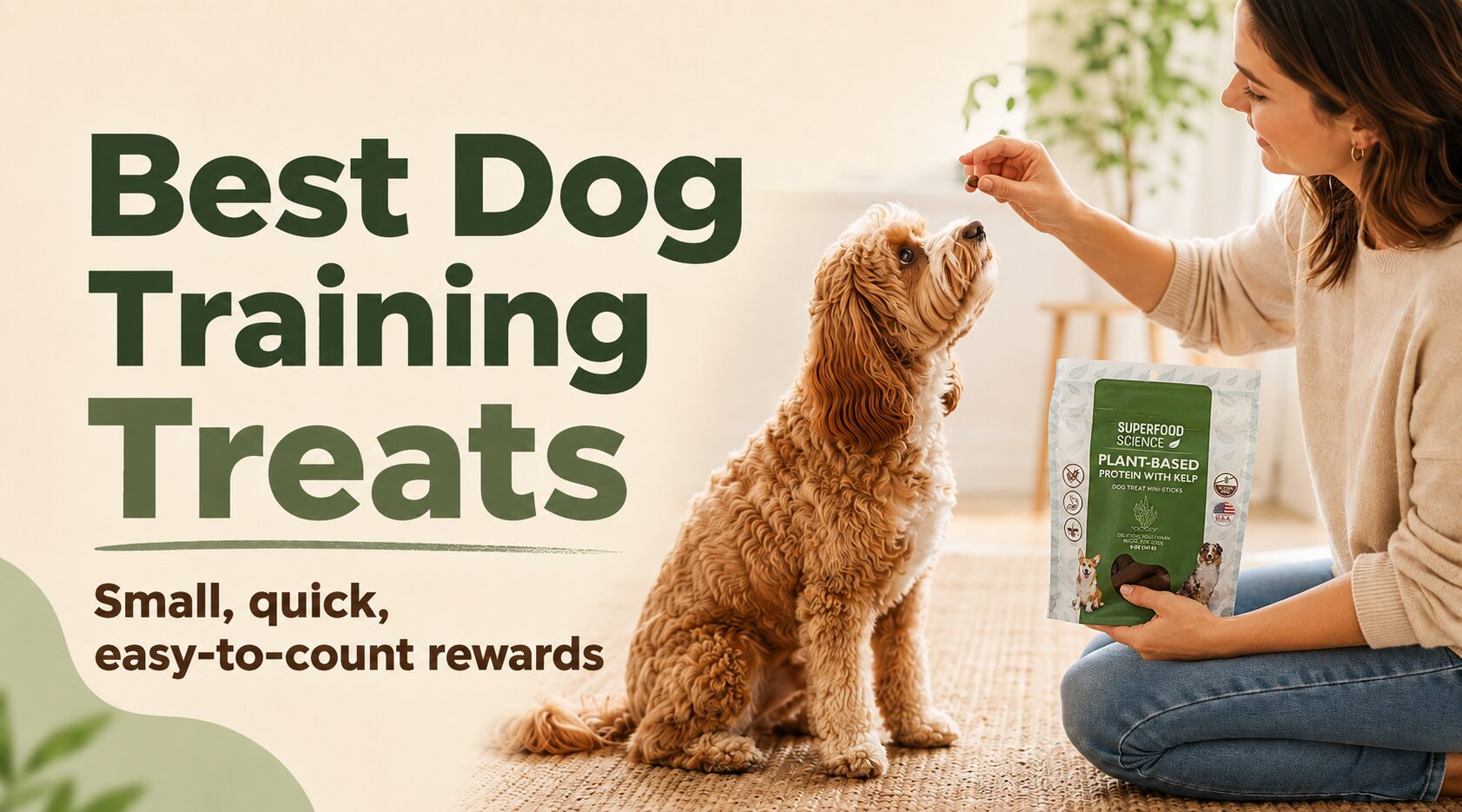
The best dog training treats are usually small, quick to chew, clearly labeled, and easy to count. For most dogs, training treats work best when they stay under about 10% of daily calories and fit the pace of the session.13 Size, chew speed, and consistent tolerance matter more than brand popularity.
Trust Signal
By Superfood Science Writing Team | Reviewed by Dr. Kelly Hood, DVM | Last Updated: 06/23/2026
Superfood Science has produced organic and natural functional foods for humans and pets for over 20 years, specializing in clean-label, functional formulations.
Key Takeaways
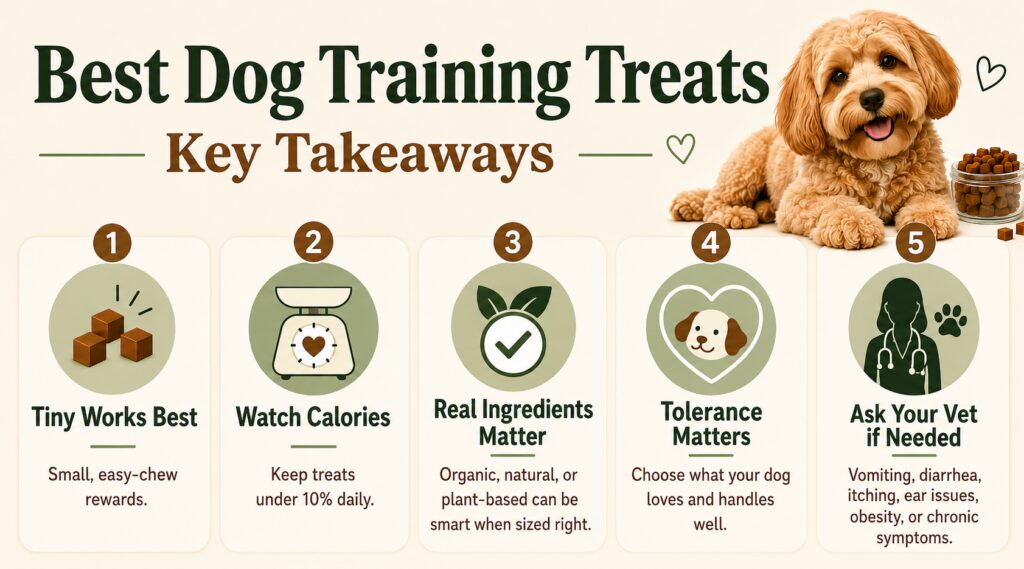
- Great training treats are usually tiny, easy to chew, and easy to repeat often.12
- For most dogs, treats should stay under about 10% of daily caloric intake.13
- Choosing organic, natural, or plant-based treats for training means rewarding good behavior with real ingredients — not fillers or empty calories. When sized right, clean-label treats are some of the smartest choices a dog parent can make.14
- The best treat is one your dog loves and tolerates well without disrupting the rest of the feeding plan.12
- Dogs with vomiting, diarrhea, itching, recurrent ear issues, obesity, or chronic symptoms may need a more careful treat strategy and veterinary guidance.25
Why Dog Training Treats Deserve More Thought Than Many Owners Give Them
Training treats look small, but they can quietly have a big impact.
A dog in an active training phase may get dozens of rewards in a single day. That changes what ‘good treat’ really means.
An occasional snack may add up quickly when given 20 times in a session. The calorie load, ingredient richness, and digestibility all matter more in a training context than in everyday casual rewarding.13
That is why the best dog training treats are rarely just the tastiest ones on the shelf. They need to work for the dog, the owner, and the daily calorie plan simultaneously.
What Stronger Evidence Supports the Best Dog Training Treats
The strongest support for this topic is to keep treats a modest part of total daily calories and to ensure the complete, balanced diet maintains the nutritional foundation.14
WSAVA advises that treats should generally make up less than 10% of a dog’s daily calorie intake.1 AAHA’s nutrition and weight-management guidelines reinforce that overall calorie balance matters more than any single ingredient choice.3
For training, that means the treat quality matters. But treat quantity matters just as much.
What Makes a Training Treat Actually Useful
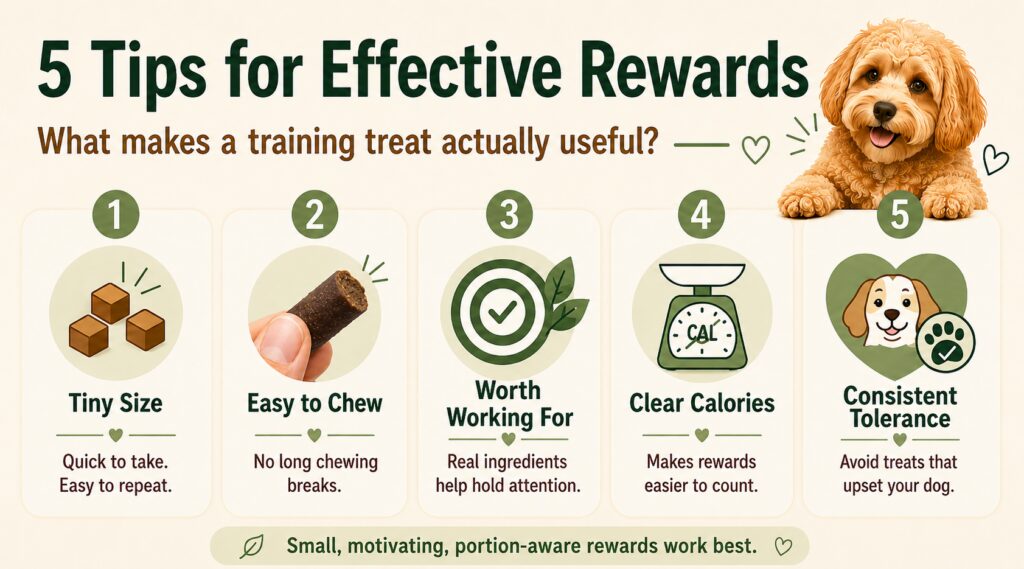
Tiny size
A dog should be able to take the treat quickly and get back to the training moment.
Large biscuits or chunky chews break rhythm. Smaller rewards work better because they let the owner reinforce more often within the same session.12
Easy to chew
A good training treat should not require a long chewing break.
That is especially important in puppies, older dogs, and fast-paced training sessions where timing, attention, and focus matter.
High enough value to hold attention
Training treats do not have to be luxurious, but they do need to be worth working for. A treat built around real, recognizable ingredients — organic protein, plant-based sources, or functional whole foods — tends to carry genuine flavor appeal that holds attention more consistently. Around distractions, that quality difference matters most.2
Your dog earns every one of those rewards — so why not make them count? Swapping cheap, empty-calorie treats for natural, health-promoting snacks is an easy win: your pup stays motivated in training, and you can feel good about what you’re handing them.
Clear calorie information
A treat is much easier to manage when calories are clearly stated. Owners cannot stay inside a calorie budget if the product gives no useful serving information.13
Consistent tolerance
The best treat in the world is still a poor choice if it causes loose stool, vomiting, gas, itchiness, or appetite disruption. Real-world tolerance is a non-negotiable filter.25
Decision Table: What Usually Works Better in Dog Training
| Training need | More helpful choice | Less helpful choice | Why it matters |
| Frequent rewards | Tiny, repeatable pieces | Large biscuits | Smaller rewards fit the training flow better12 |
| Fast-paced sessions | Soft or quick-chew texture | Long-chew or crunchy distraction | Timing matters in learning |
| Weight-conscious dogs | Low-calorie, easy-to-count treat | Rich snack-style treat | Repetition adds calories quickly13 |
| Sensitive dogs | Simpler ingredient content | Mixed or highly rich formula | Fewer variables make tolerance easier to judge25 |
| Puppies or small dogs | Small morsel size | Oversized reward | Size and swallow safety both matter |
Why ‘Top-Rated’ Does Not Always Mean Best Dog Training Treats
This is one of the biggest mistakes owners make.
A top-rated dog treat may be delicious, beautifully packaged, and popular with other buyers. But it may still not be the best fit for daily training use.12
Some treats are too large. Others are too rich — or too calorie-dense to give repeatedly, even if they work fine as an occasional reward. Many also have inconsistent piece sizes that make portioning difficult.13
That is why training-use logic matters more than general popularity.
What About Natural, Organic, and Made-in-the-USA Treats?
These can all be reasonable buying preferences.
Many dog parents want natural or organic dog treats because they prefer a cleaner-label ingredient profile. Others prioritize products made in the USA for sourcing and manufacturing confidence.4
These are legitimate filters. But they are still secondary. A training treat must first succeed as a training treat: tiny, manageable, clearly labeled, and well tolerated.12
What to Watch in Dogs With Sensitive Stomachs or Skin Issues
Training often increases treat frequency, and frequency exposes weaknesses in a formula quickly.
A treat that seems fine as a one-off reward may not work well when given ten or twenty times in a day.
That matters in dogs with:
- occasional loose stool
- vomiting after rich treats
- suspected food sensitivity
- chronic itchiness or ear flare-ups
- obesity or easy weight gain
For those dogs, a simpler, more controlled training-treat routine is usually smarter than constantly rotating products.235
How Superfood Science Treat Options Fit This Topic
For dog parents who want cleaner-label options for training rewards, Superfood Science treat products are designed with natural and organic ingredients — giving owners a more intentional reward choice that fits a structured, portion-aware routine.14
This is educational brand positioning. No Superfood Science product diagnoses or treats any medical condition. Dogs with chronic health concerns or active symptoms should receive proper veterinary guidance.
For training, the biggest goal is usually simple: use a reward the dog enjoys, can chew quickly, and that fits into the day’s calorie budget. Superfood Science treats may fit that role for dog parents who also care about ingredient quality.
Organic Turkey Dog Treats
For dog parents who want a cleaner-label, more intentional training reward, Superfood Science Organic Turkey Dog Treats may fit well into a structured reward routine.
This line also includes beta-glucan-rich Agaricus mushrooms as part of a broader functional ingredient profile, supporting the idea of a treat that brings more than just flavor.
Organic Chicken Dog Treats
For dogs that tolerate chicken well, Superfood Science Organic Chicken Dog Treats may fit naturally into a structured training routine.
This line includes ingredients such as turmeric and flaxseed as part of a more intentional clean-label formulation.
Plant-Based Protein Dog Treats
For owners who prefer a different ingredient direction, Superfood Science Plant-Based Protein Dog Treats may offer another thoughtful option for a portion-aware training routine.
This line includes ingredients such as kelp, chia, and flaxseed as part of a broader plant-based functional ingredient profile.
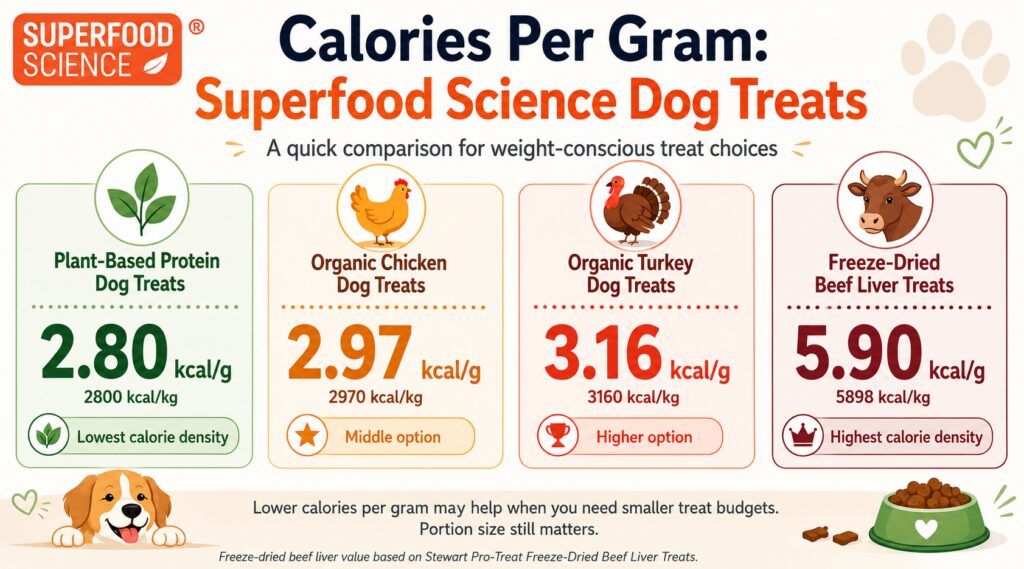
The strongest compliant brand position is this: Superfood Science gives dog parents cleaner-label treat options that may fit a more intentional, portion-conscious training approach — whether they prioritize organic sourcing, functional ingredients, or simply a cleaner label.
Limitations and Evidence Gaps
There is good veterinary guidance around treat calories, label evaluation, and the importance of keeping treats a small part of daily intake.134
There is much less direct research comparing commercial training treats head-to-head on learning outcomes, GI tolerance, or long-term health impact.
That means the most defensible advice is practical rather than dramatic: choose tiny, countable, clearly labeled treats and pay attention to how the dog actually responds over time.12
Practitioner-Recommended Usage Guide
Start by matching the treat to the training situation.
For short sessions at home, a lower-value but easy-to-count reward may be enough. For harder training around distractions, use something the dog works harder for.2
Count training rewards honestly. If your dog trains often, take those calories seriously instead of treating them like free extras.13
If your dog has digestive or skin sensitivity, choose one treat direction and keep the rest of the routine steady long enough to judge tolerance before rotating products.25
Safety and When to Call a Vet
Call your veterinarian if your dog develops repeated vomiting, chronic diarrhea, weight gain, poor appetite, recurrent itchiness, or ear flare-ups that may be related to treat ingredients.25
Seek urgent care if your dog has choking, repeated inability to keep water down, breathing difficulty, or collapse.
Also seek urgent care for black or bloody stools, sudden severe lethargy, or rapidly worsening symptoms after eating a treat.2
Use extra caution with puppies, toy breeds, senior dogs, and fast gulpers. Morsel size and chew safety matter as much as ingredient quality.12
FAQs
What are the best dog training treats?
Usually the best option is a tiny, easy-to-chew, clearly labeled treat that your dog values and that fits into the daily calorie budget without disrupting the overall feeding plan.12 The best dog training treats are practical first and fashionable second.
Are natural dog treats better for training?
Natural or organic positioning may matter to owners, but for training the biggest factors are size, chew speed, calorie density, and whether the dog tolerates the treat consistently.14
What dog treats work best for puppies in training?
Small, soft, easy-to-portion treats usually work best for puppies. They allow frequent rewards without adding too many calories or slowing down the session.12
Can dog training treats cause diarrhea?
Yes. Rich fatty treats, too many treats, or abrupt ingredient changes can contribute to digestive upset in some dogs.25
How many training treats can I give my dog per day?
That depends on your dog’s size, total calorie needs, and the calories in each treat. In general, treats should stay under about 10% of daily caloric intake. Count them like calories, not like freebies.13
Conclusion
The best dog training treats do more than just motivate them. They make every reward count.
They are small, quick to chew, and built around real ingredients: organic proteins, plant-based sources, and functional whole foods your dog can actually benefit from. Clean-label, portion-friendly, and sized right for frequent use.
Choosing natural, health-promoting treats for training is not just smart for the session — it is a daily investment in your dog’s wellbeing. Every reward is a chance to do a little good, and that adds up.123
Explore More Dog Health Tips
- Best Organic Dog Treats for Sensitive Stomachs
- Best Organic Dog Treats Made in the USA: A Vet-Safe Guide for Dog Parents
- Organic Dog Treats with Natural Ingredients: What Actually Matters
- Top-Rated Organic Dog Treats: A Guide to Safety
- Organic Dog Treat Subscription Options: Why Superfood Science Makes Sense
References
- 1. World Small Animal Veterinary Association. Feeding treats to your dog. WSAVA. https://wsava.org/wp-content/uploads/2025/11/WSAVA_Guidelines_Treats_2025.pdf
- 2. American Kennel Club. Best training treats for puppies and dogs. AKC. https://www.akc.org/expert-advice/training/best-training-treats-for-dogs/
- 3. American Animal Hospital Association. 2021 AAHA nutrition and weight management guidelines for dogs and cats. AAHA. https://www.aaha.org/resources/2021-aaha-nutrition-and-weight-management-guidelines/
- 4. World Small Animal Veterinary Association. Guidelines on selecting pet foods. WSAVA. https://wsava.org/wp-content/uploads/2021/04/Selecting-a-pet-food-for-your-pet-2021.pdf
- 5. VCA Animal Hospitals. Food allergies in dogs. VCA. https://vcahospitals.com/know-your-pet/food-allergies-in-dogs
