

Small Changes. Big Difference for Your Dog’s Well-Being
At Superfood Science, we believe the best dog wellness comes from consistent, doable habits—not scary headlines or one-size-fits-all advice. That’s why our team is committed to publishing clear, practical dog health tips you can actually use in daily life, from smarter treat choices to gentle routine upgrades that support long-term well-being. Just as importantly, every article is reviewed by a veterinarian to help ensure our guidance is accurate, balanced, and grounded in what’s safe and reasonable for real dogs, not trends.
Our goal is simple: give you trustworthy information you can feel good about, so the small changes you make today can add up to a happier, healthier life for your dog.
Have a Dog Health Question? Reach Out
We’d love to hear from you. If you have a dog wellness question or questions about Superfood Science pet products, send them our way. Whether you’re wondering which product is the best fit for your dog, how to use it, what functional ingredients are best for your pets, serving tips, or how to build a simple daily routine, your message helps us support you better. We can’t diagnose or treat medical conditions online. Still, we can explain our products clearly and use your questions to shape future veterinarian-reviewed articles on the topics pet parents care about most.
Dog Health Tips

Quick Answer A single vomiting episode in a dog that quickly returns to normal may not always require urgent care. But repeated vomiting, vomiting with diarrhea, lethargy, bloating, pain, blood, or inability to keep water down should prompt veterinary evaluation. Puppies, senior dogs, and dogs with chronic illness should be assessed sooner rather than later.[1][2][3]…

Quick Answer Early signs of arthritis in dogs often show up as subtle changes rather than dramatic limping. Stiffness after rest, slower movement, hesitation with stairs or jumping, shorter walks, and changes in mood or posture can all be indicators. If these signs persist, a veterinary exam is the safest next step.[1][2][3] Trust Signal By…

Quick Answer The best low-calorie dog treats for weight-conscious dogs are usually small, clearly labeled, easy to portion, and simple enough to fit into the dog’s total daily calorie budget. For most dogs, treats should stay under about 10% of daily calories, and weight control works best when treats, meals, and activity are managed together.[1][2]…

Quick Answer Chicken-free dog treats can be a smart option for sensitive dogs when chicken is a realistic concern, but they are not automatically better for every dog. The best choice is usually a clearly labeled, appropriately portioned treat that fits the dog’s symptom pattern, overall diet, and veterinary plan, especially when itching, vomiting, diarrhea,…

Quick Answer Chicken allergy in dogs and chicken sensitivity are not always the same thing. A true food allergy involves an immune reaction to a dietary ingredient, while sensitivity or intolerance may cause digestive upset or other signs without the same mechanism. The most reliable way to tell the difference is a structured elimination-challenge diet…
Quick Answer For most healthy puppies, either turkey or chicken can make sense if the treat is small, easy to chew, clearly labeled, and used in moderation. Chicken is not necessarily worse, and turkey is not necessarily gentler. The better choice usually depends on tolerance, portion size, ingredient simplicity, and whether the puppy has shown…

Quick Answer Turkey dog treats may be a smarter choice for some itchy dogs, especially when chicken seems linked to repeat flare-ups. But turkey is not automatically better for every dog with itching. Look for recurring patterns, rule out common non-food causes, and avoid assuming that a single protein change alone provides the answer. Trust…

Quick Answer Dog diarrhea can be mild or urgent depending on the whole picture. If your dog has diarrhea but is still bright, alert, drinking, and comfortable, brief monitoring, hydration, and a simple feeding routine may be reasonable. If diarrhea is repeated, bloody, paired with vomiting, poor appetite, weakness, pain, or dehydration, your dog should…
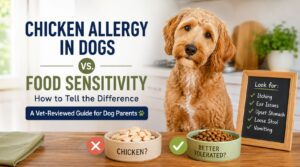
Quick Answer Chicken allergy in dogs and chicken sensitivity are not always the same thing. A true food allergy involves the immune system, whereas a food sensitivity or intolerance may present as digestive upset, stool changes, gas, or vomiting without the same immune mechanism. The most reliable way to confirm a true food allergy is…

Quick Answer Turkey is not necessarily easier to digest than chicken for every dog. Either protein may work well when the treat is appropriately portioned and the formula is simple. But if chicken repeatedly seems linked to loose stool, itching, or ear flare-ups, a turkey-based treat may be a practical next trial. Trust Signal By…